
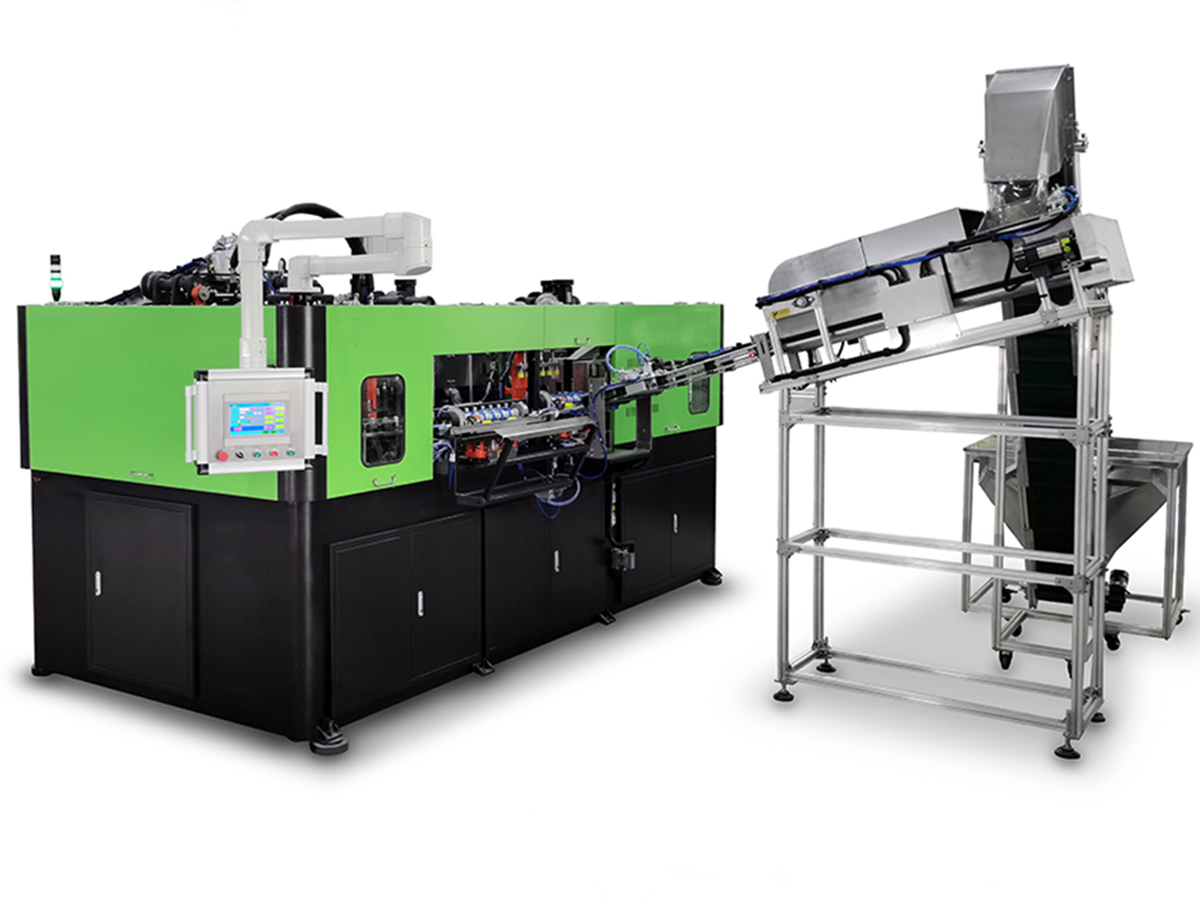
How Energy-Saving Blowing Machines Achieve High Efficiency Without Compromising Stability
IE4 Motors and Precision VFD Integration for Dynamic Energy Optimization
Modern blowing machines rely on IE4 (Super Premium Efficiency) motors—certified to operate above 95% efficiency—to minimize electrical-to-mechanical energy losses. When paired with a precision Variable Frequency Drive (VFD), the system dynamically matches motor speed to real-time air demand, eliminating the energy waste inherent in fixed-speed throttling. The VFD continuously modulates frequency and voltage, optimizing power delivery especially during partial-load operation—which accounts for over 60% of typical runtime. Instead of venting excess compressed air, the drive reduces motor speed in real time, cutting electricity use by up to 40% compared to standard induction motors running at constant speed, as verified in continuous-duty bottling line deployments. This integration also improves power factor, reducing reactive power penalties and easing strain on facility infrastructure. Critically, the motor and VFD are tuned to the blower’s torque profile, enabling stable pressure and flow even amid rapid demand shifts—proving that peak efficiency and process reliability coexist.
Electromechanical Synergy: Reducing Losses While Maintaining Consistent Air Delivery
Stability in blowing machines arises from tightly coordinated electrical and mechanical design—not just component selection. Direct-drive coupling removes belts and gears, eliminating 5–10% of input power lost to transmission inefficiencies. Advanced bearing systems and precision-balanced rotors further reduce vibration, parasitic friction, and thermal stress—extending service life while lowering energy draw. Simultaneously, the VFD control loop responds within milliseconds to pressure drops caused by filter loading or nozzle resistance changes, adjusting speed to maintain steady output without overcompensation. In stretch blow molding, where ±0.1 bar pressure stability is essential for uniform bottle wall thickness, this synergy—enabled by high-resolution encoders and low-inertia rotors—ensures consistent performance across load variations. The result is not a trade-off between efficiency and stability, but a unified outcome: rated airflow delivered with minimal waste and maximum repeatability.
Smart Control Architecture Ensuring Stable Blowing Machine Operation Across Loads
Smart control architecture serves as the digital backbone enabling modern blowing machines to sustain precise output under variable demand. By fusing real-time sensor data with intelligent drive logic, these systems close the performance gaps common in fixed-speed equipment—without adding complexity or compromising responsiveness.
Adaptive VFD Algorithms for Real-Time Pressure, Flow, and Load Compensation
Today’s VFDs go beyond basic speed control: they run adaptive algorithms that align motor output precisely with instantaneous pressure, flow, and mechanical load requirements. When air demand surges, onboard processors analyze feedback from pressure transducers and flow meters in milliseconds—and increase motor speed only as needed. This prevents the over-pressurization and energy waste typical of on-off control. According to the U.S. Department of Energy (2023), such adaptive VFDs reduce motor energy consumption by 20% to 50% in pneumatic applications. Load-compensation logic further refines torque and acceleration profiles based on actual mechanical resistance, ensuring current draw never exceeds what the task demands. The outcome is tight pressure regulation—even amid unpredictable downstream cycling—delivering both energy savings and operational consistency.
Startup-to-Load Transition Stability: Mitigating Surge, Overshoot, and Drift
The transition from idle to full load is the most vulnerable phase for blowing machine stability. Uncontrolled startups risk pressure surges, motor overshoot, and long-term setpoint drift—threatening product quality and accelerating mechanical wear. Adaptive VFD algorithms mitigate each risk systematically. A soft-start function gradually ramps voltage and frequency, suppressing inrush current and avoiding facility-wide voltage sag. Closed-loop PID control then monitors actual pressure rise and fine-tunes drive output in real time to prevent overshoot. Finally, drift compensation routines continuously compare measured pressure against the target setpoint and apply micro-corrections—holding output steady hour after hour. This integrated approach delivers shock-free startup and sustained stability, protecting both the blower and the broader pneumatic system.
Robust Industrial Design for Continuous-Duty Blowing Machine Reliability
Thermal Management and Rotor Dynamics in 24/7 Blowing Machine Applications
For round-the-clock operation, thermal integrity and rotor stability are non-negotiable. Optimized cooling channels and Class H insulation keep motor windings and bearings within safe operating temperatures, slowing insulation degradation and preventing premature failure. Rotor dynamics are equally critical: precision balancing minimizes vibration-induced stress and ensures consistent airflow without drift. Low-friction, sealed bearing designs with extended-life lubrication reduce maintenance intervals, while embedded temperature sensors feed real-time data into the control system—enabling preemptive derating or cooling adjustments before thresholds are breached. Together, these engineering choices deliver predictable, stable performance over thousands of operating hours—translating directly into lower total cost of ownership and reduced unplanned downtime.
Proven Stability and Energy Savings: Field Validation of Blowing Machine Performance
99.2% Uptime in Automotive Paint Booths: Real-World Blowing Machine Reliability Data
Real-world validation confirms that energy-saving blowing machines deliver on both efficiency and reliability promises. A 2023 multi-site monitoring study across automotive paint booth installations recorded 99.2% uptime over 12 months of continuous operation. These units combine IE4 motors, adaptive VFD algorithms, robust thermal management, and surge-mitigation logic—maintaining ±0.05 bar pressure stability despite frequent load fluctuations. The result is elimination of disruptive restart cycles and consistent air delivery critical for finish quality. Facilities achieved a documented 25% reduction in energy consumption versus legacy fixed-speed units—without sacrificing availability or process fidelity. This field evidence underscores a key principle: modern blowing machine design makes high efficiency and industrial-grade stability not just compatible—but interdependent.
FAQ Section
What are IE4 motors, and why are they important in blowing machines?
IE4 motors are super premium efficiency motors certified to operate above 95% efficiency. They minimize energy losses during the conversion of electrical energy to mechanical energy, making them critical components in energy-saving blowing machines.
How does a Variable Frequency Drive (VFD) optimize energy usage?
A VFD dynamically adjusts motor speed to match real-time air demand, eliminating energy waste caused by fixed-speed throttling. This results in electricity savings of up to 40% compared to standard induction motors running at constant speeds.
What role does direct-drive coupling play in energy savings?
Direct-drive coupling eliminates the need for belts and gears, which reduces transmission inefficiencies by 5–10%, thus improving the overall energy efficiency of blowing machines.
How do blowing machines maintain stability under varying loads?
Stability is achieved through electromechanical synergy, adaptive VFD algorithms, and advanced smart control architecture. These elements help maintain consistent air delivery, even during rapid demand shifts or pressure changes.
What is the importance of thermal management and rotor dynamics in blowing machines?
Optimized thermal management and rotor dynamics ensure continuous operation by preventing motor overheating, reducing vibration-induced stress, extending maintenance intervals, and maintaining consistent airflow over long operating hours.
Table of Contents
-
How Energy-Saving Blowing Machines Achieve High Efficiency Without Compromising Stability
- IE4 Motors and Precision VFD Integration for Dynamic Energy Optimization
- Electromechanical Synergy: Reducing Losses While Maintaining Consistent Air Delivery
- Smart Control Architecture Ensuring Stable Blowing Machine Operation Across Loads
- Robust Industrial Design for Continuous-Duty Blowing Machine Reliability
- Proven Stability and Energy Savings: Field Validation of Blowing Machine Performance
-
FAQ Section
- What are IE4 motors, and why are they important in blowing machines?
- How does a Variable Frequency Drive (VFD) optimize energy usage?
- What role does direct-drive coupling play in energy savings?
- How do blowing machines maintain stability under varying loads?
- What is the importance of thermal management and rotor dynamics in blowing machines?