
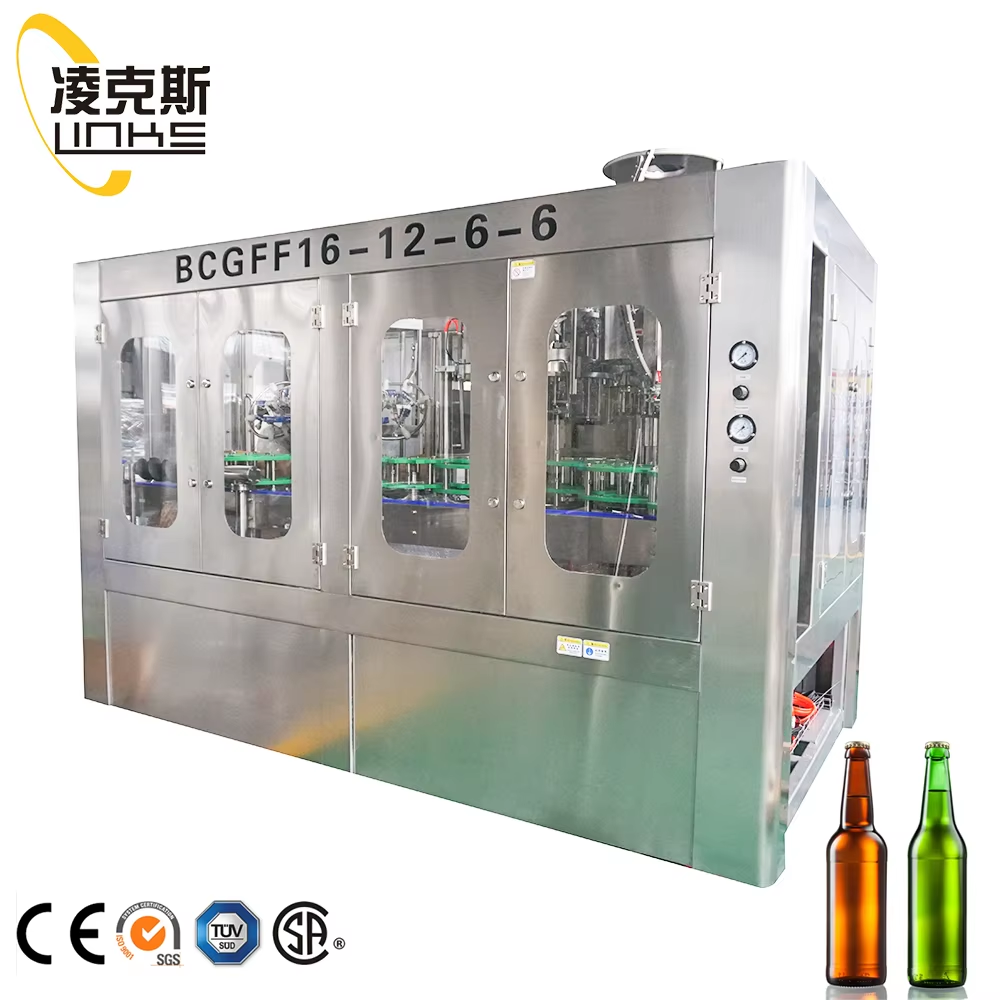
How High Precision Beer Filling Machines Preserve Carbonation and Flavor
Isobaric Filling: Maintaining CO₂ Equilibrium in Glass and PET Bottles
Isobaric filling preserves carbonation by equalizing CO₂ pressure between the beer tank and container before liquid transfer begins—typically at 2–4 bar. This equilibrium prevents turbulence-induced CO₂ loss, reducing carbonation degradation to under 0.2 volumes. Precision valves open only after pressure synchronization is confirmed, eliminating premature foam formation in both rigid glass and flexible PET bottles. Fill-level accuracy remains within ±1%, minimizing waste while safeguarding bubble integrity. Adaptive pressure ramping compensates for material differences: slower for PET (to counter its higher gas permeability) and faster for impermeable glass. Real-time sensors monitor each phase, enabling dynamic adjustments that achieve 98% foam suppression and consistent flavor delivery from tank to seal.
Counter-Pressure vs. Vacuum Systems: Oxygen Exclusion and TPO Performance Comparison
Counter-pressure systems are the industry standard for oxygen-sensitive beer filling. They first purge bottles with CO₂ or nitrogen, then pressurize them to match tank conditions—creating an inert barrier that prevents atmospheric contact. This dual-action process achieves sub-50 ppb Total Package Oxygen (TPO), the benchmark for premium shelf-life and flavor stability. Continuous gas blanketing during filling further displaces ambient oxygen, while integrated spectrophotometric TPO sensors enable real-time feedback and automatic parameter correction. In contrast, vacuum-based systems remove air but often leave residual oxygen pockets and increase foaming risk. Counter-pressure fillers reduce oxygen ingress by 78% versus vacuum alternatives and sustain stable carbonation even at high speeds (1,200+ bottles/hour). Their closed-loop gas architecture extends shelf life by up to 60 days while protecting volatile hop aromatics and delicate mouthfeel.
Bottle-Agnostic Engineering: Optimizing the Beer Filling Machine for Glass and PET
Adaptive Sealing, Gripping, and Pressure Management Across Bottle Materials
Modern high-precision fillers dynamically adapt to material-specific challenges. Low-pressure pneumatic grippers (≤5 psi) handle PET without deformation, while shock-absorbing silicone jaws protect fragile glass during high-speed transfers. Isobaric sealing adjusts O-ring compression force based on substrate: softer elastomer seals (25–35 durometer) conform to PET’s variable neck geometry, whereas rigid ceramic seals ensure leak-tight CO₂ retention on glass. Pressure calibration profiles are also material-optimized—gentle ramp-up for PET to avoid gas separation, and rapid 2.5-bar injection for glass. Field data confirms these adaptations cut foam-related wastage by 17% across both formats.
Thermal and Structural Compensation in Dual-Format Filler Heads
Temperature differentials between chilled beer (2–4°C) and ambient bottles induce dimensional shifts—glass contracts 0.003% per °C, while PET expands up to 0.07%. To maintain precision, advanced filler heads employ:
- Real-time thermal modeling, using infrared sensors to adjust nozzle position and hold ±0.2 mm clearance during thermal drift;
- Compliant kinematics, with memory-alloy actuators accommodating neck diameter variations (glass: 26–29 mm; PET: 28–33 mm);
-
Counterweight systems, dampening vibration harmonics caused by PET’s lighter mass at speeds up to 25,000 bottles per hour.
Together, these features deliver 99.8% fill accuracy regardless of thermal or structural variability.Oxygen Control Mastery: Achieving Sub-50 ppb TPO with Integrated Gas Architecture
Precise oxygen management is non-negotiable for preserving beer freshness—oxidation triggers stale, cardboard-like off-flavors even at trace levels. High-precision fillers meet the sub-50 ppb TPO standard through a fully integrated gas architecture that deploys nitrogen or CO₂ at every critical interface. Inert gas purging evacuates residual air from bottles and filler valves pre-fill, while continuous blanketing shields the beer surface during transfer. Real-time TPO monitoring enables closed-loop control: sensors detect dissolved oxygen spikes and automatically recalibrate gas flow or pressure parameters. This system-level integration safeguards hop volatility and malt complexity, extending shelf life without preservatives or additives.
Operational Reliability and ROI: Throughput, Sanitation, and Maintenance Efficiency
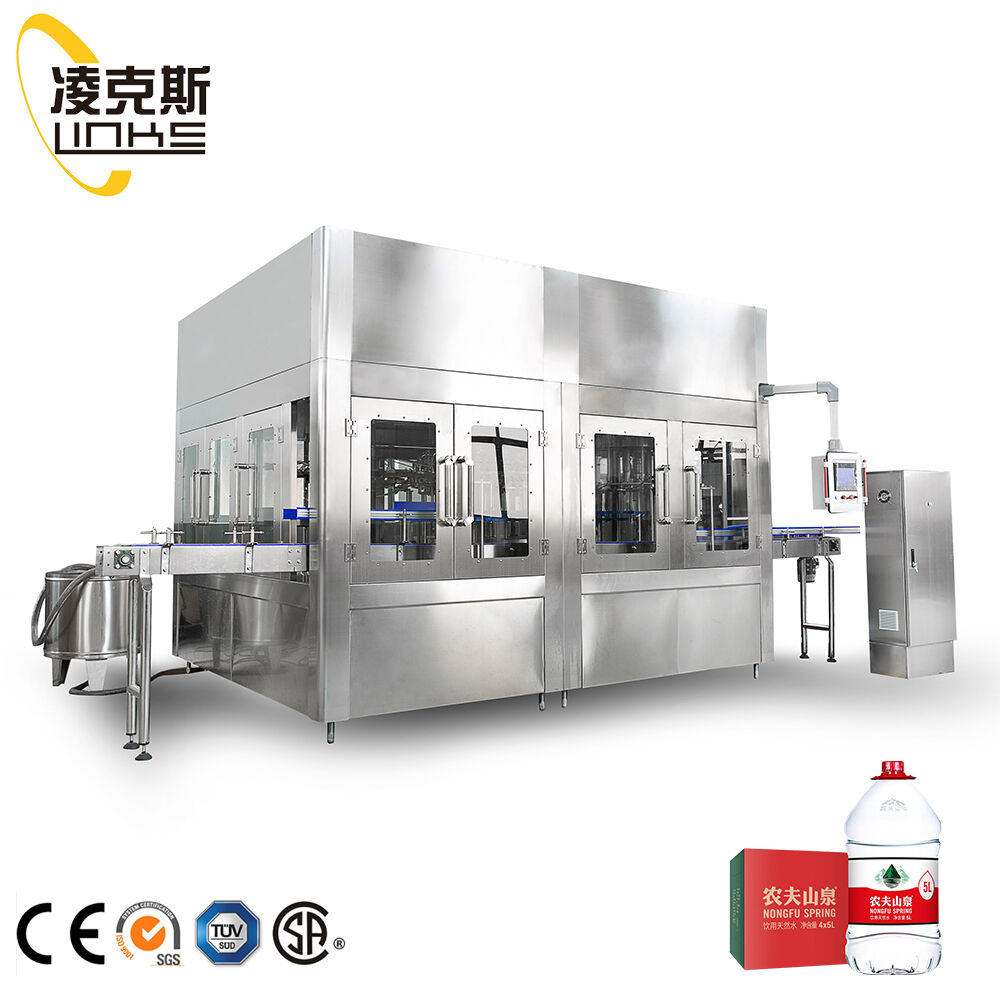
High-precision beer filling machines deliver strong ROI through three interlocking pillars: throughput consistency, sanitation efficiency, and maintenance intelligence. Stable, high-speed operation (up to 25,000 bph) eliminates bottlenecks and maximizes annual output. Automated cleaning-in-place (CIP) systems reduce sanitation downtime by up to 40% versus manual methods while lowering contamination risk. Maintenance is streamlined via modular components for rapid replacement, predictive diagnostics that flag potential failures before they occur, and centralized lubrication that extends bearing and actuator life. Collectively, these features reduce total cost of ownership—cutting spare parts inventory, emergency repairs, and labor hours—enabling payback in under 24 months. The result is not just capital efficiency, but sustained operational excellence aligned with craft-quality standards.
Table of Contents
-
How High Precision Beer Filling Machines Preserve Carbonation and Flavor
- Isobaric Filling: Maintaining CO₂ Equilibrium in Glass and PET Bottles
- Counter-Pressure vs. Vacuum Systems: Oxygen Exclusion and TPO Performance Comparison
- Bottle-Agnostic Engineering: Optimizing the Beer Filling Machine for Glass and PET
- Operational Reliability and ROI: Throughput, Sanitation, and Maintenance Efficiency