
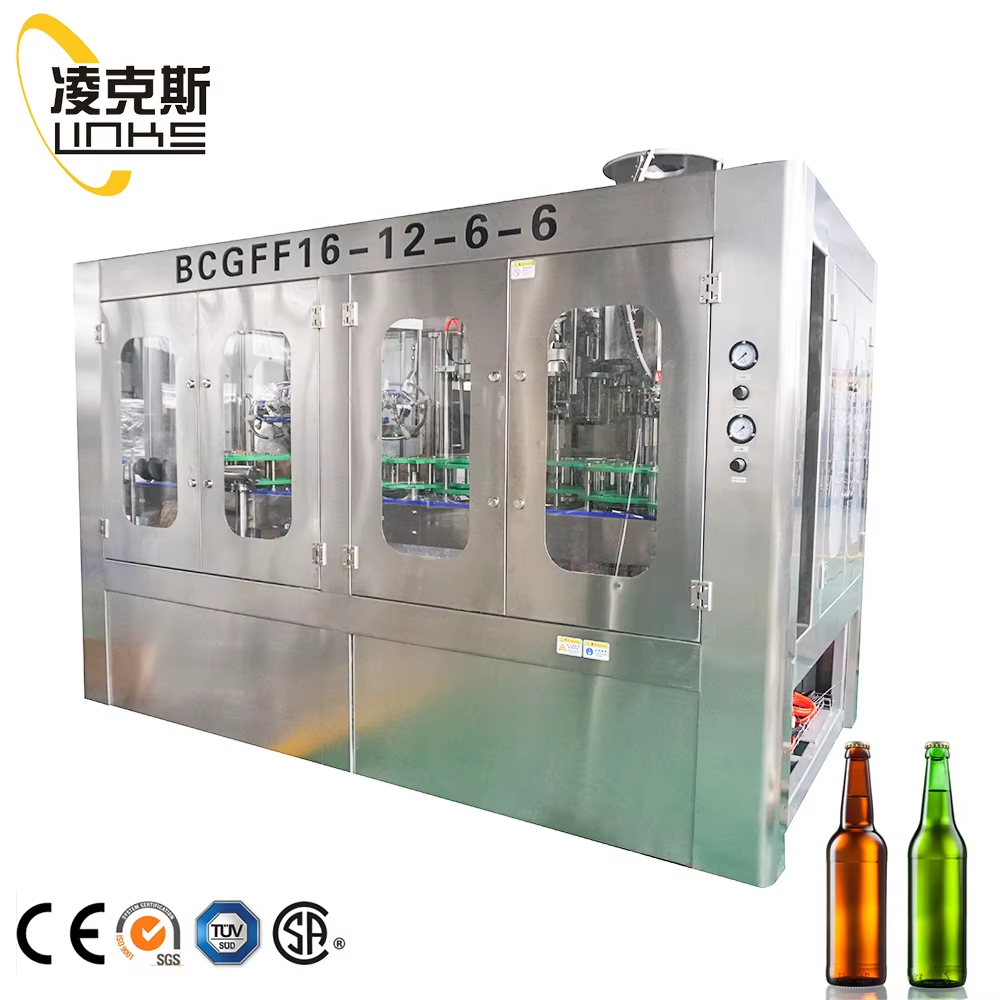
Why High-Speed Beer Filling Machines Are Critical for Brewery Scalability
Breweries face relentless pressure to scale production without compromising quality or efficiency—a challenge where high-speed beer filling machines become indispensable. These systems enable throughput of 20,000+ containers per hour while maintaining ±0.5ml fill accuracy, allowing breweries to meet seasonal demand spikes and expand distribution without bottlenecks from slower manual processes. For mid-sized operations scaling from 10,000 to 200,000 barrels annually, this technology reduces per-unit labor costs by up to 40% while ensuring consistent carbonation and foam control. Without high-capacity filling equipment, breweries risk costly production delays, inconsistent product quality, and missed market opportunities during peak seasons.
The financial impact extends beyond throughput: automated filling systems minimize product loss through precise volume control, cutting waste by 15–25% compared to semi-automated alternatives. This efficiency is crucial when expanding into competitive markets where margin compression demands operational excellence. Modern rotary fillers further support scalability through modular designs, enabling breweries to incrementally add filler heads or integrate downstream capping systems as production volumes grow—eliminating the need for complete line overhauls. By future-proofing production capacity while preserving quality benchmarks, high-speed beer filling machines transform scalability from a logistical challenge into a strategic growth accelerator.
Precision Engineering: Foam Control, Carbonation Integrity, and Fill Accuracy at Speed
Maintaining carbonation integrity during rapid filling operations presents unique challenges that demand specialized engineering solutions. Advanced high-speed beer filling machines use staged pressure ramps and nitrogen-controlled chambers to minimize turbulence, preserving CO₂ levels below industry-standard thresholds—even at speeds exceeding 40,000 containers per hour. This precise foam suppression relies on real-time viscosity monitoring and regulated temperature zones, preventing over-carbonation that typically results in 3–8% product loss (Beverage Industry Journal, 2023).
Advanced foam suppression systems preserving CO₂ levels during rapid filling
Microprocessor-controlled vacuum breakers inject precisely timed inert gas blankets between liquid and can headspace, counteracting foam nucleation while holding dissolved CO₂ above 5.2 g/L. This eliminates the need for costly post-fill dilution while maintaining head pressure within ±0.1 bar tolerance windows—critical for aromatic preservation in craft ales.
Micro-adjustable fill valves and level-sensing technology ensuring ±0.5ml consistency
Laser-calibrated volumetric valves with servo-driven actuators achieve container-to-container variance under 0.15% through contactless capacitive sensors that detect meniscus formation down to 0.1mm resolution. Operators make touchscreen adjustments to compensate for viscosity fluctuations between hazy IPAs and crisp lagers, guaranteeing label claim compliance even during 250ms fill cycles. The convergence of these technologies reduces giveaway to 0.8%—half the industry average—while meeting carbonation specifications across diverse formulations.
Automation & Integration: Seamless Line Synchronization from Filling to Capping
Modern breweries achieve peak efficiency through PLC (Programmable Logic Controller) orchestration that synchronizes high-speed beer filling machines with downstream capping and labeling units. This real-time communication eliminates buffer zones and prevents production gaps, maintaining consistent flow rates up to 60,000 containers/hour. Sensors relay positional data between stations, enabling servo-driven conveyors to adjust speeds dynamically. Such integration reduces misalignment-induced spillage by 40% and prevents costly bottlenecks during high-volume runs.
Reduced changeover time via quick-release tooling and recipe-based parameter recall
Breweries slash format transition times using magnetic quick-release tooling that swaps filler heads, capper chucks, and guide rails in under 15 minutes. Recipe-driven PLCs recall preset parameters like torque settings, fill volumes, and carbonation levels for each SKU (Stock Keeping Unit). This eliminates manual recalibration errors and maintains ±0.3 PSI pressure consistency during product shifts. Automated changeovers support just-in-time production, allowing smaller craft brewers to batch-produce seasonal varieties alongside flagship beers without sacrificing throughput.
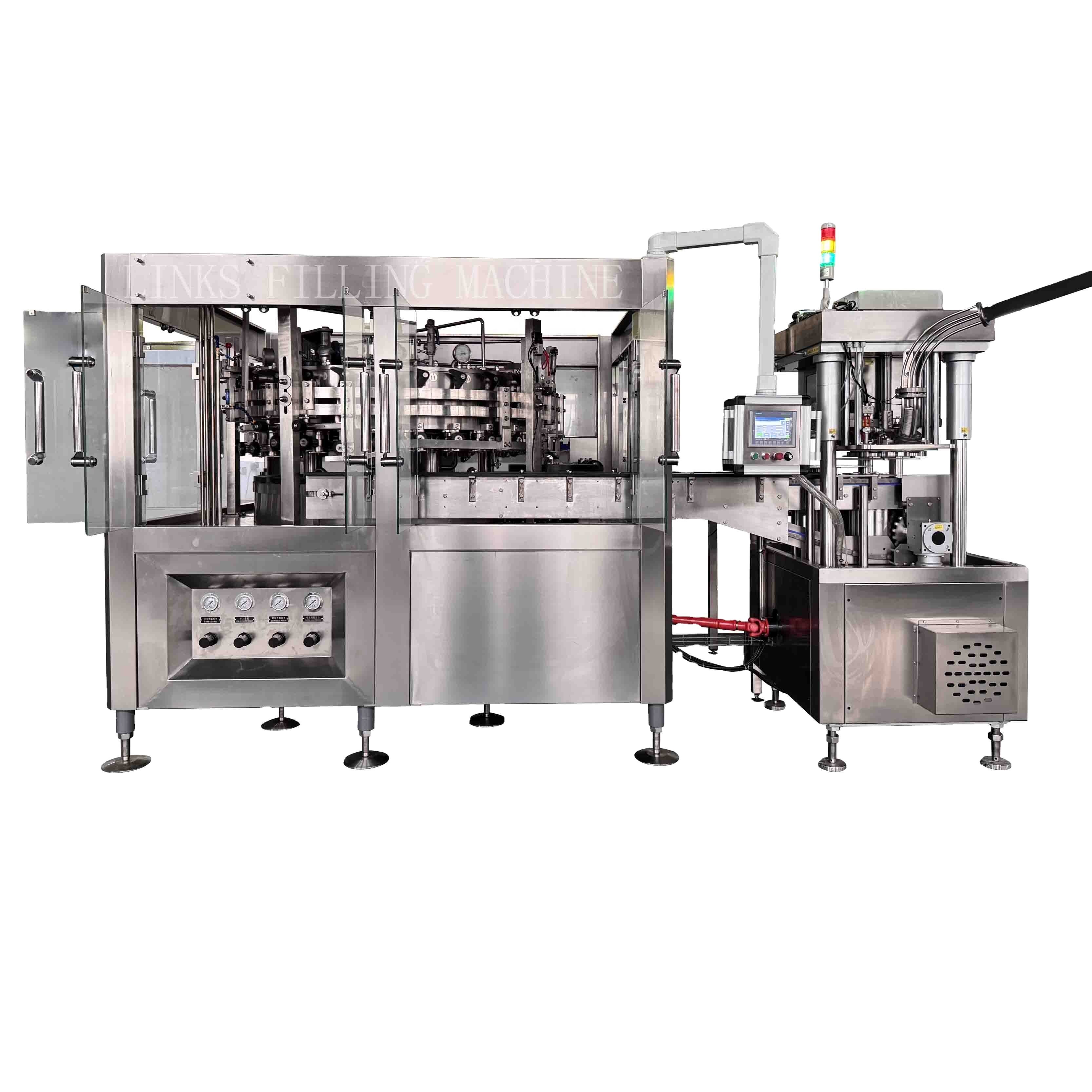
Container Flexibility and Future-Proofing: Supporting Craft Innovation and Multi-Format Lines
Modern breweries demand beer filling machines that adapt to evolving market trends. Craft innovation thrives when equipment supports diverse packaging formats without costly downtime.
Modular change parts enabling rapid switching between bottles, cans, and slim cans
Leading manufacturers use standardized interfaces for quick transitions between formats. Changeovers occur in under 15 minutes—critical for limited-edition releases. Interchangeable necks, starwheels, and seaming heads maintain precision across glass, aluminum, and specialty containers. This modularity reduces production pauses by 80% compared to fixed systems.
Scalable rotary vs. linear architectures for breweries scaling from 10,000 to 500,000 bbl/year
Rotary systems dominate high-volume operations (>100,000 bbl/year), achieving speeds of 1,200 cans/minute. Linear configurations suit mid-scale growth (10,000–50,000 bbl/year) with lower initial investment. Both architectures share PLC platforms, allowing seamless upgrades as breweries expand. Hybrid models enable incremental scaling—a key advantage for regional craft expansions facing 30% annual growth.
Table of Contents
- Why High-Speed Beer Filling Machines Are Critical for Brewery Scalability
- Precision Engineering: Foam Control, Carbonation Integrity, and Fill Accuracy at Speed
- Automation & Integration: Seamless Line Synchronization from Filling to Capping
- Container Flexibility and Future-Proofing: Supporting Craft Innovation and Multi-Format Lines