
Water Filling Machine Hygiene: Ensuring Regulatory Compliance and Microbial Safety
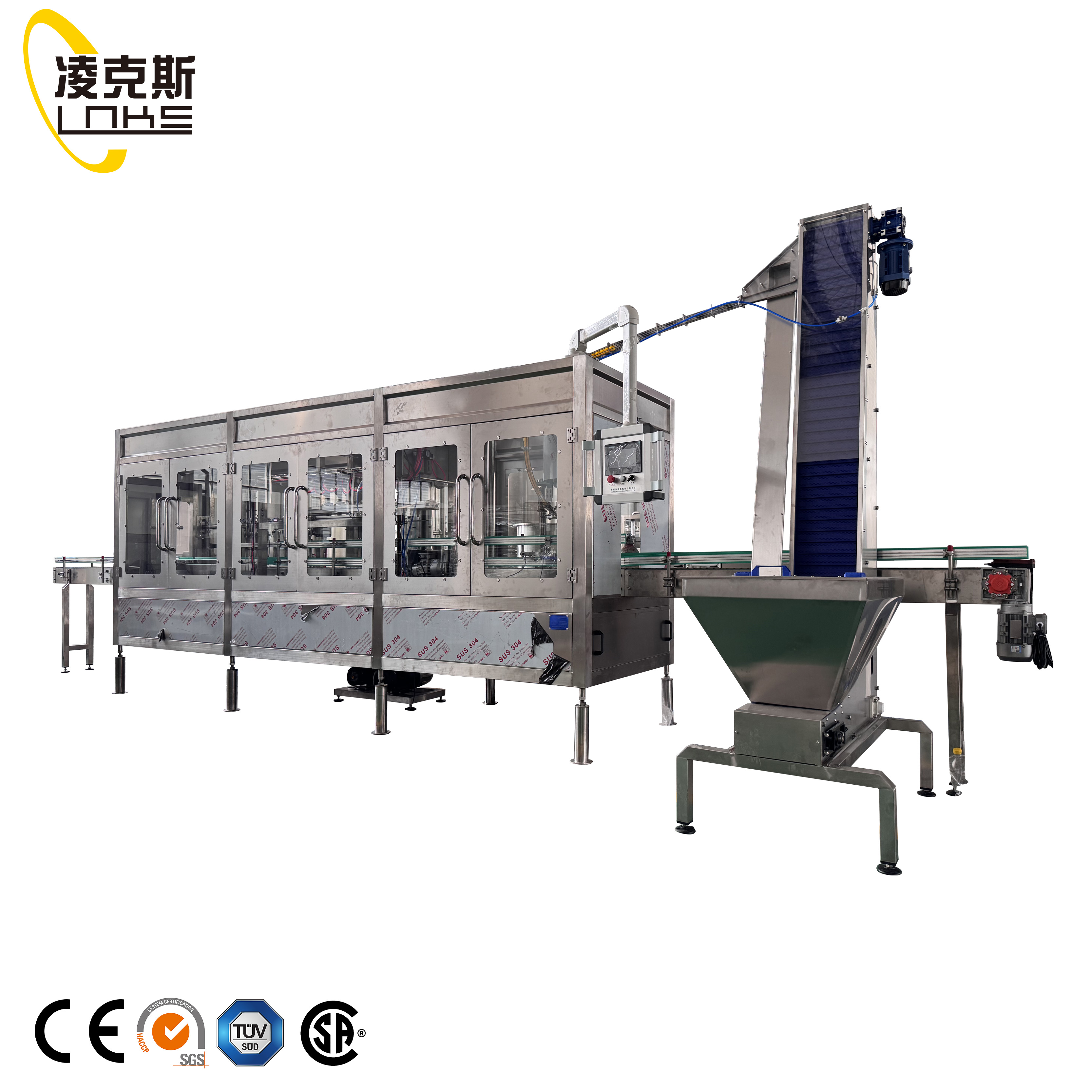
Three-Stage Aseptic Processing: Sterile Rinsing, Precision Filling, and Hermetic Capping
Today's bottling plants depend heavily on aseptic processing techniques to keep things clean and safe from contaminants. The process typically has three main steps starting with sterile rinsing. Bottles get blasted with high pressure water at around 85 degrees Celsius or higher to kill off any harmful bacteria lurking on their surfaces. Next comes the actual filling stage which happens inside special chambers with controlled air flow. These chambers have those fancy nozzles that drop liquid into bottles with incredible precision - something like half a millimeter accuracy to stop spills and protect against airborne germs getting in. Finally there's the sealing part where caps are applied with just the right amount of force to create an airtight barrier that blocks out oxygen immediately. All told, this whole system cuts down on microbes by almost 99.97% compared to old fashioned manual approaches, and it ticks all the boxes set out by the FDA regulations for water safety standards. Throughout the entire operation, sensors constantly check everything works properly, making sure nobody touches anything during these crucial moments when contamination could happen.
Automated CIP Integration and FDA/ISO 22000–Compliant Materials (e.g., 316L Stainless Steel)
The introduction of automated Clean-in-Place (CIP) systems has changed how we handle sanitation in water filling operations. These systems work by running food safe cleaning solutions and sanitizers through every part that touches the product, all without taking anything apart. The whole process happens automatically according to set schedules, which helps eliminate those stubborn biofilms that can form over time. Modern CIP technology cuts down on cleaning time by around two thirds compared to traditional methods, and still manages to knock out coliform bacteria effectively. When it comes to materials, most manufacturers now rely heavily on 316L stainless steel throughout their equipment. This particular grade stands out because it contains less carbon, making it much more resistant to corrosion and easier to keep clean in the long run.
Water Filling Machine Consistency: Delivering Uniform Fill Accuracy and Product Integrity
Closed-Loop Control Systems: Servo-Piston Actuation, Ultrasonic Level Sensing, and Auto-Calibration
Water filling machines today get their precision from these fancy closed loop systems that keep everything running smoothly. The machines use servo piston actuators to measure out exact amounts of liquid based on programmed movement patterns. At the same time, there are these ultrasonic sensors constantly checking how full each container is, refreshing their readings every 40th of a second without touching anything. All this real time information goes straight to the PLC controller which automatically adjusts when things like viscosity change or temperatures fluctuate. What this means in practice is that containers stay within about 1mm of the target fill height no matter what size they are, so operators don't have to fiddle with settings manually anymore. And if something starts going wrong, the system actually knows it before anyone notices, making tiny corrections for parts that wear down over time or unexpected environmental factors while still keeping that pinpoint accuracy throughout production runs.
Quantified Performance: ±0.3% Fill Deviation in Automated Water Filling Machines vs. Manual Lines
According to industry standards, automated water filling machines cut down on fill volume variations by about 78% when compared to what happens with manual filling. Manual approaches typically have around 1.5% variation because people get tired and measurements aren't always consistent. Automated systems manage to keep things much tighter at less than plus or minus 0.3% thanks to their sensors and control mechanisms. The improved accuracy means companies save money too, cutting back on product giveaways by roughly 19% each year and avoiding those costly fines for underfilled containers. These machines run consistently for over 20,000 cycles which matters a lot for high end bottled waters where maintaining the right mineral balance is important. Customers expect the same taste and quality every time they open a bottle, and this kind of reliability helps deliver that consistent experience.
Water Filling Machine Profitability: Maximizing ROI Through Throughput, Efficiency, and Scalability
High-Speed Monoblock Architecture: 12,000–36,000 BPH Output and 47% Reduction in Product Loss
Today's monoblock water filling systems bring together rinsing, filling, and capping all in one automated machine. These units can handle anywhere from 12 thousand to 36 thousand bottles every hour, which is pretty impressive when considering how little product gets wasted during operation. When there are no manual handoffs between different stations, the chances of spills drop dramatically, along with any risk of contamination. The fillers on these machines are driven by servos that keep things accurate within about half a percent either way, so companies don't end up giving away extra product. And if a bottle happens to be filled improperly, the system automatically rejects it before it moves further down the line. Together, this combination brings down product losses by nearly half compared to older semi-automated setups. Plus, because everything is designed with accessibility in mind and uses standard parts wherever possible, maintenance takes about 30 percent less time overall.
Labor Optimization and Energy-Smart Design: Typical 12–18-Month Payback for Mid-Volume Producers
Automated water filling machines slash labor costs by consolidating multiple manual tasks. One operator can oversee production that previously required 3–5 workers, directly reducing payroll expenses by 40–60%. Energy-smart innovations further enhance savings:
- Variable-frequency drives adjust motor speed to match production demands
- Heat-recovery systems repurpose thermal energy from sterilization processes
- LED lighting and sleep-mode activation cut idle power consumption by 25%
These efficiencies, coupled with reduced water waste and material usage, yield rapid returns. Mid-volume bottlers typically achieve full ROI within 12–18 months—faster than any other packaging machinery category. The scalability of modular designs also future-proofs investments, allowing capacity expansion without replacing core systems.
FAQ Section
What is aseptic processing?
Aseptic processing involves sterilizing products and packaging separately to prevent contamination before they are brought together in a sterile environment.
Why is 316L stainless steel preferred in water filling machines?
316L stainless steel is favored because it has lower carbon content, providing enhanced resistance to corrosion, and is easier to clean, making it suitable for food and beverage production.
What is the typical ROI period for water filling machines?
Mid-volume bottlers generally achieve a full return on investment (ROI) within 12 to 18 months.
How does the closed-loop control system improve fill accuracy?
The closed-loop system ensures fill accuracy by using real-time sensor data to automatically adjust for variable factors like viscosity and temperature, maintaining consistency.
What advantages do high-speed monoblock water filling systems provide?
High-speed monoblock systems streamline rinsing, filling, and capping processes to significantly reduce product loss and labor demand while improving output efficiency.