
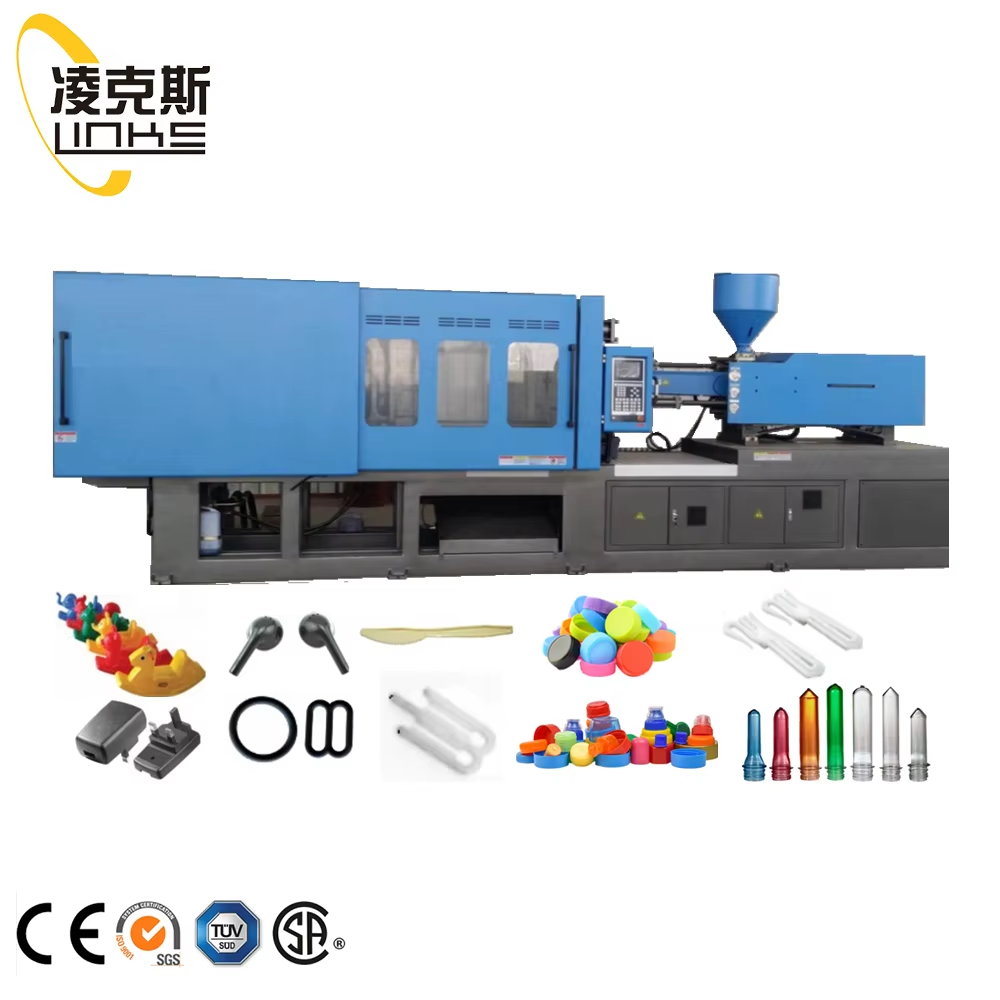
Plastic Injection Moulding Machine:Core Mechanical and Thermal Design Elements for Stability
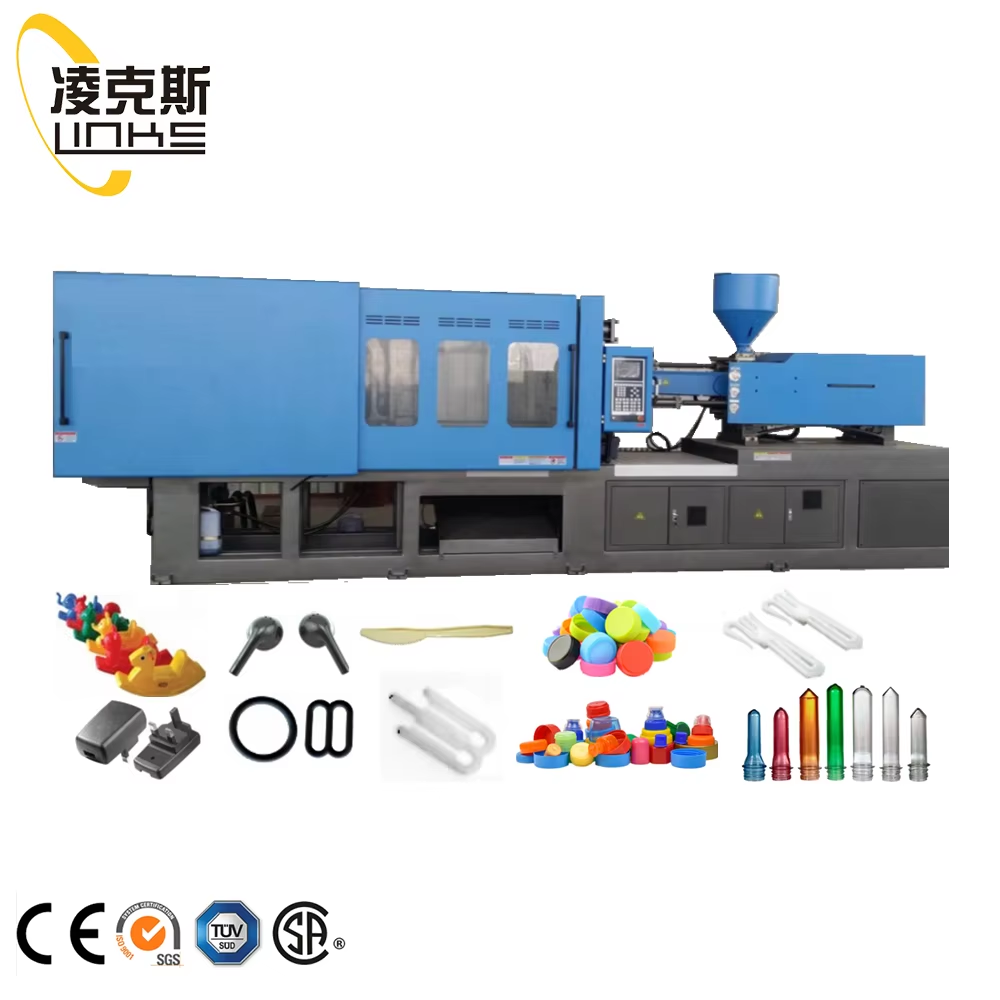
Clamping Force Consistency and Structural Rigidity
For high performance plastic injection molding machines, frame design needs to keep deflection under control - ideally below 0.1mm per meter length to stop flashing problems when running at high pressure. The reinforced tie bar setup helps maintain consistent clamping force throughout production runs, staying within about plus or minus 1%. This matters a lot for those thin wall medical parts where anything over 0.02mm deviation gets rejected straight away. A rigid frame structure reduces platen movement during fast mold operations, which makes each part come out more consistently. Looking at industry data, around 23% of cycle variations in automotive manufacturing can be traced back to weak frame stiffness. That's why top manufacturers are moving towards alloy steel monocoque frames these days instead of traditional bolted ones. These newer frames handle vibrations better and stay aligned longer term. And then there's the electro hydraulic servo system (EHSS) technology that allows adjustments down to the micron level for platen parallelism. Even when dealing with massive clamping forces over 1,000 tons, these systems maintain even pressure distribution across the mold.
Precision Temperature Control Across Barrel, Nozzle, and Mold Zones
Multi zone PID controllers can maintain around 0.5 degree Celsius stability in the heating barrels, which is really important to stop those expensive high performance resins like PEEK from breaking down thermally. The nozzles have their own temperature control so the melted material stays consistent in viscosity. Mold cooling channels work with cascade control to get rid of those pesky thermal gradients that cause parts to warp. Some advanced systems actually check how even the surface temperatures are using thermal imaging tech, aiming for about 1 degree Celsius difference across the whole mold face. This kind of precision matters a lot when making optical components where surface roughness needs to stay under Ra 0.05 micrometers. Research published in journals has shown that even small inconsistencies in thermal management, sometimes in areas we don't think are critical, can lead to as much as 18% more rejected parts in applications requiring tight tolerances.
Screw/Barrel Geometric Accuracy and Drive System Reliability
Bimetallic barrels rated at C2 grade and hardened beyond 65 HRC stand up well against abrasive composite materials while maintaining their shape even after long production periods. The ground screws used here have really tight tolerances - less than 0.02 mm error per 100 mm pitch - which means better mixing of melted material and more consistent pressure throughout the process. For machines that need extremely accurate shots, especially in medical device manufacturing where each shot might only be around 0.1 grams, high torque direct drive systems make all the difference. These systems cut out any mechanical play during plasticization, resulting in shot weight consistency within about plus or minus 0.3%. Tests on metal properties indicate that when flight edges are properly hardened, they cut down on pressure fluctuations caused by wear by roughly 76% after half a million cycles compared to regular parts. And before these machines hit the factory floor, drive systems go through rigorous testing that simulates ten million full load cycles to check if they'll last as long as expected during actual operation.
Intelligent Automation for Repeatable Plastic Injection Moulding Machine Operation
Integrated Control Architecture with Adaptive HMI and Real-Time Parameter Tuning
Today's plastic injection moulding machines come equipped with central control systems that bring together robotics, material handling, and process adjustments all in one flexible setup. The Human-Machine Interfaces, or HMIs for short, adjust workflows on the fly depending on what kind of part is being made and how complex the cycle needs to be. These systems keep things running smoothly by maintaining melt temperatures within about plus or minus 1 degree Celsius, keeping injection pressure variations below 1 percent, and ensuring accurate screw speeds so operators can make adjustments during production without stopping the whole line. With edge computing built in, the machines analyze changes in melt viscosity at lightning fast speeds, making automatic tweaks to parameters that help maintain stable processes throughout long production runs.
Closed-Loop Monitoring of Five Critical Process Parameters
Stability depends on continuous, high-fidelity surveillance of five core variables:
- Melt temperature homogeneity across barrel zones
- Injection pressure profiles during cavity filling
- Screw position accuracy during plastication
- Cooling rate consistency between cycles
- Hold phase duration and pressure decay
This sensor-driven feedback ensures part dimensions remain within ±0.05 mm tolerance windows. Automated quality assurance correlates real-time process data with dimensional verification—flagging deviations before non-conforming parts accumulate. Such closed-loop control is essential for medical components requiring full batch traceability and automotive assemblies demanding micron-level dimensional fidelity.
Real-Time Process Monitoring and Quality Assurance Integration
Modern plastic injection moulding equipment now comes equipped with built-in real time monitoring systems that are part of the quality control process. These machines have sensors that track things like injection pressure, melt temps, and how fast the material cools down every 50 milliseconds. The system can spot when something goes out of spec by more than half a percent almost immediately. When these advanced systems work together with Statistical Process Control methods, manufacturers report around a 27% drop in defective products compared to old fashioned manual checks according to research published last year in the Journal of Advanced Manufacturing Systems. If the machine detects issues early enough, it will automatically make adjustments like changing how fast the screw spins or tweaking the nozzle temperature before any actual problems happen. All this quality information gets stored right alongside electronic batch records so companies can track exactly what materials were used and what settings were active during production runs. This means quality control isn't just about checking finished goods anymore but actually fixing issues while the product is still being made, which helps maintain consistent dimensions even when running large batches.
Application-Specific Stability Validation: Automotive and Medical Use Cases
High-Tolerance Part Consistency in Automotive Components
The world of automotive plastic injection molding needs incredible precision at the micron level plus parts that can stand up to serious structural stress, especially when making components sensitive to vibrations like engine covers and sensor housing units. Getting those consistent dimensions right means keeping clamping forces stable within about half a percent tolerance and ensuring even heat distribution across all mold surfaces. This helps avoid problems like flash formation and dimension changes during mass production runs for things like connectors, air ducts, and various interior trim pieces. The validation process typically includes running these parts through over fifty thousand cycles while subjecting them to extreme temperature swings from minus forty degrees Celsius up to one hundred twenty degrees Celsius, along with realistic road vibration testing scenarios. To check if everything meets standards, manufacturers use laser scanning technology combined with coordinate measuring machines to compare finished products directly against original equipment manufacturer blueprints.
Regulatory Compliance and Batch Traceability in Medical Device Manufacturing
When we talk about medical grade plastic injection molding, it's not just about getting the dimensions right. There's also the whole issue of keeping materials pure, controlling the environment during production, and making sure all documentation stays intact. The machines need to work within ISO Class 7 cleanrooms standards and they absolutely have to stop any particles from forming in parts used for drug delivery systems or surgical tools. Every single injection cycle gets recorded too recording things like cavity pressure changes, how hot the resin gets at different points, and where exactly the screw was positioned during processing. All this data goes into creating those electronic batch records that meet FDA requirements under 21 CFR Part 11. What does this mean practically? It means companies can track back every detail of their manufacturing process to specific batches when auditors come knocking. And before anything hits the market, there's validation involved too. They test if the materials are safe for contact with body tissues according to ISO 10993 guidelines, plus check whether products can withstand common sterilization methods like autoclaving or gamma radiation treatment. These tests help ensure compliance across borders since regulations vary so much worldwide.
FAQ
What is the importance of clamping force consistency in injection molding?
Clamping force consistency is crucial in injection molding to prevent defects such as flashing and to maintain part precision, especially in high-tolerance applications like thin-wall medical parts.
Why is temperature control vital in plastic injection moulding?
Temperature control is essential to maintain material viscosity, prevent polymer degradation, and eliminate thermal gradients that can lead to warping or dimensional instabilities.
How does intelligent automation benefit plastic injection moulding operations?
Intelligent automation integrates control systems for material handling and process adjustments, ensuring processes are stable and efficient, thereby reducing errors and enhancing productivity.
What are the primary factors monitored in a closed-loop injection moulding process?
The primary factors include melt temperature, injection pressure, screw position, cooling rate, and hold phase duration. Monitoring these factors helps in maintaining process stability and part quality.
What specific challenges do automotive and medical applications present in injection moulding?
Automotive components require micron-level precision and endurance against stress and vibration, while medical devices demand stringent environmental controls and comprehensive batch traceability to ensure purity and compliance with regulatory standards.
Table of Contents
- Plastic Injection Moulding Machine:Core Mechanical and Thermal Design Elements for Stability
- Intelligent Automation for Repeatable Plastic Injection Moulding Machine Operation
- Real-Time Process Monitoring and Quality Assurance Integration
- Application-Specific Stability Validation: Automotive and Medical Use Cases
-
FAQ
- What is the importance of clamping force consistency in injection molding?
- Why is temperature control vital in plastic injection moulding?
- How does intelligent automation benefit plastic injection moulding operations?
- What are the primary factors monitored in a closed-loop injection moulding process?
- What specific challenges do automotive and medical applications present in injection moulding?