
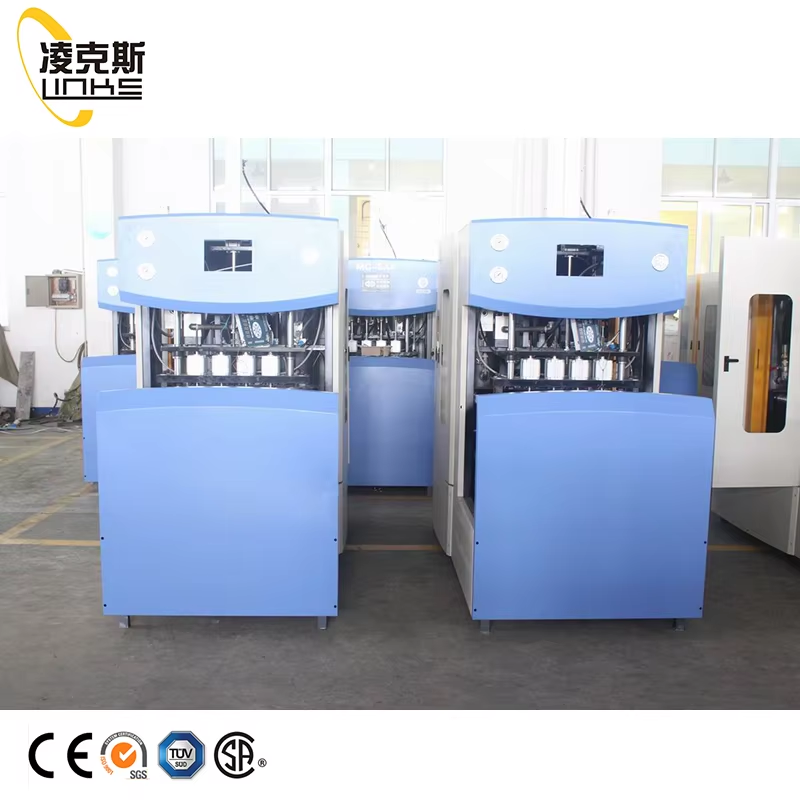
AI and IoT Integration in the Intelligent Blowing Machine
AI-Driven Real-Time Parameter Optimization for Consistent Output
Artificial intelligence transforms the blowing machine into a self-optimizing system. Sensors embedded throughout the equipment continuously feed data—such as melt temperature, preform heating profiles, mold pressure, and ambient humidity—to AI algorithms. These models dynamically adjust critical process parameters in real time to compensate for material batch variations, environmental fluctuations, or tooling wear. The result is tighter control over wall thickness, weight consistency, and dimensional accuracy—reducing scrap rates by up to 35% in validated deployments (source: Plastics Technology, 2023). By minimizing unnecessary cycle time extensions and eliminating manual tuning, manufacturers achieve higher throughput without sacrificing quality. Crucially, the AI system learns from historical production runs, refining its optimization logic across thousands of cycles. Operators shift from reactive troubleshooting to strategic oversight—focusing on yield analysis, preventive planning, and continuous improvement rather than constant parameter tweaking.
IoT-Enabled Remote Monitoring and Predictive Maintenance for Uptime Assurance
Internet of Things (IoT) connectivity turns the blowing machine into a fully networked asset. Vibration, motor current, bearing temperature, and hydraulic pressure data stream securely to a centralized dashboard—accessible via web or mobile interface from any location. This real-time visibility enables cross-facility monitoring and rapid response coordination, especially valuable for global OEMs and contract packagers. More significantly, IoT data feeds predictive maintenance models trained on failure signatures from tens of thousands of machine-hours. These models detect subtle anomalies—like harmonic shifts in motor vibration or gradual thermal drift in heater bands—up to 72 hours before potential failure. Alerts trigger automated work orders and recommend optimal repair windows aligned with planned downtime. As a result, unplanned stoppages drop by an average of 48%, while mean time between failures (MTBF) increases by 31% (source: Packaging World Industry Benchmark Report, 2024). For high-volume packaging lines—where one hour of downtime can cost over $12,000—this level of uptime assurance directly protects margins, customer commitments, and brand reputation.
User-Friendly Control System Design for the Blowing Machine
Intuitive HMI, Mobile App Integration, and Voice-Assisted Operation
Modern blowing machines prioritize operator effectiveness through human-centered control architecture. A responsive, high-resolution touchscreen HMI features logical workflow navigation, context-sensitive help, visual status mapping (e.g., color-coded zone temperatures), and one-touch access to validated job presets. Mobile app integration extends this control beyond the machine—enabling remote monitoring of OEE metrics, push notifications for alarm conditions, and secure parameter adjustments from iOS or Android devices. Voice-assisted operation supports hands-free execution of routine commands (“Start cycle,” “Pause heating,” “Show last defect log”) using on-device speech recognition—eliminating the need for physical interaction during glove-wearing or hygiene-critical operations. Together, these capabilities reduce procedural errors, accelerate task completion, and support flexible staffing models—without requiring deep PLC programming knowledge.
Human-Centered Design Principles: Reducing Cognitive Load for Operators
Effective control design begins with understanding how operators process information under pressure. Human-centered principles minimize cognitive load by limiting decision points per task, standardizing iconography across all machine generations, and grouping functions by operational phase (e.g., setup → run → diagnostics → maintenance). Physical ergonomics are equally critical: control panels are positioned at waist-to-chest height, screens use anti-glare laminates with adjustable brightness, and tactile feedback (e.g., button haptics) complements visual and audible confirmations. Status indicators follow IEC 62443-compliant color logic—green for ready, amber for warning, red for fault—with clear, unambiguous text labels. This deliberate simplification doesn’t dilute functionality; instead, it surfaces only the controls relevant to the current mode, reducing mental strain during extended shifts and lowering error rates by up to 27% in comparative usability studies (source: Journal of Manufacturing Systems, Vol. 68, 2023).
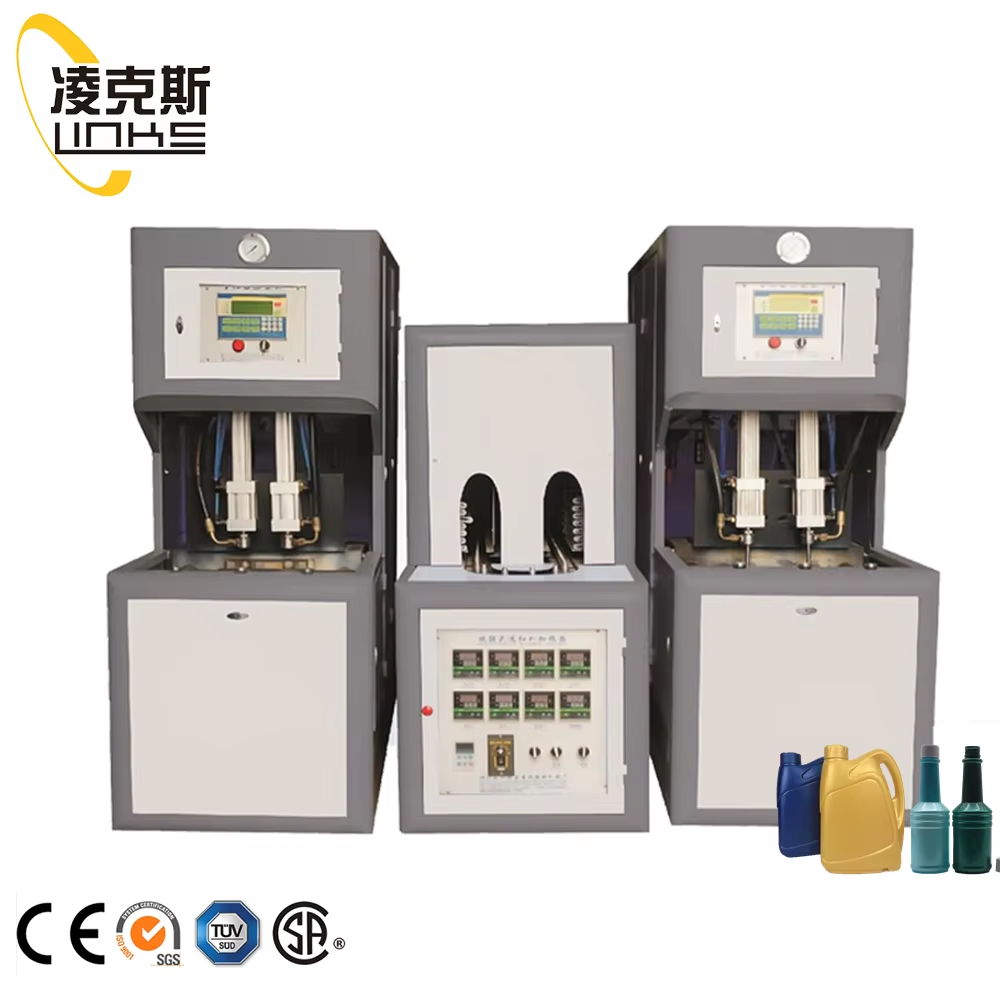
Measuring Usability Impact: Operational Simplicity Without Compromising Industrial Performance
42% Faster Operator Onboarding and Reduced Training Burden
A thoughtfully designed control system directly shortens the learning curve for new operators. When interfaces use intuitive navigation, consistent terminology, and progressive disclosure—revealing advanced settings only after foundational tasks are mastered—trainees achieve full operational proficiency in significantly less time. Field data from 14 Tier-1 packaging facilities confirms a 42% reduction in average onboarding time compared to legacy systems with menu-deep configurations and undocumented shortcuts. This acceleration lowers the cost of temporary labor, reduces supervision overhead during shift rotations, and improves retention—especially among younger technicians accustomed to consumer-grade digital experiences. Critically, this simplicity coexists with industrial-grade performance: cycle times, Cpk values for critical dimensions, and material utilization remain unchanged from benchmark standards. The system’s forgiving interface absorbs minor input errors—like mis-entered setpoints—by validating ranges in real time and offering corrective guidance, not lockouts.
Real-Time Responsiveness: Latency as a Critical Trust Factor in Blowing Machine Automation
In synchronized production lines, deterministic responsiveness is non-negotiable. The blowing machine must execute sensor-triggered actions—such as mold closure timing, parison extrusion cutoff, or cooling valve actuation—within sub-millisecond tolerances. Delays exceeding 8 ms disrupt parison sag control and cause wall thickness variation; latency above 15 ms risks incomplete mold sealing or premature ejection, leading to flash defects or part deformation. Operators quickly lose trust in automation when response feels “laggy”—not because it fails outright, but because unpredictability undermines their ability to anticipate outcomes. Deterministic latency—the guaranteed worst-case response time under full computational load—is therefore engineered into both hardware (real-time OS, FPGA-accelerated I/O) and software (time-sliced task scheduling, priority-based interrupt handling). When every control loop meets its deadline, consistently and transparently, operators gain confidence in unattended operation—enabling lights-out production and reinforcing the machine’s role as a reliable, intelligent node in the smart factory ecosystem.
FAQs on AI and IoT Integration in Blowing Machines
What is the role of AI in blowing machines?
AI enables blowing machines to optimize parameters in real time, improving output consistency and reducing scrap rates significantly.
How does IoT improve blowing machine maintenance?
IoT facilitates remote monitoring and predictive maintenance, reducing downtime by detecting anomalies before failures occur.
What are the benefits of intuitive control systems?
Intuitive control systems simplify operation, reduce errors, and accelerate operator onboarding without compromising industrial performance.
Why is latency critical in blowing machine automation?
Latency affects the timing of automated actions, which is crucial for maintaining the quality and efficiency of production lines.
Table of Contents
- AI and IoT Integration in the Intelligent Blowing Machine
- User-Friendly Control System Design for the Blowing Machine
- Measuring Usability Impact: Operational Simplicity Without Compromising Industrial Performance
- Real-Time Responsiveness: Latency as a Critical Trust Factor in Blowing Machine Automation
- FAQs on AI and IoT Integration in Blowing Machines