How Fully Automatic Soft Drinks Bottling Machines Enable End-to-End Production
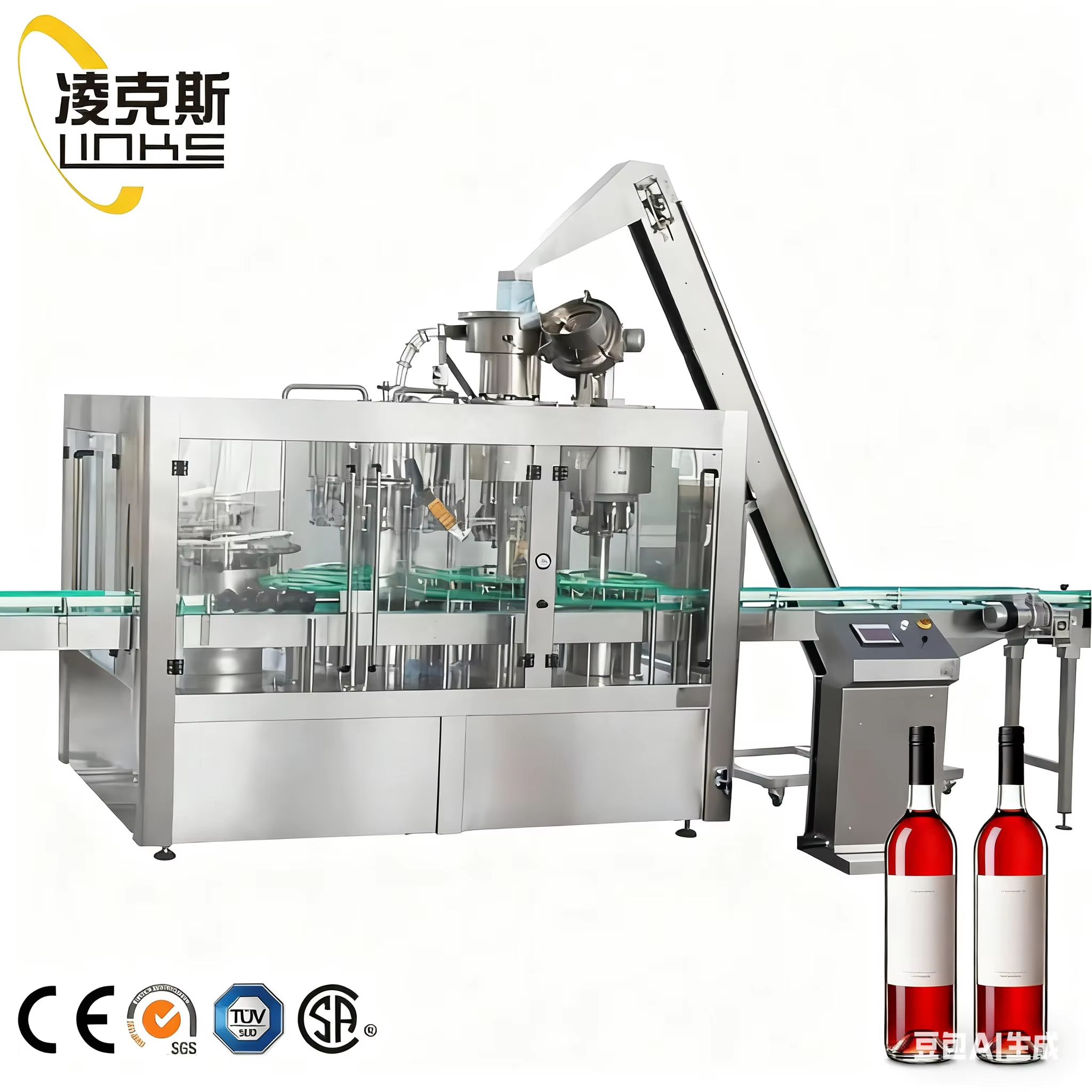
Modern large-scale factories rely on fully automatic soft drinks bottling machines to orchestrate every step—from container entry to finished pallet—eliminating manual bottlenecks and delivering consistent throughput at speeds unattainable with manual lines.
Seamless Workflow: From Rinse and Fill to Cap, Label, and Pack
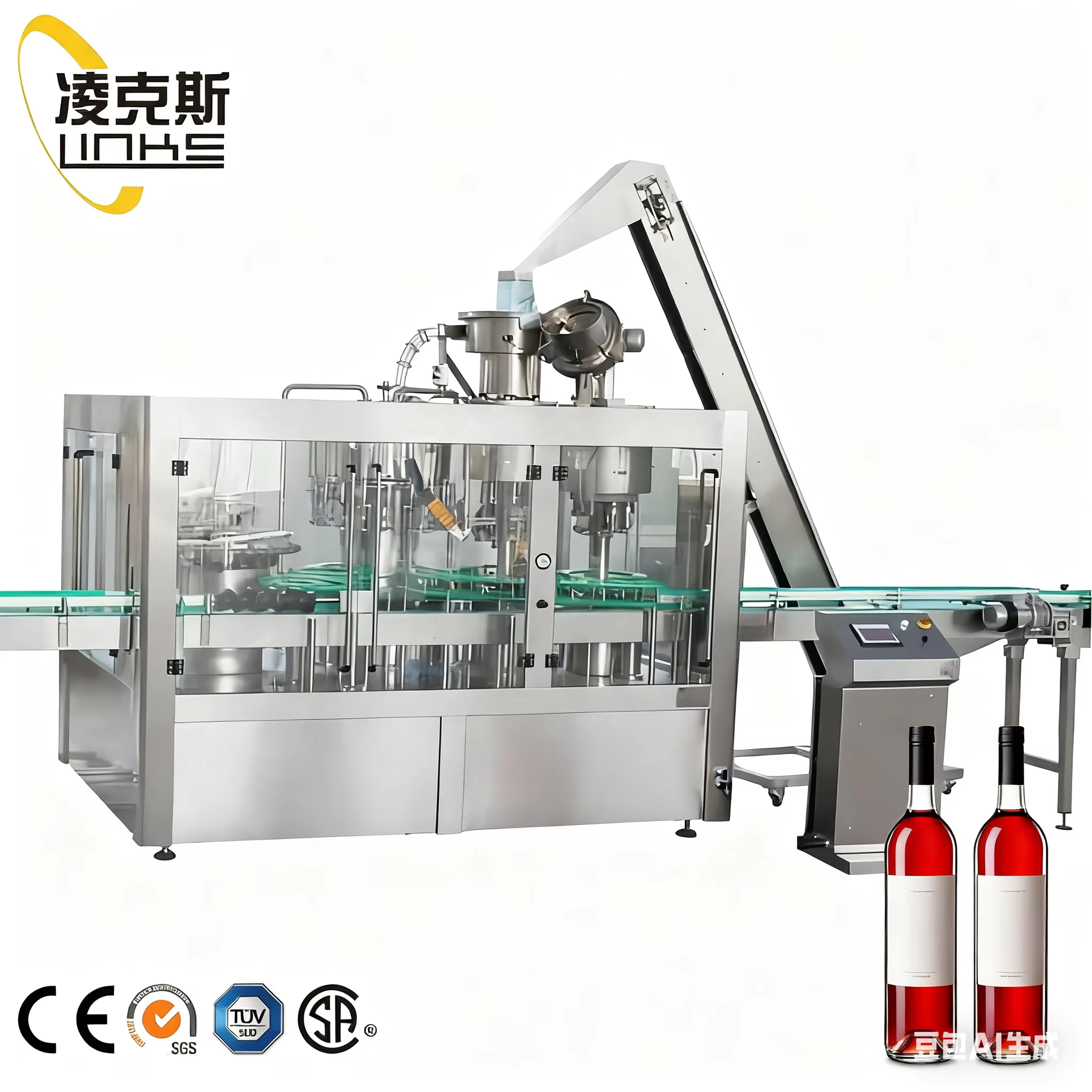
A fully automatic line synchronizes rinsing, filling, capping, labeling, and packing into one continuous flow. Bottles first pass through a high-pressure rinse station that removes dust and particles. They then enter the filling zone, where servo-controlled valves dispense the beverage with sub-milliliter precision. Immediately after filling, a capping unit applies closures at speeds exceeding 40,000 bottles per hour. The capped bottles move to a multi-head labeler that applies front, back, and neck labels simultaneously. Finally, a robotic packer arranges bottles into trays or cartons. Every transition happens without manual intervention—the conveyor system maintains exact timing between stations, preventing jams and reducing changeover time to under 15 minutes.
Robotic Integration and PLC Synchronization for Zero Manual Handoff
To achieve true end-to-end automation, soft drinks bottling lines integrate articulated robots and programmable logic controllers (PLCs) that govern every actuator. A central PLC communicates with each machine via a real-time industrial network such as EtherCAT, adjusting speeds and torque on the fly. For example, if the filler’s output drops during a carbonation adjustment, the PLC automatically slows downstream units to preserve line balance. Robots handle bulk depalletizing, cap sorting, and final case palletizing—with vision-guided grippers adapting to bottle variations without human re-teaching. Operators supervise only via the HMI and intervene solely for non-recoverable errors. This synchronization delivers 94.7% average Overall Equipment Effectiveness (OEE) and a defect rejection rate below 0.02%.
Precision Fill Accuracy and Quality Assurance in Soft Drinks Bottling
Sub-Milliliter Consistency via Servo-Controlled Filling Valves
Precision is the backbone of soft drinks bottling. Servo-controlled filling valves maintain sub-milliliter consistency across thousands of bottles per hour by adjusting flow in real time to compensate for temperature shifts, carbonation pressure, and viscosity changes. This eliminates overfilling and underfilling, reducing product giveaway by up to $740,000 annually for large-scale producers—and ensuring every bottle meets label claims within ±0.5% of target fill.
AI-Powered Vision Inspection and Real-Time Defect Rejection (<0.02% Failure Rate)
AI-driven vision systems inspect every bottle at full line speed using high-resolution cameras and machine learning models trained to detect cap misalignment, fill-level deviations, foreign particles, and label defects. Defective units are ejected instantly, achieving a failure rate below 0.02%—significantly outperforming manual inspection. The system preserves batch integrity, safeguards brand reputation, and continuously refines detection accuracy by learning from production data.
Scalability, OEE Optimization, and Smart Factory Integration
Modular Design for 12,000–42,000 BPH Output Without Line Downtime
Modular architecture enables swift capacity upgrades—from 12,000 to 42,000 bottles per hour—without halting production. Components integrate via standardized mechanical, electrical, and communication interfaces, allowing factories to scale output without replacing entire systems. The design accommodates diverse container sizes and product viscosities, while automated tooling adjustments keep changeovers under 15 minutes—ensuring throughput continuity during peak demand.
IIoT Dashboards, Predictive Maintenance, and 94.7% Average Overall Equipment Effectiveness
Industrial IoT sensors monitor equipment health across the line in real time. Centralized dashboards display OEE metrics, while predictive algorithms forecast maintenance needs up to 72 hours before failures occur—reducing unplanned downtime and sustaining an industry-leading 94.7% average OEE (21% above conventional lines, per Ponemon Institute’s 2023 benchmark). Automated alerts and energy consumption optimization cut operational costs by 18%, enabling data-driven decisions that maximize asset utilization without compromising quality.