
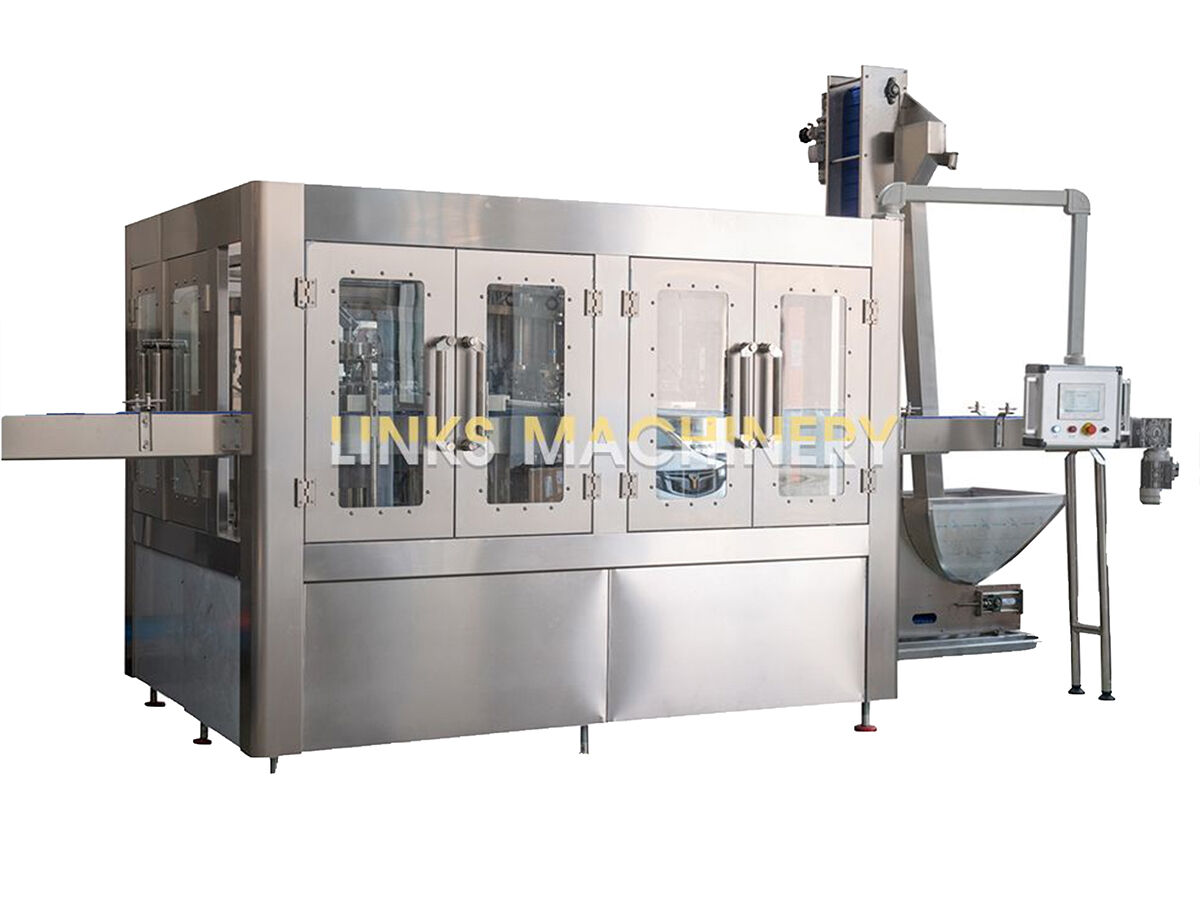
Automation and Smart Technology in Automatic Bottle Filling Machines
The Role of Automated Systems in Modern Beverage Production
Automated systems handle 87% of repetitive tasks in beverage plants using automatic bottle filling machines, enabling continuous 24/7 production. Programmable logic controllers (PLCs) synchronize rinsing, filling, and capping stations, minimizing human intervention while maintaining error rates at or below 0.5%.
Integration of AI, Electronic Controls, and Smart Sensors
Top-tier systems integrate AI-driven quality control with electronic proportional valves that adjust filling parameters in 2-millisecond intervals. Smart sensors monitor 14 critical variables—including liquid viscosity and bottle orientation—and feed data to self-optimizing algorithms. According to 2023 bottling industry benchmarks, this integration reduces product waste by 23% compared to manual operations.
Ensuring Consistent Performance Through Intelligent Feedback Loops
Intelligent feedback loops analyze over 120 data points per second, enabling real-time adjustments when deviations occur in fill volume (±1.5 mL) or carbonation levels (±0.2 volumes CO₂). Actuators recalibrate pressure and flow rates within seconds, sustaining consistency across high-speed runs of 600+ bottles per minute.
Achieving Precision at High Speeds Across Beverage Lines
Modern automatic bottle filling machines exceed 500 containers per minute while maintaining ±0.5% fill accuracy through servo-driven controls. This precision prevents overfills and underfills, especially critical for carbonated beverages prone to foaming. Manufacturers using these systems report an 18% annual reduction in product giveaway compared to legacy equipment.
Measuring Efficiency: Key Metrics from Real-World Case Studies
Food-grade production facilities achieve 40% faster changeovers and sustain 99.5% uptime with automated filling systems. A 2023 industry study found that intelligent machines reduce energy consumption by 22% per liter filled while increasing hourly output by 35%. These improvements translate to an ROI of $8.50 for every dollar invested in automation upgrades.
Modular Design for Scalable and Flexible Output Growth
High-end machines feature swappable filler heads, quick-release clamps, and recipe-driven PLCs, reducing format changeovers from hours to just 15 minutes. This modularity allows producers to scale output from 5,000 to 50,000 bottles/hour without replacing core infrastructure—ideal for managing seasonal demand fluctuations.
Balancing Speed with Fill Accuracy: Resolving the Core Trade-Off
Advanced systems overcome the traditional speed-accuracy trade-off through three key innovations:
- Mass flow meters that compensate for real-time changes in liquid viscosity
- Vision-guided nozzles adjusting to container position variances ±0.3mm
- Pressure-regulated valves ensuring ±1.5% volumetric consistency at 600 bottles/minute
Industry leaders using these technologies achieve 99.98% fill accuracy, surpassing FDA and ISO 9001 standards for commercial beverage production.
Hygienic Design and Compliance in Advanced Filling Equipment
Stainless Steel Construction and CIP-Compatible Sanitation Systems
The best automatic bottle filling machines come equipped with stainless steel components that have been polished down to around 0.8 microns or less on their surfaces. This level of smoothness goes beyond what EHEDG standards require, making it harder for bacteria to stick around. Most modern systems now include Clean-in-Place technology which handles sanitation automatically through hot water sprays mixed with specially formulated detergents at specific pH levels. These methods typically knock out about 99.9 percent of bacteria from equipment surfaces. Smart manufacturers actually program these cleaning routines right into the machine's control system, so operators can run thorough cleans between production runs without having to take anything apart first. This saves time while keeping everything sanitary.
Meeting Industry Standards for Hygiene and Food Safety Compliance
Meeting standards such as EHEDG, FDA 21 CFR Part 11, and ISO 22000 isn't just recommended anymore it's pretty much table stakes in modern manufacturing. The best systems go beyond basic requirements with proper validation for materials safety through NSF or 3-A certifications, they stand up against microbes even when things get really tough, and they maintain complete traceability so auditors don't find any surprises. Plants that implement standard hygienic design principles tend to see around 37 percent reduction in downtime related to cleaning issues, plus those same facilities usually clear third party hygiene checks without problems most of the time. These days, many facilities have embedded sensors watching seal integrity and tracking particulate counts in real time. When something crosses an acceptable threshold, the system sends out warnings automatically. This kind of monitoring isn't optional for certain industries anymore regulators require it for operations handling products like dairy items or specialty drinks where contamination risks are highest.
Versatility of Automatic Bottle Filling Machine Platforms
Quick Changeover Between Bottle Sizes and Formats
Servo-driven adjustments and tool-free components enable format changes between 200ml glass bottles and 1.5L PET containers in under 15 minutes, cutting downtime by 60–80%. Modular elements like quick-release nozzles and adjustable conveyors enhance agility. Industry automation reports confirm such flexibility shortens new product launch cycles by 34% on average.
Compatibility with PET, Glass, and Aluminum Containers
Stainless steel grippers and non-marking guide rails protect all container types during handling. Programmable torque controls ensure secure capping across lightweight aluminum cans (±0.1mm thickness) and heavy glass bottles (up to 800g). Anti-shatter detection systems halt production upon detecting fragile container breakage, preserving throughput above 98% even during mixed-material runs.
Adapting to Still, Carbonated, and Specialty Beverages
Pressure-regulated chambers maintain ±0.2 psi accuracy to minimize foam in sparkling drinks, while piston-based systems manage viscous products like protein shakes (up to 15,000 cP) without dripping. When switching between juice and dairy, CIP-compatible designs complete sanitation in ±22 minutes, meeting 3-A hygienic standards.
Case Study: Multi-Format Line Implementation
One major beverage manufacturer in Asia recently hit an impressive 92% overall equipment effectiveness (OEE) figure across no fewer than 19 different packaging formats, all on just one flexible production platform. Their system can switch between small 330ml aluminum cans for energy drinks and larger 750ml glass bottles for spirits thanks to automatic height adjustments ranging from 50 to 400mm, plus they've got those handy dual lane conveyor belts working overtime. According to recent tests looking at how well machines handle multiple formats, companies adopting this approach typically save around $18k each month on labor costs during product changes. What's really remarkable though is that despite all these format switches, the filling accuracy stays within a tight +/- 0.5% margin across every single stock keeping unit they produce.
Precision Engineering and Performance Optimization
Measuring Fill Accuracy in Milliliters and Ounces
Precision is achieved through load cells and flow meters delivering ±0.5 mL accuracy. For carbonated liquids, pressure-compensated systems prevent foam-related errors, while optical sensors verify fill heights to ±0.1 mm in glass containers. Top manufacturers report 99.95% consistency across formats ranging from 100 mL vials to 2-liter family packs.
Data-Driven Calibration Using Real-Time Monitoring Systems
Load sensors connected to the internet along with predictive analytics let production systems tweak filling speeds and adjust nozzle pressure as things happen. According to some recent research from 2024, factories that implemented these smart monitoring systems saw a reduction of about 37 percent in product giveaway compared to when they relied on manual adjustments. The machine learning algorithms behind this technology actually handle more than 120 different factors every single minute, looking at things like how thick the material is and what the air moisture levels are doing. All this helps maintain precision even when machines are running nonstop at top speeds for hours on end.
Industry Trend: The Push Toward Zero Tolerance for Fill Variance
The current regulations require fill deviations to stay below 0.25%, according to both FDA and EU food safety standards, which has pushed many companies toward closed loop verification systems. After several major recalls involving underfilled energy drinks last year, where companies lost around $740k each time according to Ponemon Institute research from 2023, manufacturers have started implementing these advanced inspection setups. These systems typically include multiple stages checking product weight, visual quality through cameras, and even looking for air bubbles right before the bottles get capped. The whole point of this approach is to cut down on potential lawsuits while making sure what's written on the label actually matches what ends up in the container, sometimes down to every single milliliter.
FAQ
How do automated bottle filling machines benefit beverage production?
Automated bottle filling machines enhance beverage production by handling repetitive tasks, enabling continuous production, and minimizing human intervention. They reduce error rates and increase efficiency in operations.
What is the role of smart technology in bottle filling machines?
Smart technology integrates AI, electronic controls, and sensors to optimize filling parameters and monitor critical variables in real-time, reducing product waste and ensuring consistent performance.
Are automatic bottle filling machines adaptable to different container types?
Yes, these machines are versatile and can handle different container types such as PET, glass, and aluminum with specialized components ensuring safe handling and fill accuracy.
What measures are taken to ensure hygiene and food safety in filling systems?
Automatic bottle filling systems include stainless steel components and Clean-in-Place technology for sanitation, complying with industry standards like EHEDG, FDA, and ISO certifications for food safety.
Table of Contents
- Automation and Smart Technology in Automatic Bottle Filling Machines
- Achieving Precision at High Speeds Across Beverage Lines
- Measuring Efficiency: Key Metrics from Real-World Case Studies
- Modular Design for Scalable and Flexible Output Growth
- Balancing Speed with Fill Accuracy: Resolving the Core Trade-Off
- Hygienic Design and Compliance in Advanced Filling Equipment
- Versatility of Automatic Bottle Filling Machine Platforms
-
Precision Engineering and Performance Optimization
- Measuring Fill Accuracy in Milliliters and Ounces
- Data-Driven Calibration Using Real-Time Monitoring Systems
- Industry Trend: The Push Toward Zero Tolerance for Fill Variance
- FAQ
- How do automated bottle filling machines benefit beverage production?
- What is the role of smart technology in bottle filling machines?
- Are automatic bottle filling machines adaptable to different container types?
- What measures are taken to ensure hygiene and food safety in filling systems?