
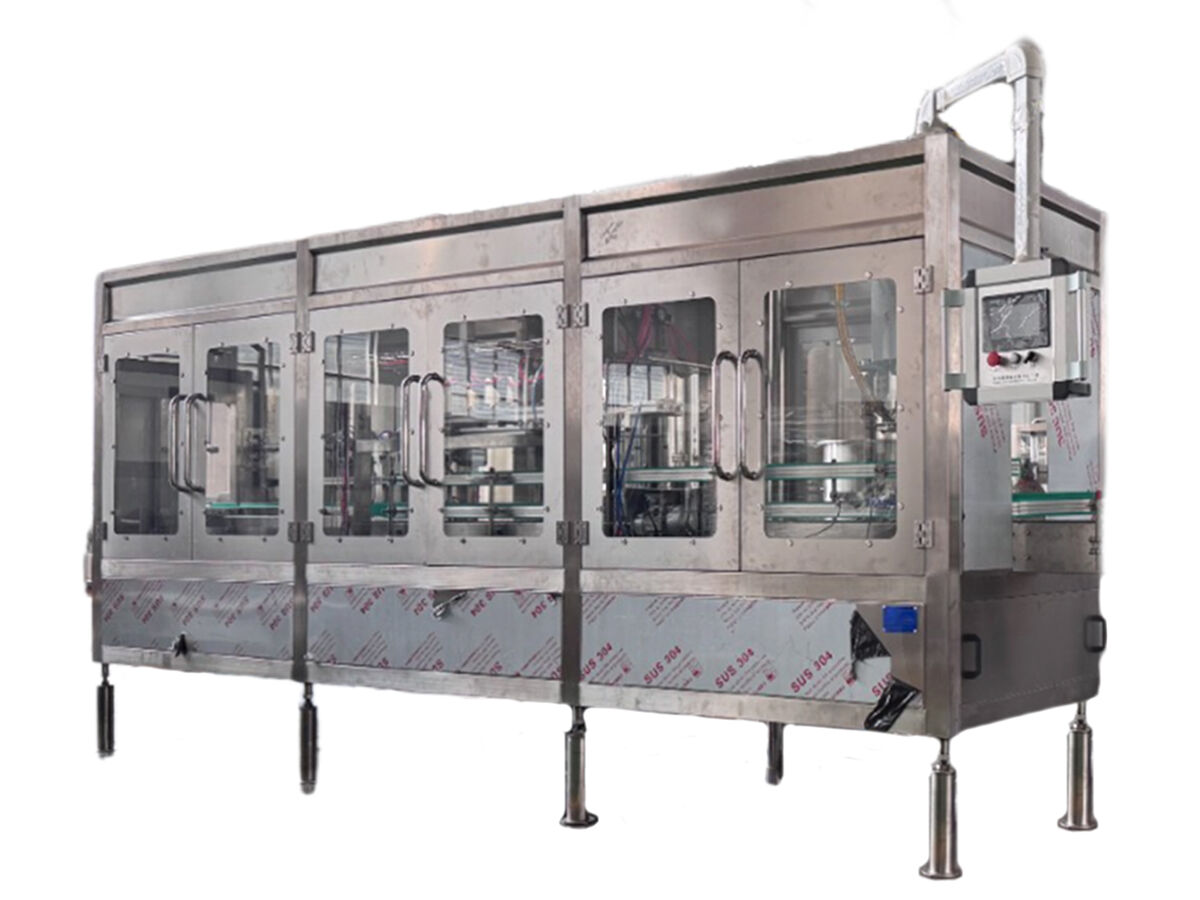
How PLC Automation Ensures Precision in Automatic Bottle Filling Machines
Understanding PLC-Controlled Automation in Bottle Filling
PLCs act like the brain behind today's automatic bottle filling machines, controlling everything from those fancy servo pistons to the optical sensors and moving parts on the conveyor belts. These industrial computers run their programs to time those valves just right, about every 2 milliseconds actually, all while keeping track of how much liquid goes into each container using flow measurements in real time. When manufacturers install these closed loop feedback systems, as seen in Datong Machinery research from last year, the PLCs can tweak things like pressure settings and valve opening times up to 400 times every second. This keeps the fill accuracy within plus or minus 0.05%, which is way better than what humans could manage manually. The result? Less wasted product since giveaway drops below half a percent, and factories can crank out over 24 thousand bottles an hour when making fizzy drinks.
Calibration and Control Mechanisms Behind ±0.05% Filling Accuracy
Getting that pharmaceutical level of accuracy isn't something manufacturers achieve overnight. It takes several layers of calibration work across different systems. Modern flow meters capable of 0.01% resolution send their readings to PLC controllers, which then check these against encoder readings from those rotating filling heads. Meanwhile, temperature adjusted load cells keep an eye on fill weights as they happen, automatically making corrections when there's even a slight deviation beyond 0.3mL threshold. Industry reports show machine builders are hitting around 99.98% repeatability rates in their test environments. This kind of precision is made possible through advanced servo motor technology that can place nozzles with incredible accuracy down to just 5 micrometers during fast production runs. Such tight tolerances make all the difference in meeting strict quality control requirements for sensitive pharmaceutical applications.
Core Components and Operational Workflow of an Automatic Bottle Filling Machine
Key mechanical and electrical components of the filling system
Today's automatic bottle filling systems bring together advanced engineering and industrial automation to hit volume accuracy around ±0.1%. At their heart are several key parts: stainless steel rinsing units help keep things clean, filling nozzles controlled by servos adjust flow as needed, and capping heads apply between 2 and 15 Newton meters of force to seal bottles properly. On the electrical side, programmable logic controllers coordinate all sorts of components including air valves, motor movements, and those little light sensors that spot where each bottle sits with pretty much 0.2mm precision. According to recent research, nearly all production problems come down to either sensors out of alignment or old worn out O-rings on the nozzles. This highlights why using materials safe for food contact matters so much when moisture levels run high in packaging facilities (as noted in Packaging Digest last year).
Step-by-step workflow: From bottle infeed to sealing integration
The automated cycle begins with empty bottles entering the system via a rotary indexing conveyor operating at 150–400 containers/minute. After infrared verification of bottle integrity, a two-stage process initiates:
- Pre-rinse phase: 2–3 bar compressed air removes particulates
-
Volumetric filling: Twin-lane nozzles dispense liquids at 0.5–5 L/sec with automatic viscosity compensation
Cap application occurs within 0.8 seconds of filling completion, utilizing magnetic torque control to ensure consistent seal integrity. Integrated weight-check stations immediately downstream reject underfilled units, maintaining <0.05% defect rates in pharmaceutical-grade installations.
Smart Sensors and IoT-Driven Intelligence in Modern Filling Systems
Real-Time Monitoring Through Smart Sensors and IIoT Connectivity
Modern automatic bottle filling machines deploy 12–15 smart sensors per filling head to monitor variables like viscosity, pressure, and fill volume at speeds exceeding 300 containers per minute. Industrial IoT (IIoT) connectivity feeds this data into centralized control systems that adjust nozzle flow rates within 0.05-second intervals, maintaining accuracy within ±0.3% of target volumes. For temperature-sensitive products like pharmaceuticals, real-time viscosity detection prevents underfills caused by thermal expansion, reducing waste by up to 40% compared to manual systems. Manufacturers implementing IIoT-driven automation report 92% fewer regulatory compliance errors due to automated documentation generated through ERP integrations.
Predictive Maintenance and Machine-to-Machine Communication
Advanced systems leverage machine-to-machine communication to predict component wear 3–6 weeks before failure using vibration analysis and thermal imaging sensors. A 2023 study revealed that smart filling lines achieve 98.7% uptime by analyzing historical performance data to schedule maintenance during planned downtime. Cloud-based predictive models reduce unplanned stoppages by correlating motor current signatures with bearing degradation patterns, extending equipment lifespan by 25% in high-speed beverage applications. This intelligence allows plants to preemptively replace seals or pumps before leaks disrupt production, saving $740k annually in downtime costs (Ponemon 2023).
Data Tracking, Traceability, and Compliance in PLC-Controlled Production
Logging Batch Data, Fill Volumes, and Performance Metrics
Today's PLC controlled bottle filling machines keep track of batch numbers, measure fill amounts down to ±0.03 mL, and record how long each cycle takes thanks to built-in sensors and SCADA systems. All this detailed information helps companies meet ISO 9001 standards because it creates records that can be checked during audits. For places making medicines or other sensitive products, this kind of tracking has become essential since most manufacturers want complete visibility into every batch they produce. Top equipment makers are adding features like QR code scanners and RFID readers these days so that actual bottles get connected directly to their digital records on the production line. This cuts down on mistakes from people entering data manually by around half according to recent industry reports from PMMI in 2023.
Ensuring Regulatory Compliance and Managing Data Security Risks
PLC-driven systems address FDA 21 CFR Part 11 and EU Annex 11 mandates through encrypted audit trails and electronic signature capabilities. Three security layers mitigate risks:
- Role-based access controls limit parameter changes to authorized technicians
- End-to-end AES-256 encryption protects production data in transit and at rest
- Automated backups preserve records for the 7+ years required in GMP environments
Regular firmware updates and air-gapped historian servers further shield automatic bottle filling machines from evolving cyberthreats while maintaining ±10 ms response times for real-time monitoring.
Evaluating ROI: Long-Term Benefits of Smart Automatic Bottle Filling Machines
Cost-benefit analysis: High initial investment vs. operational savings
While PLC-controlled automatic bottle filling machines require a capital investment of $150,000–$500,000 (IBISWorld 2024), their 3–5 year ROI stems from three operational efficiencies:
- 47% labor cost reduction by automating bottle positioning, filling, and capping
- ±0.5% product waste via real-time flowmeter adjustments (±0.03 mL accuracy)
- 18% energy savings through variable frequency drives (VFDs) and smart idle modes
A 2024 McKinsey automation study found manufacturers using IoT-connected filling systems achieve 20–30% higher EBITDA margins by year 3 through reduced downtime and predictive maintenance alerts.
Customization and scalability for diverse industry applications
Modern systems support <6-minute format changeovers through:
| Feature | Beverage Use Case | Pharma Use Case | ROI Impact |
|---|---|---|---|
| Swappable filler heads | 250ml–5L bottles | 10–100ml vials | +35% line utilization |
| CIP/SIP integration | Dairy products | Sterile solutions | -90% cleaning costs |
| Hybrid pneumo-servo valves | Carbonated drinks | High-viscosity gels | +22% batch consistency |
As production scales, manufacturers adding modular PLC expansions report 5.2% annualized capacity growth (IBISWorld 2023) without major retrofits. This future-proof design aligns with FDA 21 CFR Part 11 and EU GMP Annex 11 compliance frameworks.
Frequently Asked Questions
What is a PLC and how does it contribute to bottle filling accuracy?
A Programmable Logic Controller (PLC) acts as the main control system within bottle filling machines, ensuring precision by managing servo pistons, optical sensors, and conveyor components. It adjusts settings like pressure and valve openings in real time to maintain filling accuracy within ±0.05%.
How do smart sensors enhance the filling process?
Smart sensors enable real-time monitoring of variables such as viscosity, pressure, and fill volume. They communicate with central control systems to make immediate adjustments, improving accuracy and efficiency in the filling process.
What are the cost benefits of using automated bottle filling machines?
Automated filling machines reduce labor costs by 47%, minimize product waste to ±0.5%, and save energy by 18% through advanced automation technologies. These factors contribute to an effective ROI within 3-5 years despite high initial investments.
Table of Contents
- How PLC Automation Ensures Precision in Automatic Bottle Filling Machines
- Core Components and Operational Workflow of an Automatic Bottle Filling Machine
- Smart Sensors and IoT-Driven Intelligence in Modern Filling Systems
- Data Tracking, Traceability, and Compliance in PLC-Controlled Production
- Evaluating ROI: Long-Term Benefits of Smart Automatic Bottle Filling Machines
- Frequently Asked Questions