
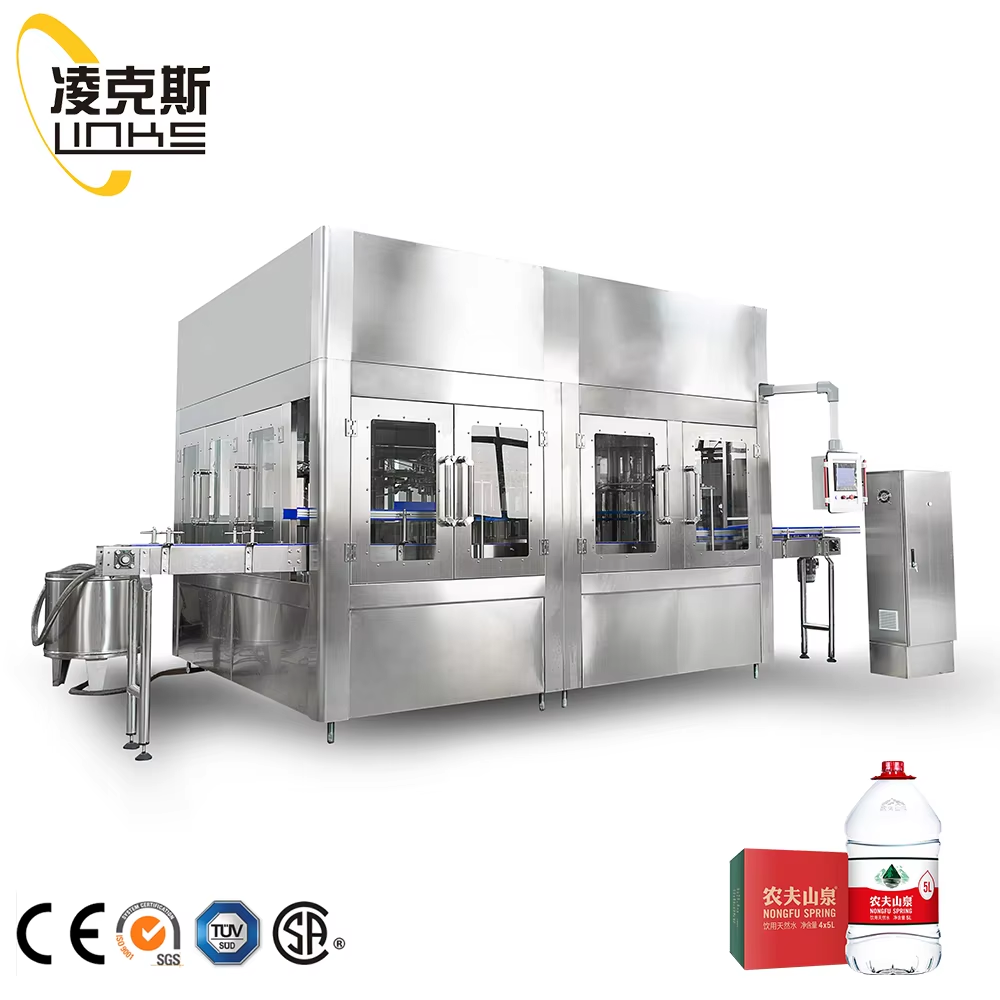
Automatic Bottle Filling Machines: A Key Driver in How Automation Transforms Bottling Efficiency
Bottle filling machines that run automatically have changed manufacturing floors completely, allowing for fast paced work without needing much hands on help from workers. These newer models come with special motors called servos and cameras that guide where things go, so they can fill containers accurately within about half a percent either way. That cuts down wasted products by roughly 18% when compared to old fashioned manual methods according to MarketsandMarkets data from last year. For drug makers specifically, getting those measurements right matters a lot since even small variations could affect patient health outcomes. Plus these automated setups work around the clock too. Factories that switched over from halfway automatic systems saw their bottling speed jump nearly 45% better performance overall based on what some companies shared in a recent industry report published in 2024.
Integration With Upstream and Downstream Packaging Systems
Getting all these parts to work together smoothly makes a big difference in how well automated filling systems perform. Today's equipment connects bottle unscramblers, cappers, and labelers via central control panels, which really cuts down on time lost during transfers somewhere around 70 to almost 90 percent. According to some industry research from last year, when these systems process about 1,200 bottles every minute they stay running at least 99.2% of the time. That's way better than what we see with separate machines that only hit around 82% reliability. The ability to talk across different components helps prevent slowdowns throughout production lines. This matters a lot for companies in food and drink manufacturing where they deal with more than ten different product types each day and need their machinery to keep pace without constant interruptions.
Case Study: Integrated Solutions in Action
One major player in the packaging machinery field recently installed an end-to-end automated system that handles filling, adds nitrogen purge protection, and applies twist caps all in one seamless process for carbonated drinks. What did this automation achieve? Downtime dropped around 40 percent, and production rates jumped to nearly 29 thousand bottles per hour without sacrificing much on precision either—the fill accuracy stayed at 99.4%. According to a recent beverage industry report from last year, these kinds of integrated systems cut down changeover time between products by somewhere between two thirds and three quarters when compared with traditional modular equipment arrangements. And let's not forget the money saved too. The Ponemon Institute found out that companies typically lose about seven hundred forty grand every year just because their lines keep stopping unexpectedly.
Maximizing Throughput: High-Speed Performance and Bottles per Hour
Measuring High-Speed Bottle Filling Machine Throughput Under Real-World Conditions
Getting accurate throughput measurements requires considering all sorts of real world factors such as how viscous the liquid is, what shape the containers are, and whether everything works together properly upstream and downstream. Some beverage production lines can hit speeds around 1,200 bottles per minute when tested in controlled lab settings, but in reality most plants manage somewhere between 900 to about 1,050 BPM because there are always those little delays happening with conveyor belts not lining up perfectly or air pressure going up and down. A recent study looking at bottling efficiency back in 2023 found something interesting too - when everything along the entire production line syncs up well, this actually impacts overall throughput by roughly 23 percent more than just focusing on how fast the fillers themselves operate. So companies really should look at their whole operation instead of just isolated parts when trying to boost performance.
Multi-Head Fillers for Increased Throughput: Design and Performance Metrics
To scale output without expanding footprint, modern automatic bottle filling machines use 24–48 filling heads. Rotary systems with staggered nozzles maintain 98% flow consistency across heads, while linear designs emphasize rapid indexing. Key performance metrics include:
- Cycle Time: ≈0.5 seconds per fill (200ml water)
- Changeover Efficiency: ≈15 minutes for format adjustments
- Energy Consumption: 0.8–1.2 kWh per 1,000 bottles
Servo-Controlled Filling Systems Enabling Dynamic Speed Adjustments
Servo-driven actuators adjust fill speeds by ±30% in real time to match shifting line demands. This flexibility prevents overfills during slowdowns and maximizes flow when upstream buffers are replenished. In carbonated beverage applications, dynamic control reduces foam-related waste by 18% compared to fixed-speed systems.
Industry Benchmark: 600–1,200 Bottles per Minute in High-Performance Machines
Top manufacturers now consider 750 BPM the baseline for high-speed automatic bottle filling machines, with advanced models reaching 1,200 BPM for low-viscosity products. A 2024 industry report highlights a 60,000-bottle-per-hour (1,000 BPM) installation that maintained 99.2% accuracy over 12 months of continuous operation.
Balancing Speed and Stability in Ultra-High-Speed Operations
Achieving speeds above 1,000 BPM requires specialized engineering:
- Container Guidance Systems: Laser-aligned rails minimize wobble
- Anti-Foam Sensors: Trigger instant flow cutoff during turbulent fills
-
Thermal Management: Liquid-cooled pumps maintain <±0.5°C temperature variance
These features allow pharmaceutical manufacturers to run vaccine lines at 800 BPM with ≈0.3% volume deviation—representing a 40% throughput improvement over previous-generation systems.
Ensuring Precision: Calibration and Fill Level Accuracy
Getting the right amount of liquid into each bottle matters a lot for keeping products consistent across batches and protecting brand reputation. Even small mistakes matter here - something as tiny as half a millimeter off in fill level can result in bottles that don't meet standards. Manufacturers end up losing around seven hundred forty thousand dollars every year just dealing with these issues according to research from Ponemon Institute back in 2023. That's why many plants have started adopting closed loop control systems lately. These advanced setups constantly monitor what's happening during the filling process through sensors and make adjustments on the fly. The results speak for themselves: factories report cutting down on overflows by nearly ninety two percent when switching from old fashioned manual checks to these automated solutions.
The Impact of Fill Level Detection Accuracy on Product Consistency
Advanced photoelectric sensors and load cells deliver ±0.1% volumetric accuracy across a wide range of viscosities—from thin liquids to dense suspensions. This level of precision ensures compliance with strict FDA and EU packaging regulations while minimizing overfills.
Reducing Waste Through Precision Calibration and Closed-Loop Control
| Calibration Type | Waste Reduction | Frequency |
|---|---|---|
| Automated nozzle checks | 37% | Every 15 minutes |
| Full system calibration | 68% | Weekly |
Leading facilities implement daily calibration protocols using AI-powered diagnostics that predict sensor drift before errors occur. One pharmaceutical company reduced product giveaway by 19% in 2023 through predictive adjustments.
Real-World Results: 99.7% Fill Accuracy in a 2023 Beverage Plant Case
A Midwest bottling facility achieved 99.7% fill accuracy across 12 million units using servo-controlled volumetric pumps and automated checkweighers. The system’s self-calibrating design maintained ±2 mL consistency despite temperature swings and batch variations, illustrating how integrated sensor networks sustain precision in dynamic environments.
Minimizing Downtime with Predictive Maintenance and Automation
Predictive Maintenance Powered by Real-Time Monitoring and Analytics
Today's automated bottle filling systems are getting smarter thanks to predictive maintenance approaches that combine internet connected sensors with machine learning algorithms. These machines constantly check things like how much the motors vibrate (keeping it under 2.5 mm/s is ideal), track hydraulic pressure changes within about 1.2% accuracy, and watch out for when bearings start getting too hot (the red flag comes at 85 degrees Celsius). With all this data flowing in, artificial intelligence can actually predict when parts might fail well over three days before anything goes wrong. A real world case study from a soft drink manufacturer shows just how effective this can be they cut down on unplanned stoppages by almost 40% once they started analyzing vibration patterns on their 12 different filling stations throughout the plant.
Reducing Human Intervention Through Automated Bottle Filling Systems
Automation reduces reliance on manual oversight via closed-loop control. Servo-driven actuators self-adjust fill volumes based on weight sensors, while machine vision inspects over 1,200 bottles per hour for defects. A 2023 deployment at a European dairy plant showed a 92% reduction in manual calibration tasks thanks to PLC-controlled feedback mechanisms.
AI-Driven Alerts Cutting Unplanned Stops by Up to 40%
Advanced algorithms analyze historical data alongside real-time inputs to generate prioritized maintenance alerts. As shown in a Predictive Maintenance Study by industrial researchers, this approach reduces emergency repairs by 40% in high-speed bottling lines. Systems now detect early signs of pump cavitation or seal wear, preventing disruptions before they occur.
Key Implementation Steps:
- Install vibration sensors on rotary fillers and capping heads
- Integrate PLCs with cloud analytics platforms
- Train maintenance teams on AI-generated work orders
- Establish spare parts inventory thresholds based on failure probability models
Fully Integrated Filling, Capping, and Labeling Systems
Modern automatic bottle filling machines serve as the core of fully integrated packaging lines that combine filling, capping, and labeling into a single continuous process. This unified approach eliminates manual transfers between stations, reducing throughput delays by 18–22% compared to segmented systems (Packaging Trends Report 2023).
Seamless transition from filling to automated capping and labeling
Leading systems use synchronized conveyors and robotic arms to ensure uninterrupted movement between stages. Recent advancements in integrated packaging solutions enable direct transfer from filling nozzles to capping heads without intermediate buffering, achieving 99.4% transfer success rates in controlled settings.
Optimizing line efficiency with synchronized process control
Unified control architectures monitor all subsystems via a single interface, allowing real-time adjustments for container variations or speed mismatches. Servo-driven coordination between filling valves and capping torques cuts product waste by 0.7% per shift while sustaining 1,200 containers per minute.
Case study: Integrated system performance in a pharmaceutical facility
A 2023 deployment at a European injectables plant achieved 34% faster changeovers and 29% higher OEE scores compared to older decoupled systems. Continuous-motion integration reduced energy consumption by 11% by eliminating start-stop cycles, all while maintaining ISO Class 5 cleanliness standards throughout packaging operations.
FAQ Section
What are the benefits of using automatic bottle filling machines?
Automatic bottle filling machines enhance production efficiency, reduce labor costs, and improve fill accuracy. They support seamless integration with upstream and downstream systems, minimizing downtime and product waste.
How does servo-control improve bottling operations?
Servo-control allows for dynamic speed adjustments, optimizing fill volumes and reducing foam-related waste. This ensures consistent performance across varying production demands.
What role do predictive maintenance and AI play in modern bottling operations?
Predictive maintenance, enhanced by AI and real-time monitoring, reduces unexpected downtimes by anticipating equipment failures. This approach improves system reliability and efficiency.
How does system integration benefit bottling processes?
System integration streamlines entire production lines, reducing manual transfers and synchronization issues. This results in improved throughput, reduced waste, and higher overall equipment effectiveness (OEE).
Table of Contents
- Automatic Bottle Filling Machines: A Key Driver in How Automation Transforms Bottling Efficiency
- Integration With Upstream and Downstream Packaging Systems
- Case Study: Integrated Solutions in Action
-
Maximizing Throughput: High-Speed Performance and Bottles per Hour
- Measuring High-Speed Bottle Filling Machine Throughput Under Real-World Conditions
- Multi-Head Fillers for Increased Throughput: Design and Performance Metrics
- Servo-Controlled Filling Systems Enabling Dynamic Speed Adjustments
- Industry Benchmark: 600–1,200 Bottles per Minute in High-Performance Machines
- Balancing Speed and Stability in Ultra-High-Speed Operations
- Ensuring Precision: Calibration and Fill Level Accuracy
- Minimizing Downtime with Predictive Maintenance and Automation
- Fully Integrated Filling, Capping, and Labeling Systems
- FAQ Section