
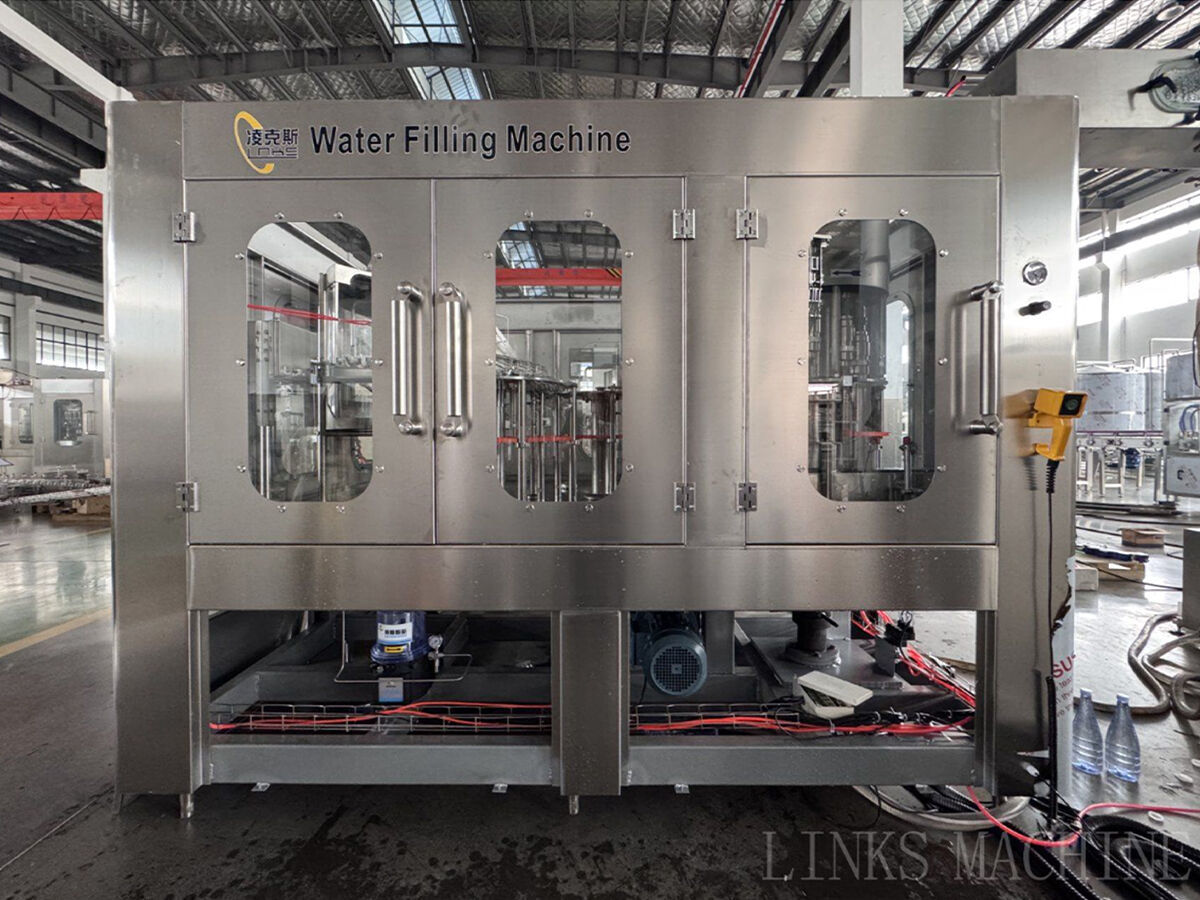
Understanding Precision Control in Automatic Bottle Filling Machines
What is Fill Volume Accuracy and Why It Matters in Liquid Filling
When it comes to fill volume accuracy, we're talking about how well an automatic bottle filler actually puts the right amount of liquid into each container every single time. Small mistakes matter a lot here too. A difference of just plus or minus 1.5 percent might not sound like much, but for companies making drinks on a medium scale, this adds up to around seven hundred forty thousand dollars worth of wasted product each year according to Ponemon's research in 2023. The stakes get even higher when looking at regulated sectors such as pharmaceutical manufacturing. Nearly all those products pulled off shelves because something went wrong? Well, the FDA reported back in 2022 that almost 99% of these recalls were directly linked to problems with incorrect filling amounts.
Impact of Precision on Product Consistency, Waste Reduction, and Regulatory Compliance
Precision filling systems cut down on overfilling by about 23% each year, all while staying within important industry standards like USP chapter 1151 which applies to injectable medications. Looking at recent data from beverage manufacturing in 2024, facilities equipped with servo controlled fillers hit around 99.4% accuracy when it comes to matching label claims. That's quite a jump from the roughly 93.1% accuracy seen with older mechanical systems. Getting these numbers right matters a lot financially too. Cosmetic companies can expect to pay around $122k on average if they get caught selling luxury skincare items that don't meet their labeled contents. These figures come straight from EU regulations on cosmetics dating back to 2023.
The Trade-Off Between Filling Speed and Accuracy in High-Volume Production
The standard line speed for carbonated drinks sits around 400 bottles per minute, but when manufacturers push past 500 bottles per minute, they typically see about a 3% variation in volume measurements. The newer equipment on the market fights back against this issue through real time adjustments for liquid thickness and smart prediction software, which helps achieve nearly perfect accuracy even at 450 bottles per minute for milk products. Still, quite a few companies aren't convinced by all this tech talk. About 12 out of every 100 manufacturers continue to chase faster production speeds instead of worrying so much about getting each bottle just right. And guess what happens? Their product returns go up by roughly 4.1 percentage points compared to others who care more about precision (according to Packaging Digest from last year).
Core Technologies Enabling Precision in Automatic Bottle Filling Machine Operations
Servo Motor Control for Consistent and Repeatable Dosing Accuracy
Today's automated bottle fillers rely on servo motors to hit those super tight dosing targets, usually within about half a percent of what they're supposed to be. This kind of precision matters a lot in industries where mistakes cost money, think pharmaceutical manufacturing for instance. Old school pneumatic systems just can't keep up when pressure changes happen because they tend to drift out of calibration over time. Servo driven equipment stays rock solid accurate though, holding position down to 0.1 millimeters even when running through 150 cycles every single minute. Some recent research from Fluid Dynamics back in 2023 found that using these torque controlled servos cut down on overfill problems by nearly 40% specifically for fizzy drinks production lines. That translates into real savings too, around sixteen thousand dollars less wasted product each year per production line according to their calculations.
PLCs and Touchscreen Interfaces: Enhancing Operational Control and Repeatability
When programmable logic controllers (PLCs) work together with industrial HMIs, they allow for real time adjustments to liquid viscosity during processing. This becomes really important when dealing with products that react badly to temperature changes, think syrups or oils for instance. Operators now have space to save hundreds of different recipes, each one tailored with specific settings like how fast things should heat up or where exactly to stop the process. No need anymore for all those tedious manual changes between production runs. According to recent industry data from the 2024 Automation Efficiency Report, companies implementing these PLC based systems saw around 72 percent fewer mistakes during setup procedures. Makes sense doesn't it? Less error means better product quality and happier customers overall.
Multi-Head Filling Systems: Scaling Accuracy Without Compromising Performance
When dealing with operations that handle over 300 bottles each minute, rotary fillers equipped with between 16 to 24 nozzles and individual servo controls can keep accuracy within about 1% thanks to their closed loop feedback system. These machines actually eliminate the risk of total system failure that comes with traditional volumetric piston fillers. Plus they can work with different sized containers at the same time without any issues. Something new has come along recently too - this thing called split stream technology lets each filling head be calibrated separately. What does that mean practically? Well in dairy production settings, these modern systems maintain around 99.2% consistency throughout an entire 8 hour shift. That's pretty impressive when compared to older multi head systems which typically only hit about a third of that stability level.
Real-Time Monitoring and Error Detection for Sustained Precision
Integration of sensors and vision systems for live fill-level monitoring
Modern automatic bottle filling systems combine several technologies including load cells, electromagnetic flow meters, and advanced machine vision to maintain around 0.5% accuracy in fill volumes. The system actually takes more than 1,200 measurements every single minute. High speed cameras watch the liquid surface at microscopic levels while infrared sensors make sure each container is properly positioned before filling begins. A recent study from Packaging Digest in 2023 showed that these multiple sensor setups cut down on fill errors by about 82% when compared to what humans can do manually. This kind of precision matters a lot in the pharmaceutical industry where strict standards like USP 697 must be followed for proper medication dosing.
Detecting and correcting deviations before capping to minimize waste
The latest systems employ smart algorithms that track changes in fluid viscosity and detect when foam starts forming during the filling process. If there's a deviation greater than 1.2% from what's expected, pneumatic actuators kick in to tweak how fast the nozzles pull back and send any containers that didn't fill properly straight to the reject line. These automated corrections have pushed first pass yields up to around 99.7% according to recent industry standards, which means manufacturers avoid about 95% of those pesky overfill situations that mess up labeling machines all the time. For food processors dealing with tight margins, this kind of precision makes a huge difference in both quality control and operational efficiency.
Limitations of current detection systems under high-speed operating conditions
At speeds above 500 bottles per minute, nanosecond sensor latency can accumulate into 2–3mm of positional drift along conveyor lines. The Journal of Automation Technology (2022) notes that current vision systems miss 1.5% of fill defects when container reflectivity varies beyond 30 gloss units, necessitating secondary verification for premium cosmetic and nanoemulsion products.
Calibration and Maintenance: Ensuring Long-Term Accuracy
Routine calibration procedures for maintaining fill precision
Keeping equipment properly calibrated makes all the difference when it comes to consistent results. According to industry findings, performing monthly checks helps maintain fill volume accuracy around ±0.5%. This matters a lot for meeting those strict FDA and ISO 9001 requirements that food and drug manufacturers must follow. Techs typically work with certified reference weights alongside laser measuring devices to check things like nozzle alignment, how pressure settings hold up, and whether valves respond quickly enough. If anything drifts past that 1% threshold, they need to fix it right away before production continues. Companies that stick to weekly calibration schedules saw their product recall problems drop by about 37% versus businesses only checking every three months, according to a recent 2023 report looking at measurement accuracy across different industries.
Sensor recalibration and system checks to prevent drift over time
The need for regular recalibration of load cells and flow sensors every two weeks helps counteract issues like temperature changes and equipment wear over time. Looking at data across about 120 different facilities, there were cases where viscosity sensors that hadn't been calibrated properly led to around 12% too much syrup being added after roughly 500 hours of operation. Newer systems now handle this automatically during production switchovers, checking weight measurements against visual inspections to spot tiny leaks or unexpected foam buildup. Plants using this double check approach saw their material losses drop by approximately 15%, according to recent industry reports from the bottling sector in 2024.
Maximizing Throughput While Maintaining Fill Accuracy
Strategies for optimizing filling speed without sacrificing precision
Peak performance in automatic bottle filling machines comes from adaptive speed control and split-second dosing adjustments. Top manufacturers use variable-speed servo pumps that operate 34% faster than traditional pneumatic systems (Packing World 2023), combined with dynamic recipe presets for varying viscosities. The 2024 Material Handling Report identifies three key strategies:
- Tiered filling sequences: Rapid initial pour (85% capacity) followed by precision micro-dosing
- Simultaneous container indexing: Overlapping transport and filling cycles to reduce idle time
- Self-adjusting nozzles: Automatic diameter adaptation ensuring ±0.5ml accuracy across container types
Case study: Dual-mode systems balancing speed and accuracy
A leading manufacturer demonstrated how 12-head rotary fillers with real-time viscosity compensation maintain 99.8% volume accuracy at 400 bottles per minute. Their hybrid system combines:
- Burst-mode filling: 120ml/sec initial flow rates for low-viscosity liquids
- Pulsed dispensing: 50ms micro-dosing intervals for syrups and creams
This two-phase method reduced product waste by 17% compared to single-speed setups and achieved 22% faster cycle times than industry averages. Field testing confirmed 99.4% accuracy retention after 3,000 operating hours without recalibration.
FAQ Section
What is fill volume accuracy?
Fill volume accuracy refers to the precision with which an automatic bottle filling machine dispenses the intended amount of liquid into containers.
Why is precision in bottle filling important?
Precision affects product consistency, reduces waste, and ensures compliance with industry regulations.
How do servo motors contribute to dosing accuracy?
Servo motors provide consistent control, maintaining accuracy even under varying pressure conditions.
What are some strategies to optimize filling speed while maintaining accuracy?
Strategies include tiered filling sequences, simultaneous container indexing, and self-adjusting nozzles.
How often should calibration checks be performed?
Calibration checks should be performed monthly to maintain fill precision and comply with regulatory standards.
Table of Contents
- Understanding Precision Control in Automatic Bottle Filling Machines
- Core Technologies Enabling Precision in Automatic Bottle Filling Machine Operations
- Real-Time Monitoring and Error Detection for Sustained Precision
- Calibration and Maintenance: Ensuring Long-Term Accuracy
- Maximizing Throughput While Maintaining Fill Accuracy
- FAQ Section