Key Components of a Modern Soft Drinks Bottling Line
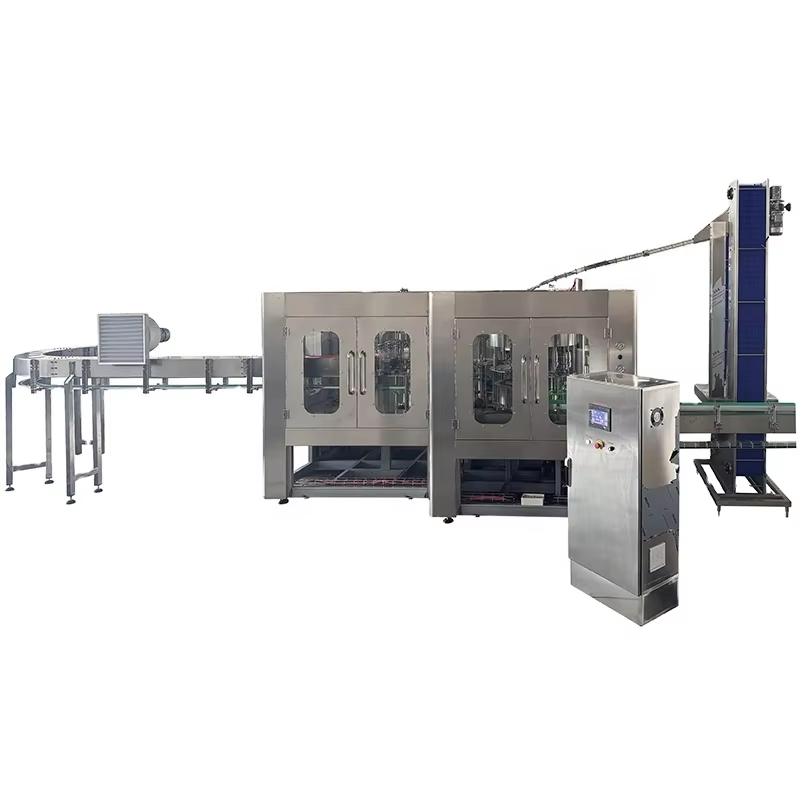
Modern soft drinks bottling lines rely on three critical subsystems working in concert to achieve consistent output, quality, and regulatory compliance.
Precision Filling Systems for Carbonated and Non-Carbonated Soft Drinks
Filling accuracy varies significantly between beverage types due to differences in viscosity and carbonation. Carbonated drinks require counter-pressure fillers that maintain CO₂ volumes within product-specific ranges (typically 1–4 volumes), while non-carbonated beverages use gravity or volumetric filling. Modern systems integrate flow meters and load cells to deliver ±0.5% volume accuracy—preventing product giveaway and ensuring batch consistency across high-volume runs.
High-Speed Capping Units Ensuring Hermetic Seals and Regulatory Compliance
Capping stations must create oxygen barriers below 0.1% to preserve shelf life while operating at speeds exceeding 30,000 caps per hour. Twist-off closures for PET bottles demand different torque profiles than press-on crowns for glass containers. Advanced units incorporate vision systems that verify seal integrity in real time and automatically reject faulty containers. Compliance with FDA 21 CFR Part 129 requires stainless steel contact surfaces and full Clean-in-Place (CIP) compatibility—a standard embedded in modern capper design.
Automated Labeling Stations for Brand Accuracy and Labeling Regulation Adherence
Contemporary labeling systems apply pressure-sensitive or cut-and-stack labels with registration accuracy within ±0.2 mm. Optical character verification confirms correct date coding and nutritional information placement on every unit. Recipe-based presets enable automatic format switching between bottle SKUs, eliminating manual reconfiguration. This automation prevents mislabeling incidents, which cost an average of $740,000 per recall event according to the Ponemon Institute’s 2023 study on food and beverage recalls.
Seamless Integration of Filling, Capping, and Labeling in Soft Drinks Bottling Lines
Synchronized Conveyor and Control Architecture for Continuous Flow
A modern soft drinks bottling line achieves continuous flow through tight synchronization of filling, capping, and labeling stations. The conveyor system maintains precise, consistent bottle movement, while a centralized control architecture dynamically adjusts feed rates to match each station’s cycle time—eliminating jams and idle wait time. For instance, if filler speed drops due to a change in product viscosity, the capper and labeler automatically decelerate in response. This adaptive coordination transforms discrete machines into a single responsive production unit, minimizing manual handling and reducing contamination risk—key priorities for beverage safety and GMP adherence.
PLC and HMI Coordination Across Stations to Minimize Downtime and Rejects
Programmable logic controllers (PLCs) and human-machine interfaces (HMIs) serve as the central nervous system of the integrated line. They collect and interpret real-time sensor data—including fill level, cap torque, and label alignment—and trigger immediate corrective actions. If the filler detects an overfill, the PLC signals downstream stations to reject that unit before it reaches the capper, avoiding potential jams. Likewise, label misalignment triggers instant HMI alerts for operator review. This closed-loop coordination slashes unplanned stops and prevents cascading defects. PLC data logs also support root-cause analysis and predictive maintenance planning—enabling rejection rates consistently below 0.5%, with measurable savings in material, labor, and compliance overhead.
Operational Advantages of Fully Automated Soft Drinks Bottling Lines
Fully automated soft drinks bottling lines deliver substantial operational benefits by unifying filling, capping, and labeling into a single, high-speed, continuously monitored process. By eliminating manual intervention, these systems sustain throughput above 100 packs per minute without compromising quality. Real-time diagnostics and predictive maintenance reduce unplanned downtime, and many producers report nearly 50% reductions in labor costs post-automation. The result is higher output, lower operating expenses, and stronger alignment with global food safety standards—including FDA, BRCGS, and ISO 22000 requirements.
Selecting the Right Soft Drinks Bottling Line for Your Production Scale and Beverage Type
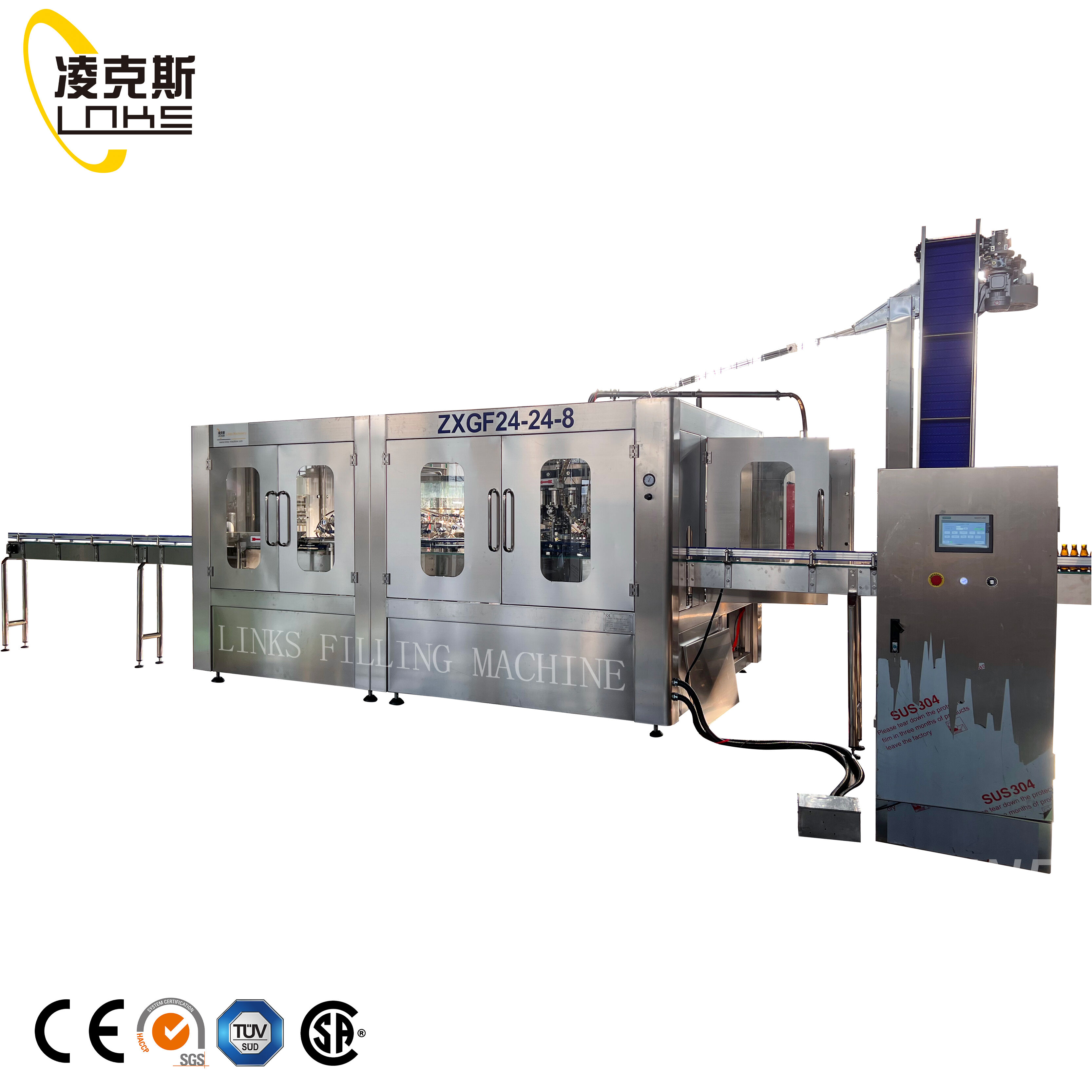
Choosing the right configuration for your soft drinks bottling line depends on production volume, product characteristics, and growth trajectory. Two primary approaches dominate the market: modular and turnkey systems.
Modular vs. Turnkey Configurations for Startups, Mid-Scale, and High-Volume Producers
Modular lines support phased investment—startups can begin with a core filler and add capping or labeling modules as demand scales. This approach suits evolving portfolios and limited initial capital. In contrast, turnkey lines provide a fully integrated solution from a single supplier, offering seamless synchronization, faster commissioning, and validated hygiene performance. Mid- to high-volume producers gain reliability, throughput consistency, and simplified regulatory validation—especially critical for carbonated beverages requiring precise CO₂ retention and fill control. While modular systems offer lower upfront cost, turnkey configurations deliver superior long-term efficiency, compliance assurance, and total cost of ownership for sustained operations.