
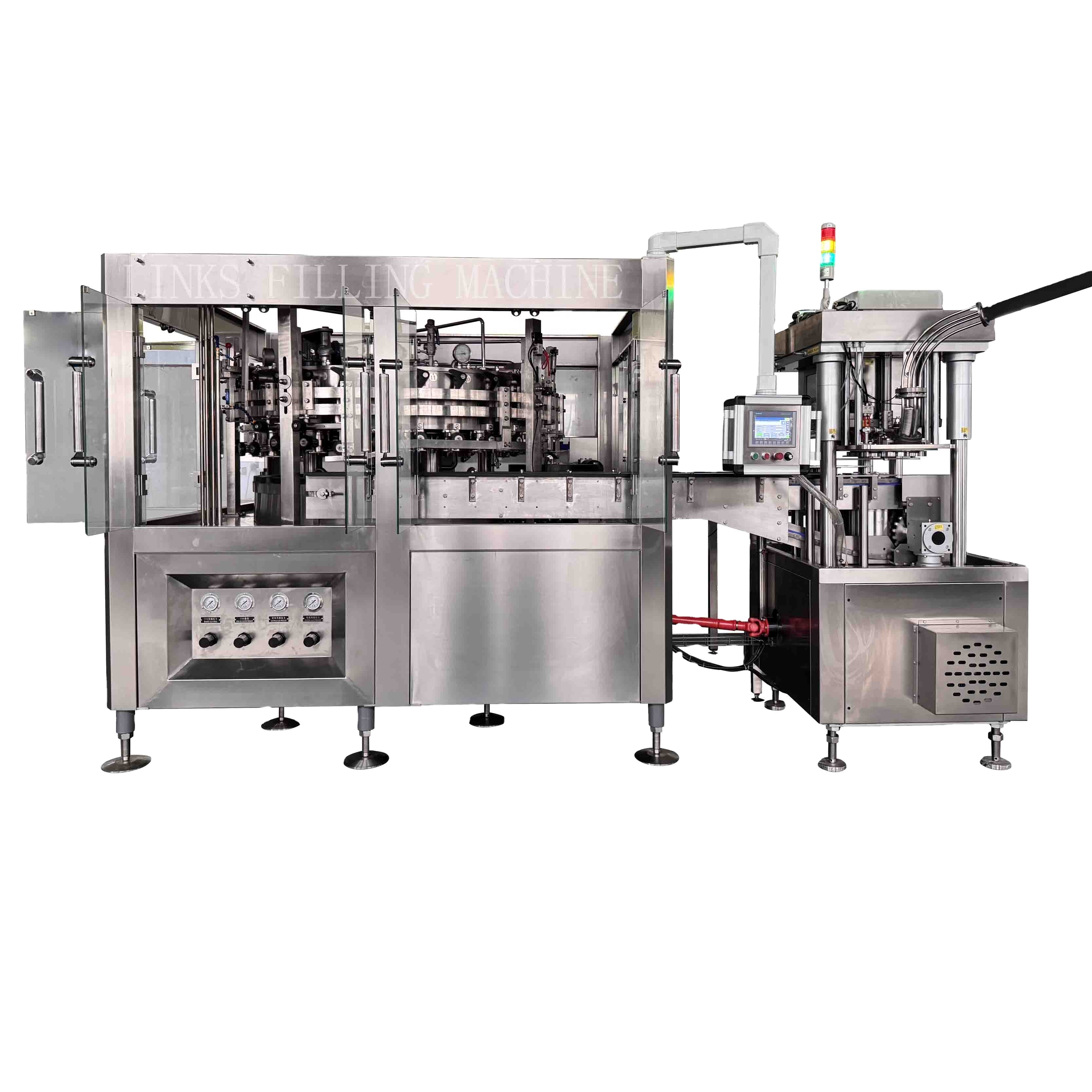
Bottle Flexibility Engineering in Modern Beer Filling Machines
Adaptive Filling Heads and Smart Sensor Systems for Variable Geometry
Modern beer filling machines must accommodate a growing range of bottle shapes, sizes, and neck finishes without sacrificing speed or accuracy. Adaptive filling heads use servo-driven mechanisms to adjust nozzle height, centering bell diameter, and lift cylinder stroke automatically for each container. Smart sensor systems—including laser profilers, ultrasonic level detectors, and force-feedback probes—measure bottle geometry in real time and send corrections to the machine controller. This closed-loop feedback enables seamless transitions between standard longnecks, custom flagons, and squat canisters in under one second. Quick-change components—such as interchangeable nozzle inserts and gripper pads—further reduce setup time. By integrating mechanical adaptability with digital sensing, breweries cut changeover downtime by up to 70% and eliminate manual reconfiguration errors, ensuring consistent fill performance across variable container runs.
Precision Calibration Protocols for Glass, PET, and Specialty Bottles
Each bottle material presents distinct physical properties that directly affect fill behavior and sealing reliability. Glass bottles are rigid and thermally conductive, requiring precise temperature management to prevent foaming; PET containers are lightweight and compressible, demanding lower fill pressures and gentler handling to avoid deformation; specialty formats—including ceramic, aluminum, and coated glass—introduce additional variables like surface friction and thermal expansion mismatch. Precision calibration protocols address these differences by storing dedicated parameter sets per container type: fill time, pre-evacuation vacuum level, counter-pressure ramp rate, and snifting duration. Operators recall profiles via an intuitive touch-screen interface, while smart sensors verify alignment between stored parameters and actual conditions. Embedded self-tuning algorithms then refine fill curves in real time—maintaining volume accuracy within ±0.2 mL and carbonation integrity within ±0.05 volumes CO₂—regardless of material. This systematic approach minimizes giveaway, reduces waste, and preserves sensory quality across diverse packaging formats.
Maintaining Fill Accuracy and Carbonation Integrity Across Materials
Modern beer filling machines must balance fill accuracy with carbonation retention across different container materials. Glass, PET, and aluminum all behave differently under pressure and temperature. Achieving consistent quality requires targeted engineering in every subsystem.
Counter-Pressure Control Strategies for Foaming-Sensitive Beer Filling
Foaming during filling compromises both volume accuracy and dissolved CO₂ levels. Counter-pressure filling mitigates this by pressurizing the container headspace before beer introduction—matching internal pressure to the beer’s carbonation level. Real-time sensors monitor pressure and temperature, enabling dynamic adjustments that prevent sudden gas nucleation. For high-carbonation styles, a controlled initial fill phase with gradual pressure release further suppresses foam formation. Electronic pressure regulators—now standard on advanced fillers—deliver tighter control than legacy mechanical units, reducing oxygen pickup and rejected bottles. Industry data shows optimized counter-pressure strategies cut foam-related waste by 60–80% while holding carbonation within ±0.05 volumes.
Sealing Reliability and Pressure Integrity with Multi-Material Containers
Seal integrity is foundational to carbonation retention and oxygen barrier performance. Container rigidity, rim geometry, and surface finish vary significantly across materials: glass offers dimensional stability but risks micro-cracks at the sealing surface; PET expands under pressure, requiring seals that maintain contact despite flexure; ceramic and aluminum demand tailored gasket formulations for reliable compression. Modern filling heads deploy adaptive sealing rings made from high-resilience elastomers that conform to minor surface irregularities. Pressure integrity validation now includes both static hold tests and dynamic fill-cycle verification—leak rates below 0.1 cc/min at operating carbonation pressure represent current best practice. A robust seal system also prevents uncontrolled pressure drops that trigger foaming, improving uptime and reducing product loss during container changes.
Operational Performance Comparison: Counter-Pressure vs. Gravity Beer Filling Machines
Throughput, O2 Ingress, and Beer Quality Outcomes by Filler Type
When choosing a beer filling machine, breweries must weigh operational trade-offs between counter-pressure and gravity systems. The table below summarizes key performance differences across three critical metrics.
| Metric | Counter-Pressure Filler | Gravity Filler |
|---|---|---|
| Throughput | High; multiple heads handle 12,000+ bottles per hour. | Moderate; limited by slower fill rates and foaming issues. |
| O2 Ingress | Low; CO₂ purging reduces dissolved oxygen below 20 ppb. | High; open filling exposes beer to air, raising DO levels. |
| Beer Quality | Excellent; preserves carbonation and extends shelf life. | Variable; carbonation loss and oxidation risk increase off-flavors. |
Counter-pressure machines excel in preserving beer integrity, while gravity fillers offer simpler operation at the cost of quality. For breweries prioritizing product consistency—especially those producing hazy IPAs, lagers, or other foam-sensitive or oxidation-prone styles—a counter-pressure beer filling machine remains the industry-standard choice.
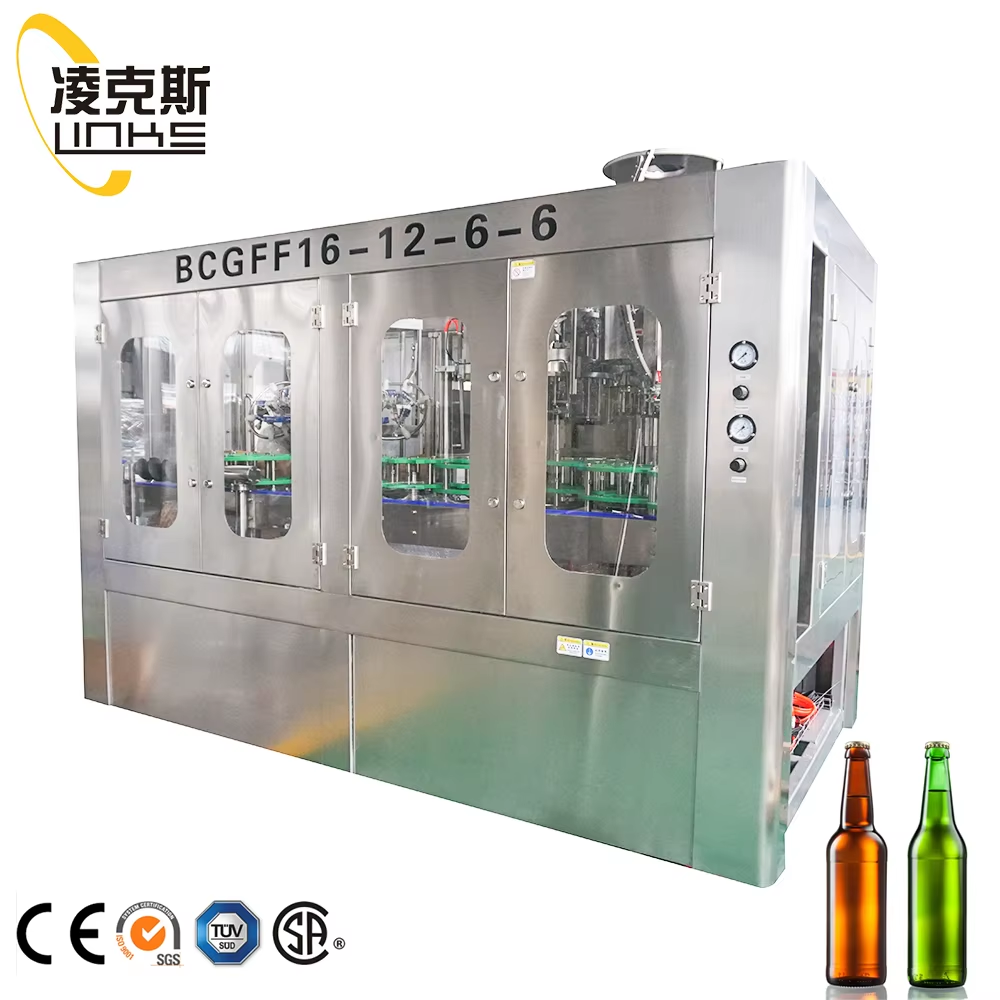
Scalable Adaptability: Quick Changeovers for Small and Mid-Sized Breweries
Small and mid-sized breweries often run multiple product styles in a single shift. A modern beer filling machine built with modular components and programmable logic controls can switch between bottle sizes, shapes, and materials in under ten minutes. Self-adjusting clamps, interchangeable nozzle plates, and recipe-driven settings eliminate manual reconfiguration. This flexibility allows brewers to respond quickly to seasonal releases, limited-edition batches, or contract brewing requests without losing production time. For a brewery scaling from 2,000 to 8,000 units per hour, a semi-automatic system with incremental add-ons—like an extra filler head or automatic capper—makes phased investment possible. Capital costs drop significantly compared to a full upgrade, while labor efficiency improves as automation reduces manual handling. The result is a production line that grows with demand, not against it.