
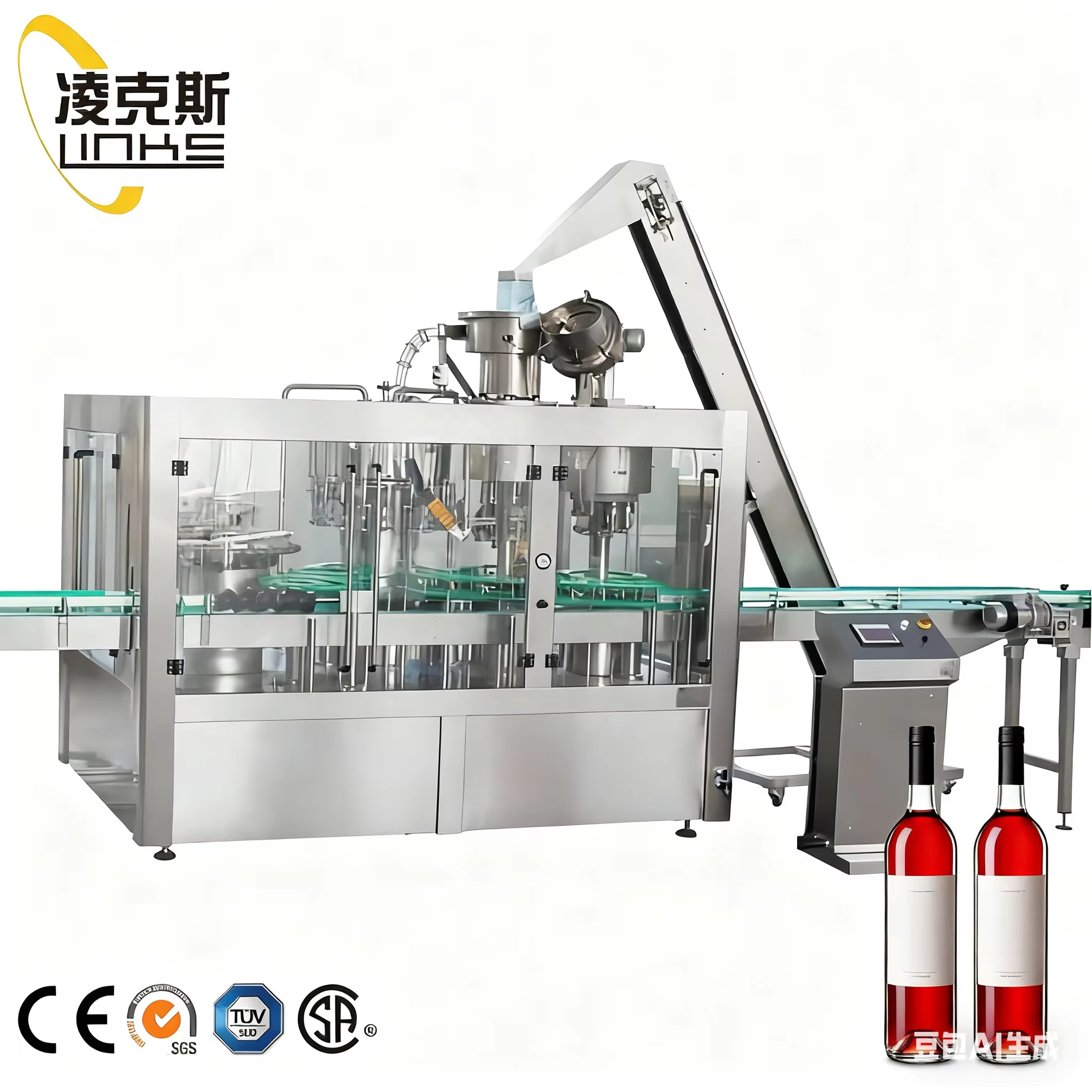
Dual-Format Compatibility: Seamless PET and Glass Bottling in One Soft Drinks Bottling Line
Modular Changeover Systems and Smart Gripper Adaptation
Modern soft drinks bottling lines must switch between PET and glass containers without compromising throughput. Modular changeover systems achieve this using quick-release tooling and automated format recognition: when a new bottle type is detected, conveyor guides, star wheels, and gripper arms adjust in seconds. Smart grippers—equipped with servo-controlled pressure sensors—dynamically modulate grip force: gentler for lightweight PET to prevent deformation, firmer for stable glass to ensure secure handling. This eliminates manual reconfiguration and reduces format-change downtime to under five minutes. Built-in machine learning refines grip positioning over successive runs, further reducing slippage and damage. As a result, the line sustains consistent speeds of up to 40,000 bottles per hour across both materials. Operators simply select the product recipe on the HMI—the system self-adjusts, delivering repeatable precision across shifts.
Material-Optimized Sealing: Pressure Integrity for PET vs. Thermal Resilience for Glass
Sealing requirements differ fundamentally between PET and glass—demanding tailored engineering to ensure shelf life, safety, and regulatory compliance. PET bottles are oxygen-permeable and mechanically delicate; their closures require high-pressure clamping to preserve carbonation and limit leak rates to ≤0.1 cc/day. To avoid neck cracking, capping heads use gradual torque build-up. Glass bottles, while impermeable and rigid, are vulnerable to thermal shock during sealing. The system therefore preheats the glass neck to 35–40°C before capping and employs a thermally resilient liner that expands slightly to form a gas-tight seal. Both approaches meet identical ISO 11607–based leak-testing standards. This dual-sealing capability enables a single line to run sparkling water in PET and premium soda in glass—eliminating the need for parallel packaging lines and significantly lowering capital and operational costs.
Precision Carbonated Soft Drinks Filling Under Pressure
Carbonated soft drinks demand specialized filling technology to retain CO₂, suppress foaming, and ensure fill accuracy. Counter-pressure (isobaric) filling remains the industry standard for this purpose. It begins by pressurizing the empty bottle with CO₂ to match the beverage’s saturation pressure before liquid introduction. Eliminating pressure differentials keeps dissolved gas in solution and prevents turbulence-induced foam. Modern systems enhance precision with servo-controlled fill valves and real-time flow monitoring, achieving fill accuracy within ±0.3 ml. This tight tolerance minimizes giveaway, supports label claims, and ensures consistent carbonation and taste across every bottle.
CO₂ Retention, Foaming Mitigation, and ±0.3 ml Fill Accuracy
Effective CO₂ retention starts before filling: counter-pressure systems inject CO₂ into the bottle until internal pressure equals that of the product tank. Once equilibrium is reached, the beverage flows in gently—no pressure drop, no foaming. Chilled product temperatures (typically 2–6°C) further inhibit bubble nucleation. These controls help maintain ≥98% CO₂ retention from holding tank to sealed bottle. The ±0.3 ml accuracy stems from high-resolution flow meters and weight-based feedback loops that dynamically adjust valve timing and flow rate. This level of control directly reduces waste, improves yield, and safeguards sensory consistency—critical for brand integrity in carbonated soft drinks.
Proven Reliability: 99.87% Consistency in High-Volume CSD Production
In high-speed carbonated soft drinks (CSD) production, even minor deviations compound rapidly. Top-tier fillers deliver batch-wide fill consistency of 99.87%, verified through continuous monitoring of temperature, pressure, and fill weight on every cycle. When a valve drifts beyond spec, the system either triggers an operator alert or initiates automatic recalibration. Paired with IP69K-rated stainless-steel construction and self-diagnostic electronics, these machines sustain >99% uptime across multi-shift operations. For CSD manufacturers, this reliability translates directly into lower rework rates, fewer consumer complaints, and predictable output—even during seasonal demand spikes.
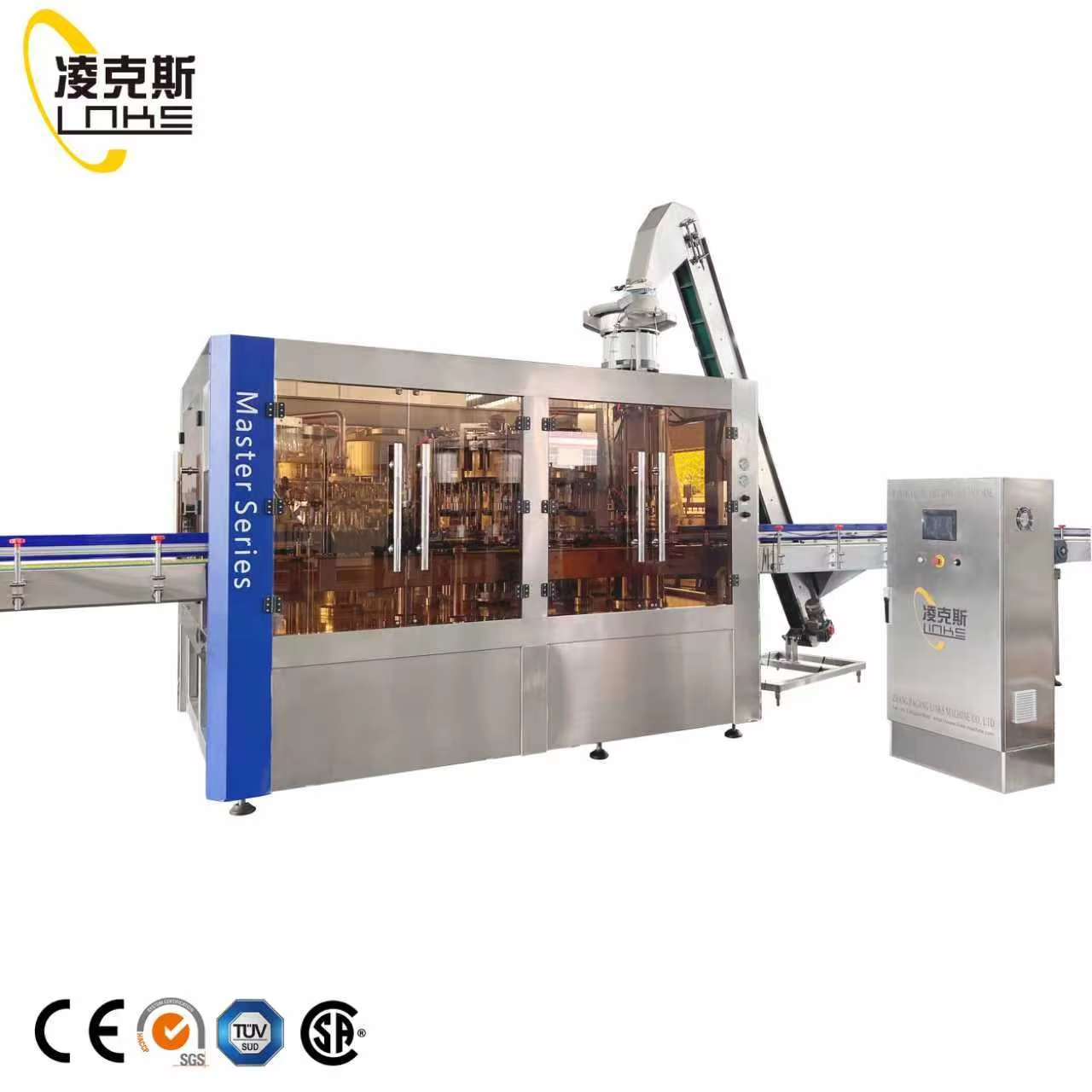
Hygienic Design and Operational Reliability for Soft Drinks Bottling
IP69K Stainless Steel Construction and Fully Integrated CIP/SIP
Hygiene is non-negotiable in soft drinks bottling—especially given the sugar content and neutral pH that support microbial growth. Equipment built to IP69K standards uses electropolished, corrosion-resistant stainless steel capable of withstanding repeated high-pressure, high-temperature washdowns (up to 80°C and 100 bar), preventing ingress into seals and electronics. Fully integrated Clean-in-Place (CIP) and Sterilize-in-Place (SIP) systems automate sanitation cycles between runs, eliminating manual disassembly and human error. This design ensures continuous operation without hygiene compromise—helping producers comply with FDA 21 CFR Part 117, BRCGS, and SQF requirements while cutting water use by up to 30% and reducing cleaning downtime by over 50%.
Filling Technology Selection Guide for Soft Drinks Bottling Applications
Overflow vs. Gravity vs. Vacuum: Matching Method to Product Clarity, Carbonation, and Bottle Format
Selecting the right filling method is essential to balancing product quality, line efficiency, and container compatibility. Overflow fillers deliver precise liquid-level consistency—ideal for clear, non-carbonated beverages where visual uniformity matters most (e.g., flavored waters or tonic). Gravity fillers offer simplicity and speed for low-viscosity still drinks like teas and juices but cannot manage carbonated liquids due to uncontrolled CO₂ release and foaming. Vacuum fillers remove headspace oxygen to extend shelf life—valuable for oxygen-sensitive products like fruit juices—but require rigid containers and are unsuitable for highly carbonated beverages. For carbonated soft drinks, counter-pressure filling is the only method that reliably preserves dissolved CO₂ and prevents foam. Container flexibility also varies: overflow and gravity systems adapt readily to PET or glass; vacuum systems require structurally robust bottles; and counter-pressure systems—when paired with smart gripper and sealing adaptations—support seamless dual-format operation. Aligning filling technology with your product’s carbonation level, clarity, and packaging format ensures optimal throughput, shelf stability, and brand consistency.