
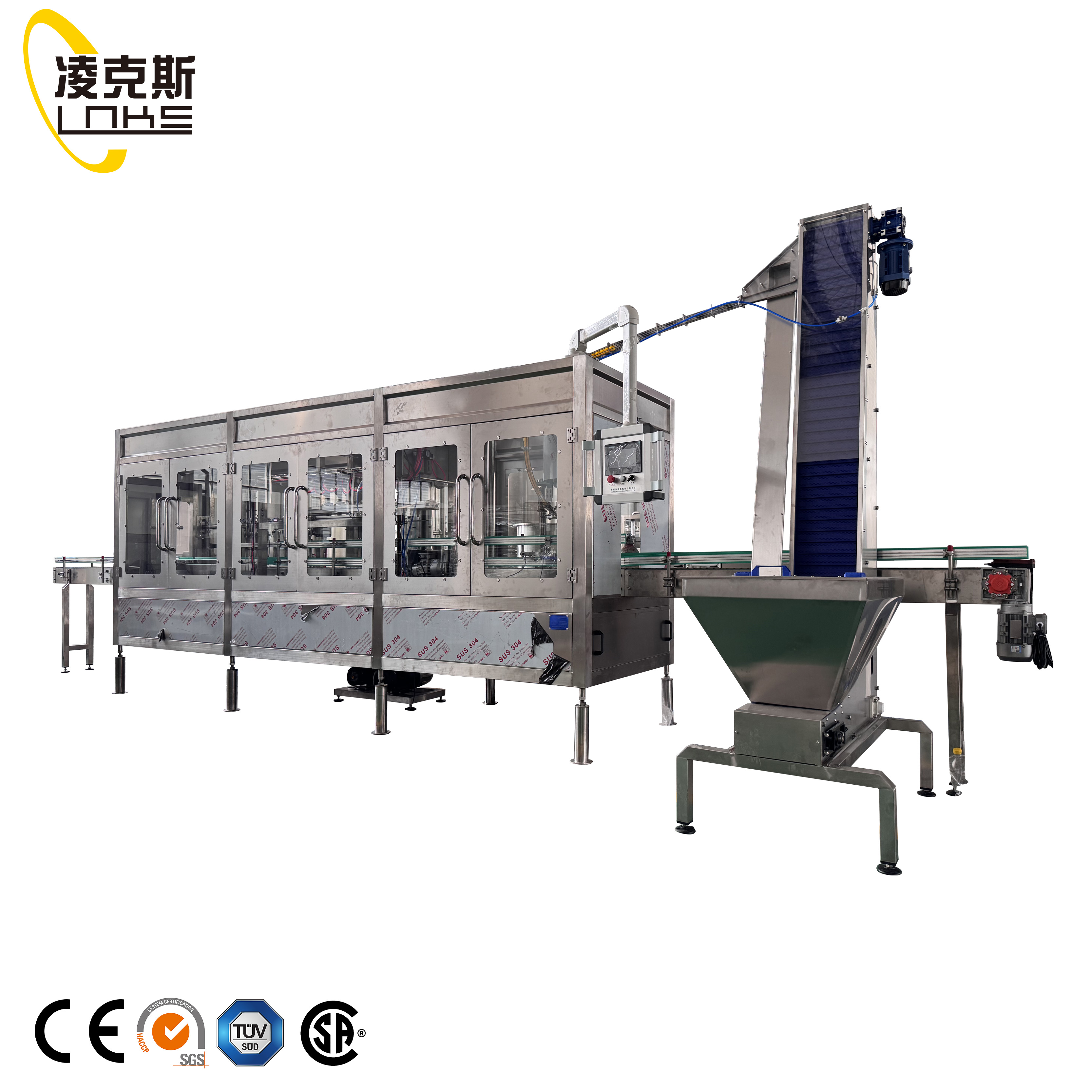
How Automatic Water Filling Machines Boost Production Speed and Throughput
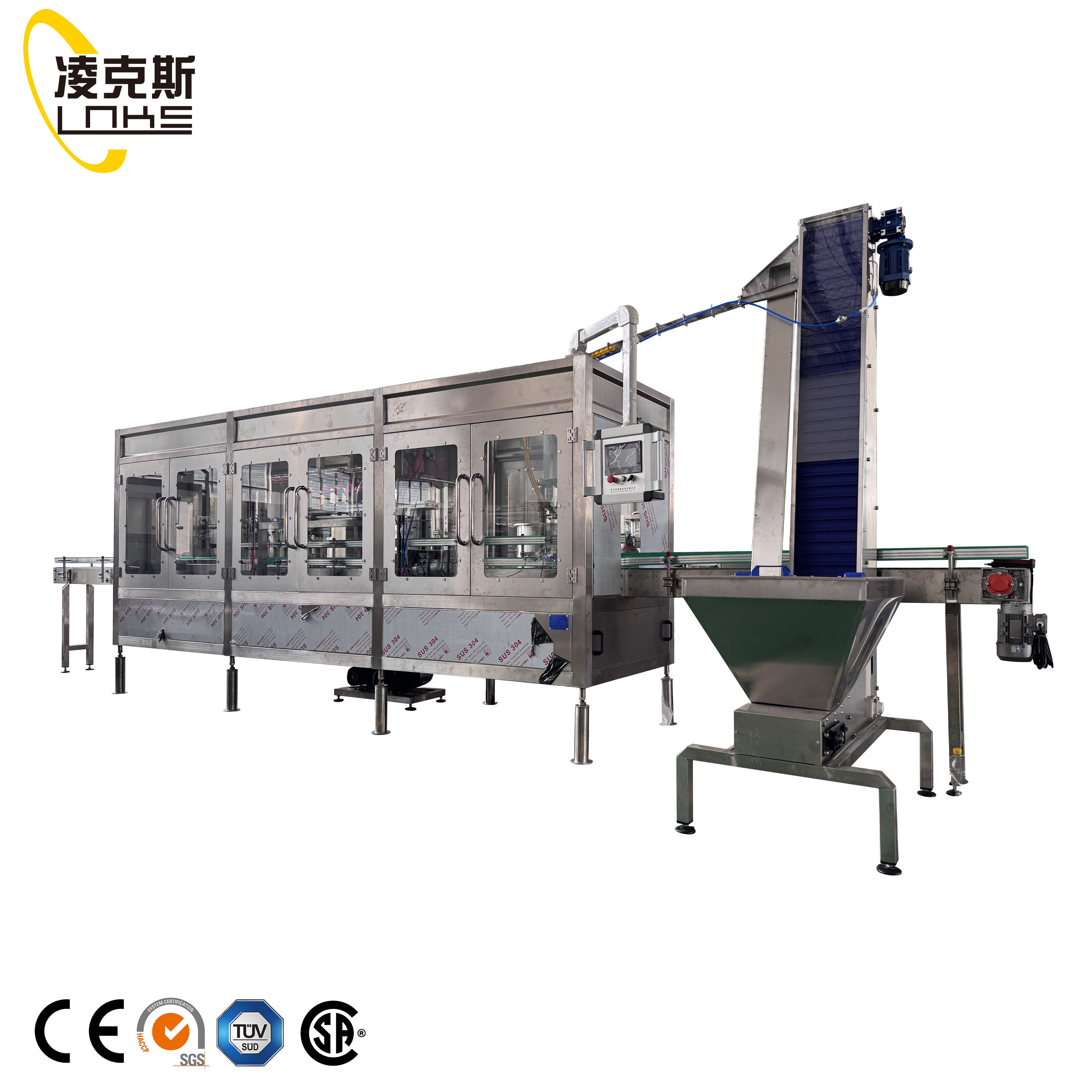
Gravity vs. Volumetric Filling: Matching Technology to Water’s Low-Viscosity Requirements
The almost nonexistent resistance of water means filling systems need to be built for both speed and accuracy. Gravity fillers work great because they rely on natural flow patterns, making them perfect for fast processing of thin liquids such as purified or mineral water. Volumetric systems, whether piston driven or using peristaltic pumps, manage to get fill amounts spot on within about 1mm tolerance. These two approaches form the backbone of today's automated water filling equipment. They cut out all those pesky manual measurement mistakes and typically run 20 to maybe even 40 percent quicker than their semi automatic counterparts. Modern machines now come equipped with photoelectric sensors that tweak filling settings based on what kind of containers are being used, round ones, square ones, whatever. This helps stop overfilling incidents and can slash product waste by around thirty percent in many cases. When manufacturers combine understanding of how water behaves at such low viscosities with smart automation tech, they end up with significant improvements in production output while still maintaining quality standards across batches.
Real-World Throughput Gains: From Manual Bottling (500 BPH) to Fully Automated Systems (12,000 BPH)
When it comes to manual bottling operations, there's just so much humans can handle before fatigue sets in or mistakes happen. Most plants top out around 500 bottles an hour simply because people get tired and their hands aren't built for repetitive motions all day long. That's where automatic water filling systems really shine. These machines break free from those human limitations by using synchronized rotary platforms that do everything from rinsing to filling to capping without stopping. The conveyor belts are driven by servos which keep each bottle positioned within fractions of a millimeter accuracy. With cycles happening every two seconds flat, these systems run non-stop day after day. And best part? Downtime stays under 1% most of the time when properly maintained.
Ensuring Consistent Hygiene and Contamination Control with Automatic Water Filling Machines
Eliminating Human Contact: How Automation Reduces Microbial Risk in Water Bottling
When it comes to keeping bottled water safe, people's hands are still the biggest problem for microbes getting into the system. Workers can leave behind all sorts of stuff on surfaces - bacteria from their skin, bits of dead cells, even little germs floating through the air. Tests show these surfaces often hit over 200 colony forming units per square centimeter according to Food Safety Journal research last year. The solution? Automatic filling machines make a big difference. These systems have sealed chambers where pressure keeps contaminants out, plus conveyors that don't need anyone touching them directly. This setup cuts down on contamination problems by almost 98% when compared to older semi-automatic methods. Many modern systems also include UV-C light zones that zap away nearly all microorganisms in the filling area. Special air filters and controlled airflow keep things pretty clean inside, meeting those ISO Class 7 standards we see in real labs. This matters because water just sits there waiting for microbes to grow, especially those stubborn biofilms that stick to surfaces and multiply.
Compliance-Driven Design: Meeting FDA 21 CFR Part 110 and ISO 22000 Standards
Validation includes ATP bioluminescence testing, with swab results consistently below 5 RLUs across production runs. Programmable logic controllers (PLCs) automate sterilization sequences and generate digital hygiene logs—enabling real-time audit readiness and reducing regulatory non-compliance incidents by 92%.
Operational Reliability and Maintenance Efficiency of Modern Automatic Water Filling Machines
Today's automatic water filling machines typically run at around 90% uptime or better thanks to solid mechanical construction paired with smart predictive features. These machines have IoT sensors built right into them that keep an eye on things like motor workload, bearing temps, vibrations patterns, and how much pressure is building up in the system. All this information gets sent to cloud platforms where it gets analyzed for warning signs of potential breakdowns before they actually happen. The improvements in precision are pretty impressive too. Back in the day, most fillers hit about 92% accuracy, but now modern systems routinely reach 98%. That makes a real difference when trying to maintain quality control standards across production lines.
That reliability comes with nuanced tradeoffs: diagnostic complexity has increased maintenance resolution time by 25–40%, particularly when troubleshooting advanced PLC architectures or spectral analysis outputs. While energy-efficient drives and optimized pneumatic systems reduce annual utility costs by ~$18,000, labor-intensive calibration and firmware updates may offset ~$12,000 of those savings.
Manufacturers counterbalance this through three proven strategies:
- Remote diagnostics, resolving 70% of system faults without on-site technician dispatch
- Modular component design, cutting part replacement time by 50% and minimizing line stoppages
- AI-driven failure forecasting, reducing unplanned downtime by 30% through dynamic scheduling of preventive maintenance around production windows
When aligned with shift planning and batch cycles, these practices sustain continuous 24/7 operation—making reliability not just an engineering metric, but a measurable driver of ROI.
FAQ
Why is gravity filling preferred for low-viscosity products?
Gravity filling is preferred because it uses natural flow patterns, making it ideal for fast processing of thin liquids, helping prevent overfilling and reducing waste.
How do automatic systems improve throughput compared to manual systems?
Automated systems enhance throughput by performing synchronized tasks such as rinsing, filling, and capping with accuracy and speed, drastically reducing downtime and human error.
What role does automation play in hygiene and contamination control?
Automation minimizes human contact and controls contamination risk through sealed chambers, UV-C light zones, and filtered airflow, achieving higher standards of hygiene.
How do IoT sensors contribute to the reliability of filling machines?
IoT sensors monitor machine conditions and send data to cloud platforms for analysis, predicting potential breakdowns and allowing preventive maintenance.