
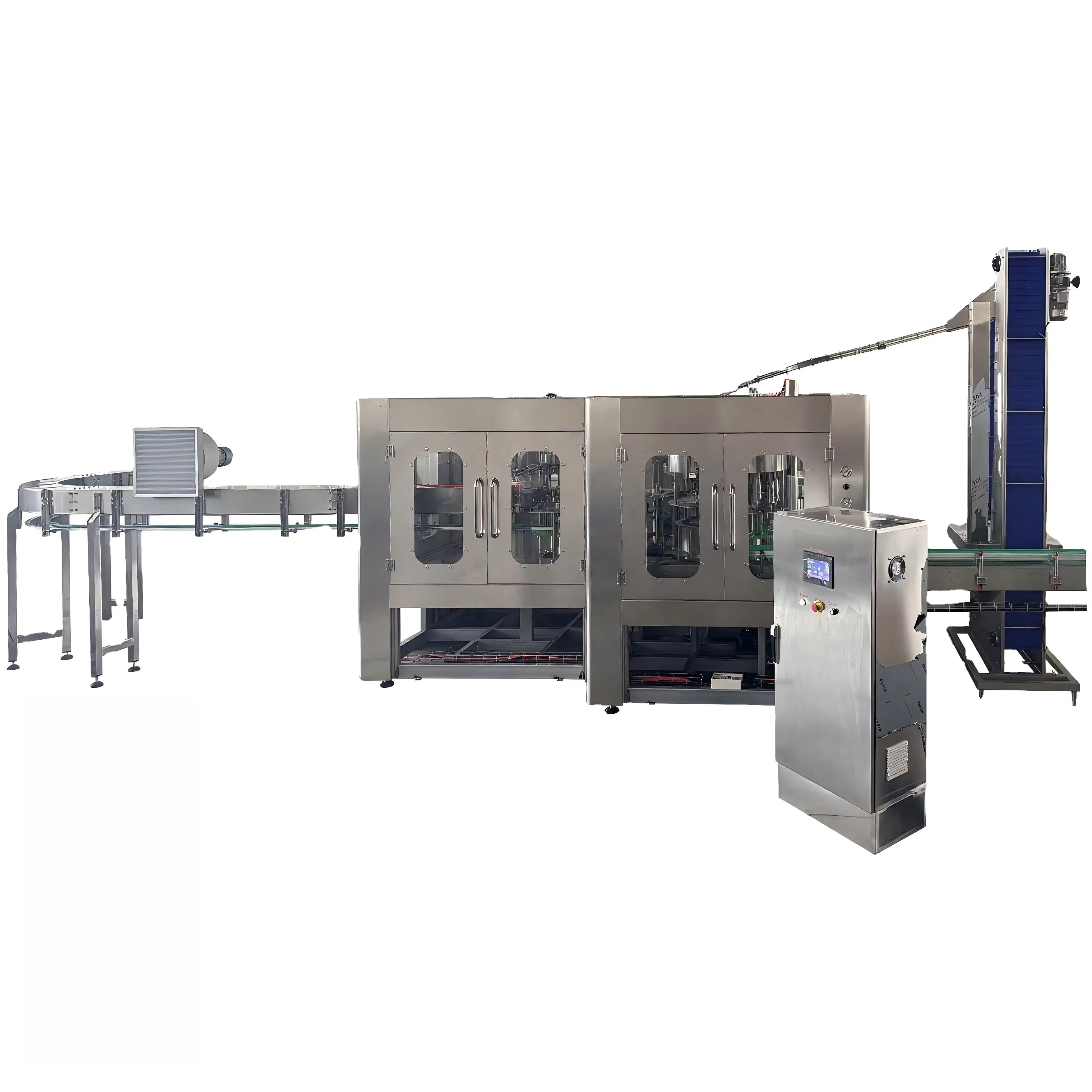
Isobaric vs. Gravity-Based Filling Systems: Mechanisms for Accurate Flow Control
Water filling machines today can hit around 1% accuracy when it comes to volume measurements, and there are basically two ways they do this. The first method involves isobaric systems which keep pressure balanced through special chambers. These work really well for things like soda because they help retain all those bubbles that make carbonated drinks taste right. Then we have gravity based systems that actually weigh the liquid as it fills up. They tend to perform better with thicker liquids since they don't rely on pressure alone. According to some research from last year, companies using these pressurized systems saw about 18% less wasted product during overfill situations compared to older manual techniques when producing standard 500ml bottles. That kind of improvement speaks volumes about how much better these modern systems are at controlling both efficiency and precision.
The Role of Calibration in Maintaining Filling Accuracy Across Production Batches
When it comes to filling operations, automated calibration through load cells and infrared sensors makes adjustments every 15 minutes or so. These systems handle changes from temperature shifts and differences in materials going through the line. The result? Fill levels stay pretty much the same with variations below 2ml even after running all day long. A recent look at bottling plant performance backs this up. Most plants these days have adopted self-calibrating equipment just to meet those ISO 9001 requirements for consistent batches. Around 87 percent of manufacturers rely on these systems now because they keep things accurate over time without needing someone standing there watching the whole process.
[^1]: Bottling Calibration Standards
Real-World Performance: Filling Precision Data From Industrial Trials
In a recent 2024 test where they filled around 2 million 500ml PET bottles, the system hit an impressive 99.8% accuracy when it comes to volume measurements. That means less than 0.03% of the bottles were underfilled, which is pretty remarkable. When looking at waste prevention numbers, automated systems saved about 23kg of product during each 8 hour workday compared to older semi-automated methods. For mid sized operations running these machines all year round, this translates into roughly $18,400 worth of savings annually. The bottom line here is clear: investing in precise automation makes good business sense for companies dealing with large scale production runs day after day.
Hygienic Pre-Fill Processes: Bottle Rinsing and Sterile Environment Control
Infeed Sterilization Using UV Light and Filtered Air to Eliminate Airborne Contaminants
Modern water filling systems often combine UV-C light in the 265 to 275 nm range with H13 grade HEPA filters to knock out about 99.97% of airborne particles right at the point where products come into contact with the machine. These two methods together create something close to ISO Class 8 cleanroom standards, stopping most mold spores, dust particles, and various microorganisms from getting anywhere near the bottles as they prepare for filling. A recent study published last year showed these systems cut down on contamination issues before filling by around 84%, which is quite impressive when compared to what happens with just regular manual cleaning procedures.
Sterile Rinsing With Food-Grade Purified Water Ensures Internal Bottle Cleanliness
Reverse-osmosis (RO) purified water is delivered through 2–3 bar pressurized jets in automated rinsing cycles. Bottles are inverted and rotated 360° for 8–12 seconds, removing 99.5% of biofilm risks in PET containers (Food Safety Journal, 2022). Temperature-controlled reservoirs keep rinse water at 60–70°C, enhancing microbial kill rates without deforming plastic.
Risks of Contamination in Manual or Open Systems Highlight the Need for Automation
Open rinsing systems show 23% higher coliform detection than closed automated units (PDA Technical Report 85, 2023). Manual processes introduce variability in rinse duration (±3.7 seconds) and inconsistent coverage, especially near bottle necks. In contrast, servo-driven rotary rinsers maintain ±0.5-second cycle precision, eliminating orientation-dependent flaws and ensuring uniform cleanliness.
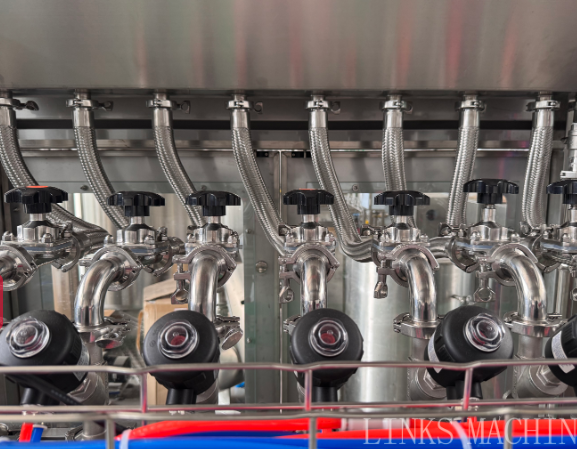
Aseptic Sealing: Closed-Loop Valves and Capping Systems That Prevent Contamination
Closed-Loop Filling Valves Minimize Air Exposure During Water Transfer
Closed-loop valves create a sealed pathway from reservoir to bottle, preventing exposure to ambient air and contaminants like dust or microbes. Testing by ZHANGJIAGANG LINKS MACHINE CO LTD revealed these systems reduce microbial contamination risk by 97% versus open-valve designs (2023 Beverage Safety Report).
Anti-Contamination Seals Maintain Sterility During High-Speed Filling
Dual-lipped silicone seals surround nozzles, forming a tight barrier against external particles even at speeds up to 600 bottles/minute. Unlike manual setups where seal alignment varies, automated systems apply consistent pressure (12–15 psi), ensuring reliable sterility during rapid operation.
Aseptic Capping: Tamper-Proof, Microbe-Free Closure for Consumer Safety
Capping occurs in ISO Class 5 cleanrooms, with sterilized caps fed through UV-treated channels. Caps are applied with <0.5mm positioning accuracy and torque control between 18–22 N·m, creating secure, airtight seals without damaging plastic. Tamper-evident rings engage automatically, giving consumers visible assurance of product integrity.
Balancing Speed and Safety: Overcoming the High-Speed Capping vs. Seal Integrity Challenge
Advanced servo motors now support up to 800 cappings/minute while maintaining 99.98% seal effectiveness—a 40% speed increase over 2020 models—without compromising safety. Real-time torque sensors detect misalignments and adjust pressure instantly, preventing both under-tightening (leak risk) and over-tightening (cap damage).
Durable, Cleanable Design: Stainless Steel Construction and CIP Integration
Stainless Steel Construction Ensures Corrosion Resistance and Long-Term Hygiene
All product-contact surfaces are built from 304-grade stainless steel, which resists corrosion and eliminates porous surfaces where bacteria can hide. This reduces biofilm formation by 72% compared to coated materials (Food Safety Magazine, 2023). Its non-reactive nature prevents chemical leaching, while polished finishes (<0.8 µm roughness) allow complete cleaning without residue buildup.
Integration with Clean-in-Place (CIP) Systems Enables Full Automation of Sanitation
CIP integration automates detergent circulation, sanitization, and final rinse cycles without disassembly. Sensors monitor temperature and conductivity to verify each phase, triggering alerts if thresholds aren’t met. Compared to manual cleaning, CIP reduces sanitation time by 40% and water usage by 30%, streamlining operations and ensuring repeatable hygiene.
CIP Reduces Downtime and Human Error in Cleaning Cycles
Automated cleaning schedules align with shift changes or batch transitions, minimizing disruptions. Precise chemical dosing prevents sanitizer overuse—a common manual error that costs an average of $17k annually per facility (Food Processing, 2022). Self-draining valve designs accelerate moisture removal post-CIP, enabling faster restarts and reducing idle time.
FAQs
What are the main types of water filling systems?
Water filling systems are mainly categorized into isobaric and gravity-based systems. Isobaric systems maintain balanced pressure through special chambers, while gravity-based systems weigh the liquid as it fills.
How do automated calibration systems ensure filling accuracy?
Automated calibration systems use load cells and infrared sensors to make periodic adjustments, maintaining fill level consistency despite temperature and material variations.
Why is hygienic pre-fill processing important?
Hygienic pre-fill processing, including UV light sterilization and purified water rinsing, is vital to minimize contamination risks and ensure bottle cleanliness.
What are closed-loop valves?
Closed-loop valves provide a sealed pathway for water transfer from reservoir to bottle, minimizing exposure to ambient contamination and maintaining sterility during the filling process.
How does CIP integration benefit water filling systems?
CIP integration automates sanitation processes, reducing downtime, human error, and ensuring repeatable hygiene without disassembly.
Table of Contents
- Isobaric vs. Gravity-Based Filling Systems: Mechanisms for Accurate Flow Control
- The Role of Calibration in Maintaining Filling Accuracy Across Production Batches
- Real-World Performance: Filling Precision Data From Industrial Trials
- Hygienic Pre-Fill Processes: Bottle Rinsing and Sterile Environment Control
-
Aseptic Sealing: Closed-Loop Valves and Capping Systems That Prevent Contamination
- Closed-Loop Filling Valves Minimize Air Exposure During Water Transfer
- Anti-Contamination Seals Maintain Sterility During High-Speed Filling
- Aseptic Capping: Tamper-Proof, Microbe-Free Closure for Consumer Safety
- Balancing Speed and Safety: Overcoming the High-Speed Capping vs. Seal Integrity Challenge
- Durable, Cleanable Design: Stainless Steel Construction and CIP Integration
- FAQs