
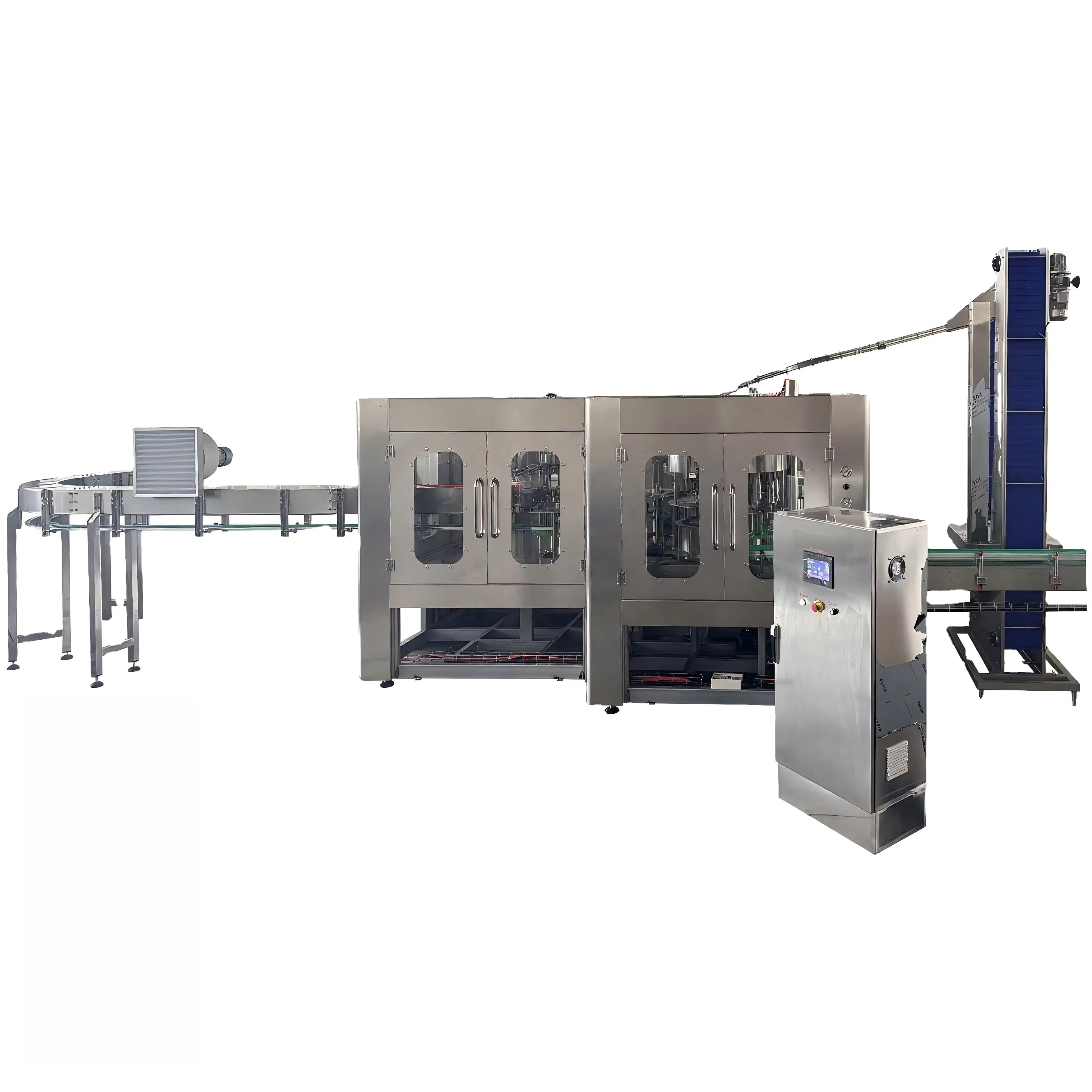
Maximizing Production Efficiency with Automated Bottle Filling Machines
Factories today are turning to automated bottle filling machines as they struggle to keep up with growing production needs without compromising on quality. According to a recent report from the beverage sector in 2024, these automated packaging systems boost line efficiency somewhere between 38 and 52 percent when compared to what workers can manage manually. Some of the better rotary systems out there can actually fill over 30 thousand bottles per hour with incredible accuracy. What makes these machines so valuable is how they fit into existing workflows. They connect smoothly with capping units, label applicators, and even quality checks along the production line. The real game changer? Changeovers take way less time now thanks to those handy tool free adjustments, cutting down downtime by around 70 percent in many cases.
Recent innovations include energy recovery technologies that cut power consumption by 25–35% during high-speed operations, while modular designs allow capacity scaling without full line overhauls. Leading manufacturers now achieve ±0.5% fill accuracy using servo-driven volumetric pumps and real-time viscosity compensation sensors—minimizing product waste and ensuring compliance with stringent FDA regulations.
Reducing Operational Costs with Cost-Effective Bottle Filling Solutions
Automated bottle filling solutions help manufacturers balance throughput with financial sustainability by optimizing labor, materials, and energy use.
Labor Cost Savings Through Fully Automatic Filling Lines
Fully automatic lines eliminate repetitive manual tasks, cutting labor expenses by up to 70% compared to semi-automatic alternatives (Food Manufacturing Report 2023). Advanced models integrate seamlessly with conveyor belts and capping systems, minimizing human intervention in bottle positioning, filling, and sealing.
Minimizing Material Waste and Increasing Process Efficiency
Precision filling systems maintain tolerances as tight as ±0.5%, reducing raw material waste by 7% annually (PMMI 2023). This accuracy also lowers packaging costs—every 1% reduction in overfilling saves an average of $4,200 per 100,000 bottles for viscous products like syrups.
ROI Comparison: Manual vs. Automatic Bottle Filling Machines
| Metric | Manual Systems | Automatic Machines |
|---|---|---|
| Labor Costs | $18/hour/operator | 70% reduction |
| Production Capacity | 500 bottles/hour | 2,500 bottles/hour |
| ROI Period | N/A (higher OPEX) | 16–24 months |
A leading beverage manufacturer recouped its $185,000 investment in 19 months through labor savings and reduced waste.
Balancing Upfront Investment and Long-Term Operational Gains
While high-speed automated fillers require a 30–50% higher initial investment than manual systems, their energy-efficient designs and predictive maintenance features lower lifetime operating costs by $92,000 on average (PMMI 2024 Analysis). Modular architectures support incremental upgrades, protecting against technological obsolescence.
Achieving High Fill Accuracy and Consistent Volume Control
Why Fill Accuracy Is Critical in Bottling Performance
Getting the volume right matters a lot for brands wanting to maintain their reputation while staying within regulations. Even a small error rate of around 2% in filling containers can lead to customer gripes or expensive penalties from regulators. Looking at industry data, about one out of every eight beverage recalls happens because of inconsistent fill amounts. That's why many manufacturers have started investing in advanced systems lately. These modern setups use something called closed loop feedback mechanisms which basically means they keep adjusting themselves as conditions change during production runs. When the liquid gets thicker or thinner, or when temperatures fluctuate, the system compensates automatically so each bottle ends up with exactly what it should contain.
Volumetric vs. Piston Filling Methods for Precision Control
Volumetric filling systems typically rely on servo driven pumps that can hit around 1% accuracy when dealing with thin liquids like water. Piston fillers work better for thicker stuff though, think motor oil or tomato sauce, because they push product through mechanical displacement rather than relying on volume measurements. When tested side by side, piston fillers held their ground at about 0.8% tolerance even with super thick 20,000 cP fluids, whereas volumetric systems started drifting off target around 1.5% under the same conditions. Most modern equipment these days comes equipped with load cells that check weight in real time, which pretty much solves the whole calibration drift problem that plagued older dip tube methods. This advancement makes a big difference in production environments where consistency is king.
Advanced Systems Deliver ±0.5% Fill Tolerance
Top-tier manufacturers achieve pharmaceutical-grade precision using multi-stage verification:
- Flow meters monitor milliliter-level discharge rates
- Checkweighers validate container mass within 0.1g thresholds
- Vision systems detect foam formation that skews fill volumes
This layered approach reduces product giveaway by 3–5% compared to single-measurement techniques and meets ISO 9001:2015 standards for packaging consistency.
Flexible and Scalable Filling Systems for Evolving Production Needs
Adapting to Various Bottle Types and Container Sizes
Modern filling machines support interchangeable tooling and adjustable guides to handle containers ranging from 50ml glass vials to 5L plastic jugs. Quick-change components enable fast transitions across formats:
| Bottle Material | Common Sizes | Adjustment Mechanism |
|---|---|---|
| Glass | 100ml–1L | Quick-release clamps |
| PET | 250ml–3L | Pneumatic grippers |
| Aluminum | 200ml–500ml | Magnetic alignment |
These capabilities reduce changeover times by up to 70% compared to fixed systems (Industry Reports 2024), allowing rapid shifts between product lines without extended downtime.
Types of Bottle Filling Machines: Volumetric, Gravity, Piston, and Pump
Selecting the appropriate method affects both precision and versatility:
| Method | Best For | Viscosity Range | Fill Tolerance |
|---|---|---|---|
| Volumetric | Oils, lotions | Medium–High | ±0.75% |
| Gravity | Water, juices | Low | ±1.2% |
| Piston | Sauces, creams | High | ±0.5% |
| Pump | Alcohol, sanitizers | Variable | ±1.0% |
Piston fillers dominate high-accuracy applications, while pump systems are ideal for volatile liquids like sanitizers.
Scaling from Small Batches to High-Capacity Production Lines
Modular systems allow gradual expansion—from 200 units/hour manual setups to fully automated lines handling 12,000 units/hour. A phased investment strategy might include:
- Phase 1: Semi-automatic 4-head filler ($18k–$25k) for startups
- Phase 2: Add rotary conveyors and capping modules (+$45k)
- Phase 3: Integrate AI-driven inspection systems (+$32k)
This incremental model reduces upfront costs by 40% while preparing for future growth. Industry leaders confirm scalable designs lower long-term capital expenditures by 22% annually versus fixed configurations.
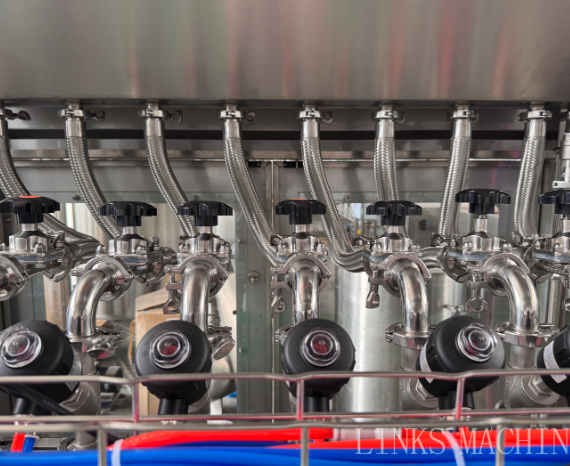
Choosing the Right Automation Level for Your Bottle Filling Machine
Semi-Automatic vs. Fully Automatic: A Practical Cost-Benefit Analysis
Semi automatic equipment can cut down on staffing expenses somewhere around 30 to maybe even 50 percent when compared with purely manual operations, making them ideal for smaller production runs up to about a thousand bottles per hour. Workers still need to handle bottle placement and start each run manually, although the actual volume control happens automatically behind the scenes. The fully automatic versions take things further by removing all manual handling requirements completely. These systems work seamlessly with conveyor belts and capping stations, capable of processing well over five thousand bottles every hour. Sure, the upfront investment costs roughly three to five times what semi automatic models cost, but most plants that manufacture more than two thousand items daily find they make back their money within eighteen to twenty four months thanks to reduced workforce needs and better material utilization across the board.
Integrating Filling Machines with Conveyors and Capping Systems
PLC-controlled fillers synchronize efficiently with downstream equipment. One manufacturer’s rotary filler achieves 99.8% uptime when paired with servo-driven capping heads and inspection conveyors. Integration prevents bottlenecks in high-speed lines—especially critical for beverages requiring <0.5% fill tolerance. Modular platforms also allow retrofitting semi-automatic units with smart sensors for real-time monitoring.
Avoiding Over-Automation: Matching Technology to Throughput Needs
According to a recent industry report from 2023, around one in five factories run at less than 60% automation because their equipment doesn't match properly. Small scale operations processing under 500 bottles per hour actually get better returns when they stick with semi-automatic setups where workers handle the loading manually. The energy bill gets really steep for automated production lines that aren't being used much. Take fillers for example: compact volumetric models use about 40% less electricity compared to those fancy high speed rotary ones when running at just 30% capacity. Most manufacturers would be wise to bring automation online gradually, tackling specific problems first such as getting consistent fill levels or dealing with staff shortages before jumping straight into full blown automation solutions.
FAQ: Automated Bottle Filling Machines
What are the main benefits of automated bottle filling machines?
Automated bottle filling machines enhance efficiency, reduce labor costs, and minimize waste while maintaining high precision and compliance with regulatory standards.
How do automated machines compare to manual systems in terms of production capacity?
Automated machines can fill significantly more bottles per hour than manual systems, improving production capacity from 500 bottles/hour to 2,500 bottles/hour on average.
What technology do advanced systems use to ensure fill accuracy?
Advanced systems employ closed loop feedback mechanisms, servo-driven pumps, and multi-stage verification techniques to achieve high fill accuracy and consistent volume control.
Can automated bottle filling systems handle different container sizes?
Yes, modern filling machines are designed with interchangeable tooling that allows them to adapt quickly to various bottle types and sizes, from small glass vials to large plastic jugs.
Table of Contents
- Maximizing Production Efficiency with Automated Bottle Filling Machines
- Reducing Operational Costs with Cost-Effective Bottle Filling Solutions
- Achieving High Fill Accuracy and Consistent Volume Control
- Flexible and Scalable Filling Systems for Evolving Production Needs
- Choosing the Right Automation Level for Your Bottle Filling Machine
- FAQ: Automated Bottle Filling Machines