
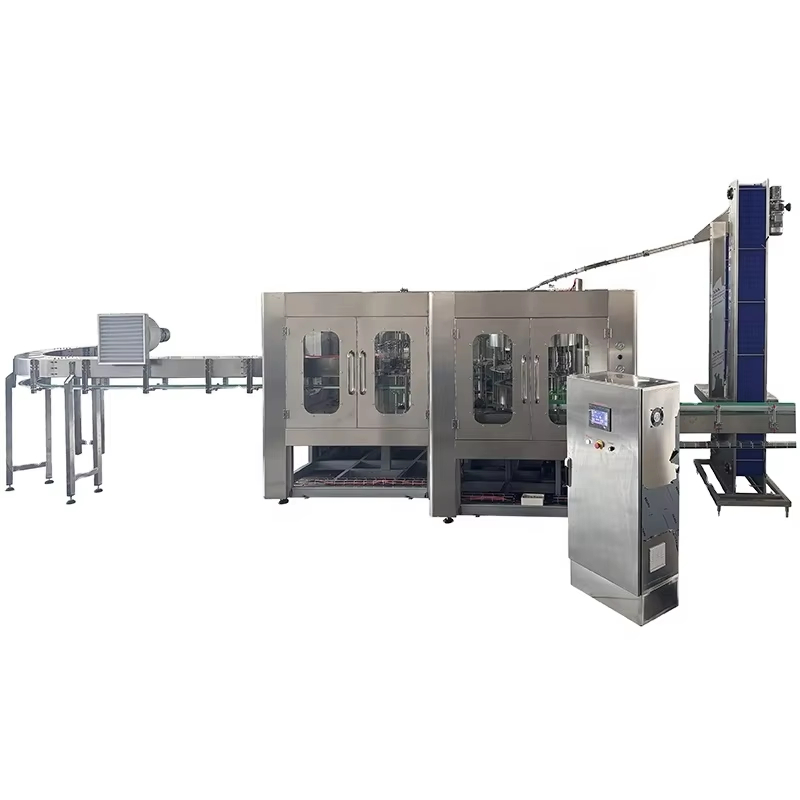
How Energy-Saving Technology Cuts Power Use in Soft Drinks Bottling
Precision Filling Systems and kWh Reduction per 1,000 Units
Modern soft drinks bottling machines use precision filling systems—equipped with volumetric sensors and adaptive flow control valves—to minimize product waste and motor energy demand. These innovations eliminate overfilling, reduce mechanical strain, and enable tighter process control. Industry benchmarks show today’s lines consume 35% less energy than 2018 models, with further gains projected:
| Year | Average kWh per 1,000 Units | Efficiency Gain |
|---|---|---|
| 2018 | 18.7 kWh | Baseline |
| 2023 | 12.1 kWh | 35% reduction |
| 2025 | 10.5 kWh (projected) | 44% reduction |
Servo-controlled filling heads are central to this progress, delivering consistent fill accuracy while cutting peak power draw. Leading manufacturers report energy reductions of 20–50% post-upgrade—accelerating ROI as electricity costs rise.
Variable Frequency Drives and High-Efficiency Motors in Modern Soft Drinks Bottling Machines
Variable frequency drives (VFDs) dynamically match motor speed to real-time line demand, eliminating energy waste during low-load or transitional phases like carbonation cycles. Paired with IE4 premium-efficiency motors, they deliver measurable operational benefits:
- 28% lower idle energy consumption
- 15% reduced peak demand during carbonation
- 22% longer motor service life due to minimized thermal stress
This integration maintains precise CO₂ dosing and pressure stability while cutting overall energy use. A major beverage producer achieved a 24% site-wide energy reduction across 14 lines after deploying VFDs and high-efficiency motors—without compromising output or carbonation quality. Regenerative braking systems further enhance efficiency by recovering kinetic energy during deceleration.
Modular Architecture and Predictive Diagnostics to Minimize Downtime
Modular architecture allows operators to isolate, service, or replace individual system components—such as fillers, cappers, or conveyors—without stopping the entire line. This design slashes mean time to repair (MTTR) and improves responsiveness. When combined with predictive diagnostics—real-time monitoring of vibration, temperature, and cycle counts—early wear signals trigger proactive maintenance alerts. The result is up to 40% less unplanned downtime, helping facilities meet production targets consistently. One global bottler cut annual maintenance costs by 25% after adopting a modular, sensor-integrated filling platform.
Sealless Valves and Corrosion-Resistant Materials for Carbonated Beverage Environments
Carbonated soft drinks present uniquely demanding conditions: elevated CO₂ pressure, low pH, and aggressive cleaning-in-place (CIP) chemistries. Sealless valve designs—using diaphragm or pinch mechanisms—eliminate dynamic seals that degrade, leak, or require frequent replacement. By isolating the beverage from moving parts, they improve hygiene, reliability, and service intervals. Complementing this, corrosion-resistant materials—including 316L stainless steel and PTFE-lined components—resist acidic attack and chemical erosion. Together, these features extend maintenance cycles significantly: a top-tier bottler reported a 60% reduction in annual valve replacements, directly lowering labor, spare-part inventory, and sanitation downtime.
Total Cost of Ownership: ROI of Energy-Saving Soft Drinks Bottling Machines
Energy-efficient bottling technology delivers strong total cost of ownership (TCO) advantages across three pillars:
- Energy: Modern systems reduce power use by an average of 22%, yielding $0.02–$0.05 savings per case (Beverage Marketing Corporation, 2023). Precision filling, VFDs, and high-efficiency motors collectively suppress idle draw and optimize load matching.
- Labor: Automation-driven workflows reduce staffing needs by up to 40%, contributing to 20–30% cumulative profitability gains over three years.
- Maintenance: Predictive diagnostics and corrosion-resistant construction lower annual upkeep to 12–18% of machine value, compared to 25%+ for legacy equipment.
In Southeast Asia, facilities implementing integrated energy-saving systems achieve full ROI in as little as 14 months, with EBIT margins improving by 3–5 percentage points—validating automation not just as an efficiency upgrade, but as a strategic financial lever.
Engineering Solutions That Preserve CO₂ Integrity Without Sacrificing Energy Savings
Carbonation stability and energy efficiency are often mischaracterized as competing goals—but modern engineering reconciles them. Precision temperature control (±0.3°C variance) cuts CO₂ off-gassing by 22% versus conventional chilling methods (Beverage Production Handbook, 2023), reducing refrigeration load without risking flatness. Advanced sealing polymers form hermetic barriers that prevent CO₂ migration through PET walls—ensuring shelf life up to 18 months without energy-intensive over-carbonation. Meanwhile, variable-pressure filling heads adapt in real time to bottle geometry and material, optimizing gas retention while using 15% less compressed air. Collectively, these solutions cut energy use by 340 kWh per 100,000 bottles, proving that sustainability, product integrity, and operational efficiency reinforce one another in next-generation soft drinks bottling.
FAQ: Key Questions About Energy-Saving Soft Drinks Bottling Technologies
Q1: How much energy can be saved using modern bottling technology?
A: Modern bottling lines consume 35% less energy compared to 2018 systems, with some systems achieving energy reductions of up to 50% post-upgrade.
Q2: How do variable frequency drives (VFDs) improve energy efficiency?
A: VFDs dynamically adjust motor speeds based on real-time demand, cutting idle energy consumption by up to 28% and reducing peak demand during carbonation phases.
Q3: What benefits do modular architecture and predictive diagnostics provide?
A: These systems reduce downtime by up to 40% and annual maintenance costs by 25%, ensuring smooth operations and earlier detection of potential component failures.
Q4: How does advanced sealing technology improve CO₂ retention?
A: Hermetic sealing polymers reduce CO₂ migration and off-gassing, enabling a shelf life of up to 18 months while cutting refrigeration and compressed air energy use.
Q5: What is the ROI timeframe for implementing energy-saving bottling systems?
A: Facilities in Southeast Asia have achieved full ROI within 14 months, with improved EBIT margins of 3–5 percentage points.
Table of Contents
-
How Energy-Saving Technology Cuts Power Use in Soft Drinks Bottling
- Precision Filling Systems and kWh Reduction per 1,000 Units
- Variable Frequency Drives and High-Efficiency Motors in Modern Soft Drinks Bottling Machines
- Modular Architecture and Predictive Diagnostics to Minimize Downtime
- Sealless Valves and Corrosion-Resistant Materials for Carbonated Beverage Environments
- Total Cost of Ownership: ROI of Energy-Saving Soft Drinks Bottling Machines
- Engineering Solutions That Preserve CO₂ Integrity Without Sacrificing Energy Savings
- FAQ: Key Questions About Energy-Saving Soft Drinks Bottling Technologies