
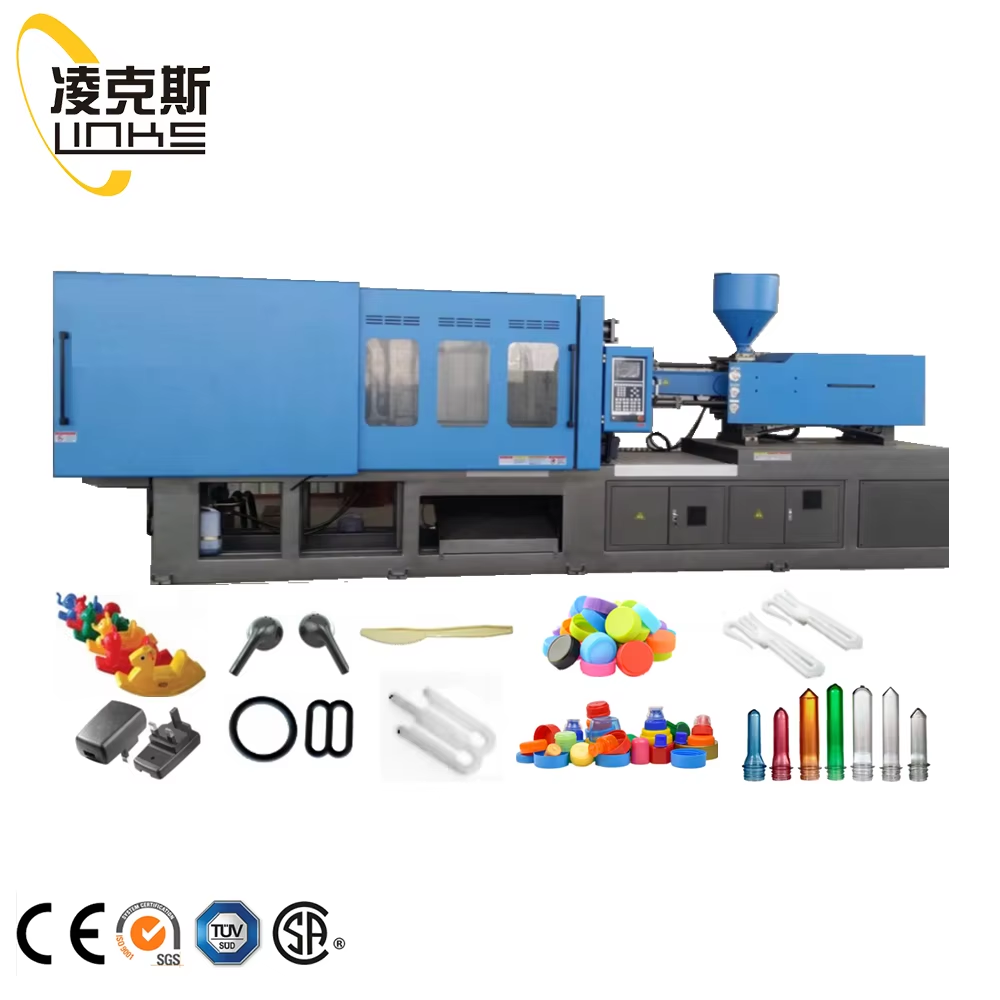
Core Engineering Advantages of High-Speed Plastic Injection Moulding Machines
Clamping Accuracy and Structural Rigidity for Stable, High-Volume Production
Modern high speed plastic injection molding machines reach micron level clamping accuracy thanks to reinforced platens and strong alloy tie bars built specifically to handle clamping forces over 250 tons without bending. The structural strength matters a lot when it comes to keeping molds aligned properly during fast cycles, which helps maintain consistent cavity filling and produces repeatable parts every time. For medical devices where precision counts, this kind of stability cuts down on rejected parts caused by flash issues by around 19 percent because those tiny gaps between mold halves just don't happen anymore. Top end systems now come equipped with real time strain sensors that automatically tweak platen alignment as needed, making sure pressure stays even throughout all cavities during continuous round the clock production runs.
Cycle Time Performance: From 4.2s to Under 2.8s in Automotive Trim Applications
Servo-hydraulic actuation technology has slashed cycle times by about 33% for automotive trim parts, bringing down production from around 4.2 seconds to less than 2.8 seconds per piece according to Automotive Plastics Council research from last year. What makes this possible? Three main factors working together actually. First, the system allows ejectors to move at the same time as the mold opens. Second, it uses pre-pressurized melt delivery which gets rid of those annoying screw recovery delays we all know too well. And third, there are these special conformal cooling channels that reduce solidification time by roughly 40%. All this adds up to machines producing over 11 million components each year without missing a beat. Even better, they maintain strict ISO 9001 quality standards with dimensional accuracy staying within plus or minus 0.08 millimeters across the board.
Precision Injection Control: Optimizing Speed Without Compromising Part Quality
Pressure–Speed Synchronization at 250 MPa to Prevent Flash and Warpage
Today's fast machines stop problems like flash and warping without relying on heavy clamping force alone. Instead they sync pressure and speed in real time, reaching pressures as high as 250 MPa. Flash happens basically because the injection pressure gets too strong for what the mold can hold back. Warped parts come from uneven material flow combined with different cooling rates across the part. The solution? A segmented velocity profile approach works wonders here. First there's a slow start to keep air bubbles out, then speeds up during the middle to cut down on those annoying flow lines, and finally applies controlled pressure at the end to make sure everything fills properly. We tested this method on bumper fascias and saw flash drop by about 43%. Even better, we maintained tight dimensions within plus or minus 0.05 mm throughout production runs lasting just 15 seconds each cycle. What's really impressive is how it maintains good melt front quality even when dealing with tricky narrow channels in the mold design.
Adaptive PID Control for Screw Retraction and Cooling Phase Efficiency
Smart adaptive PID control changes those old static process steps into something much more responsive and aware of what materials are actually doing. These systems look at things like viscosity as it happens, track temperature changes across surfaces, and monitor flow characteristics in real time. They then adjust when the screw pulls back and how long cooling takes accordingly. Traditional fixed cooling times can lead to problems either way - too short and we get sink marks, too long and we waste energy. The adaptive approach cuts cooling time down by around 17% while still keeping parts intact. And let's not forget about those self-calibrating retraction features that stop drooling and vacuum voids from happening. We saw this work wonders in PET preform manufacturing recently, where scrap dropped to just 0.3% and production speed went up by 22 extra cycles each hour. What makes all this possible is the system's ability to respond continuously, maintaining proper melt cushion even when different batches of polymer come through with their own unique properties.
Smart Automation and Real-Time Monitoring for Consistent Large-Scale Output
Closed-Loop Feedback Systems Reducing Scrap Rate by 37% in Medical Device Housing Runs
Closed loop feedback systems that integrate cavity pressure, temperature readings, and cooling rate monitoring allow for actual real time corrections in precision manufacturing processes. When making medical device housings where tolerances often drop under plus or minus 0.05 millimeters, these systems catch small problems before they become big issues. They spot things like uneven resin flow or areas where material starts setting too soon. The collected data goes straight to smart controllers which then tweak injection speed or packing pressure while the cycle is still running. This helps avoid common defects such as sink marks on clear parts or size changes in ventilator enclosures. According to recent industry stats from 2023, factories using this tech see about a third less waste when operating around the clock. Every single product consistently meets those strict ISO 13485 standards that are absolutely essential for critical components used in surgery tools and breathing machines.
Proven Applications Across Automotive and Consumer Electronics Manufacturing
The benefits of high speed plastic injection moulding machines are pretty clear when looking at industries where precision matters most. Take the automotive sector for instance these machines make it possible to produce parts that can handle extreme heat conditions. We're talking about things like headlight casings, those metal brackets holding everything together, even the protective shells around EV batteries which need to meet strict fire safety standards like UL94 V-0. The machines themselves are built solid so they maintain consistent dimensions even after repeated heating cycles. A recent study from Transportation Materials Report shows that about 18 percent of car plastics today come out of these fast running presses. Makes sense really since manufacturers want lighter vehicles but still need parts that won't fall apart over time.
The consumer electronics sector has seen major improvements thanks to dry cycle times below 0.8 seconds, making it possible to produce those super thin smartphone cases and wearable devices with flawless surface finishes. Manufacturers can now reliably create walls thinner than 0.4 mm while keeping critical quality dimensions within just 0.015 mm tolerance ranges, which speeds up how quickly new products get developed. Looking at real world data from leading electronics makers, brands adopting these advanced systems typically bring their products to market around 37 percent faster than companies sticking with traditional molding methods. This kind of efficiency matters a lot in today's fast paced tech environment where getting ahead of competitors is everything.
FAQ
What is high-speed plastic injection moulding?
High-speed plastic injection moulding is a manufacturing process where molten plastic is injected into a mold to form a product. This technology is optimized for speed, allowing for faster production cycles and higher volumes.
How does clamping accuracy affect production?
Clamping accuracy is crucial as it ensures molds remain properly aligned, reducing defects such as flash. It helps maintain consistency in cavity filling which results in producing repeatable, high-quality parts.
Why is precision injection control important?
Precision injection control is important as it optimizes speed without sacrificing part quality, preventing issues like flash and warpage while maintaining strict dimensional tolerances.
What advantages does smart automation bring?
Smart automation and real-time monitoring reduce scrap rates, making adjustments during production to catch and correct defects early, ensuring consistent large-scale output.
Where are high-speed plastic injection moulding machines commonly used?
These machines are commonly used in automotive and consumer electronics sectors, where precision, speed, and high-quality standards are necessary for manufacturing components safely and efficiently.
Table of Contents
- Core Engineering Advantages of High-Speed Plastic Injection Moulding Machines
- Precision Injection Control: Optimizing Speed Without Compromising Part Quality
- Smart Automation and Real-Time Monitoring for Consistent Large-Scale Output
- Proven Applications Across Automotive and Consumer Electronics Manufacturing