
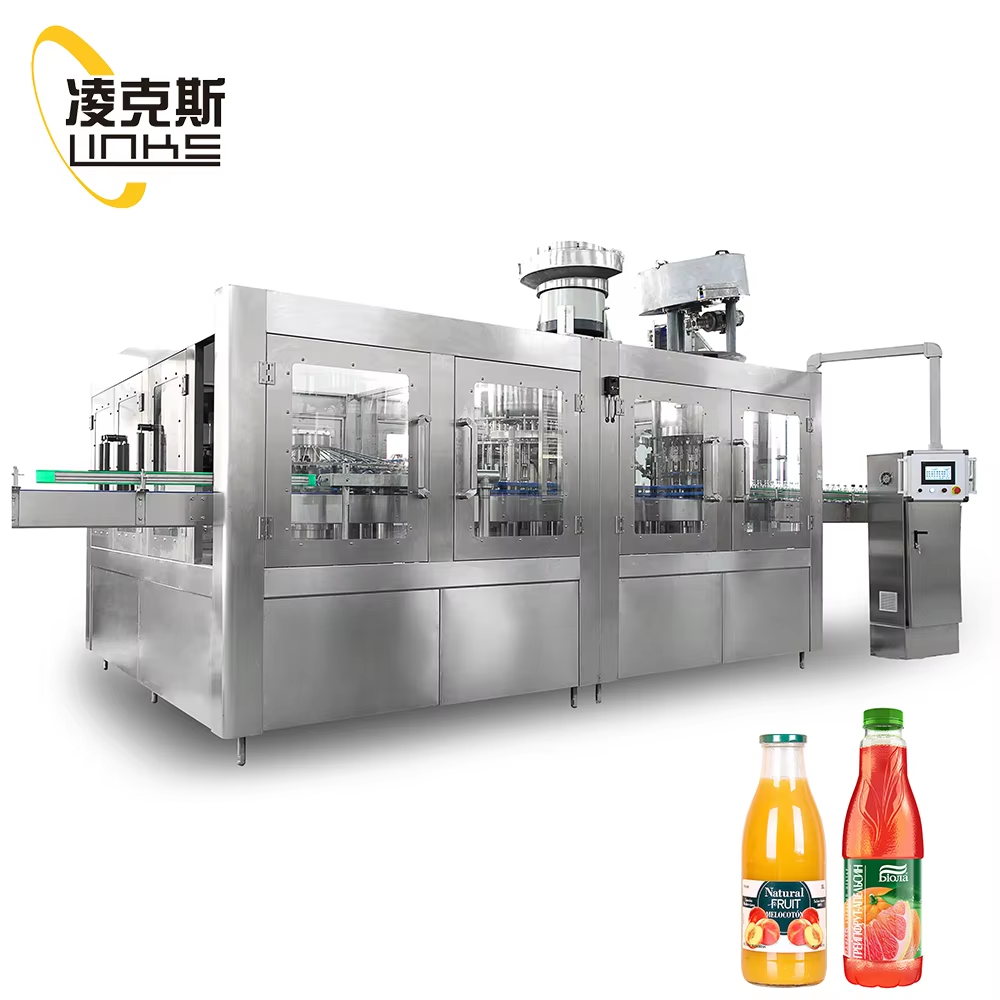
Why Hygiene Is Non-Negotiable in Juice Filling Machines
Pathogen contamination in juice production can trigger recalls costing over $740k (Ponemon 2023). Modern juice filling machines integrate hygienic engineering to eliminate this risk.
Stainless Steel Construction and CIP/SIP Compatibility for Microbial Control
The choice of food grade 316L stainless steel makes a big difference when it comes to resisting corrosion and keeping bacteria at bay. When combined with Clean-in-Place (CIP) and Sterilize-in-Place (SIP) systems, these industrial machines can knock out pathogens down to a 5-log reduction level. The automated cleaning cycles run through every surface that touches products without needing to take anything apart. This eliminates those pesky biofilm spots that become problem areas especially in acidic environments like orange juice production which typically ranges from pH 3.3 to 4.2. Those conditions are perfect for stubborn Alicyclobacillus spores to grow unchecked. Plus, since the surfaces aren't porous, there's no lingering taste contamination from one batch to the next, something manufacturers really appreciate during high volume operations.
Compliance with FDA, EHEDG, and ISO 22000: What It Means for Your Juice Filling Machine
Certification frameworks mandate design protocols that prevent contamination:
- FDA 21 CFR Part 120: Requires hazard analysis at each filling zone
- EHEDG: Validates cleanability of seals and dead-leg elimination
- ISO 22000: Ensures traceability from raw material to sealed container
Machines meeting these standards feature radiused corners, sloped surfaces, and aseptic chambers. Third-party audits verify sanitation efficacy—critical when producing cold-pressed juices with no preservatives. Compliance reduces recall likelihood by 89% versus non-certified equipment (Global Food Safety Report 2023).
How Automatic Juice Filling Machines Deliver Speed, Precision, and Scalability
Throughput Ranges (2,000–12,000 BPH) and ±0.5% Filling Accuracy Across Juice Viscosities
Juice production today requires not just speed but also pinpoint accuracy when it comes to portion sizes. Juice filling machines can handle anywhere between 2,000 and even 12,000 bottles each hour, making them suitable for everything from small craft producers right up to massive industrial plants. These machines keep their accuracy pretty tight too, around plus or minus half a percent, no matter if they're dealing with runny apple juice or thick mango pulp mixtures. How do they manage this? Well, there's these smart systems inside that constantly check the thickness of what's flowing through using special meters and valves, then tweak the settings on the fly as needed. When working with fruit pulps specifically, certain models come equipped with pistons designed to stop bits of fruit from sinking down during the filling process. What does all this mean in practice? Bottles get filled consistently every time, cutting down wasted product by about 3.5 percentage points over traditional hand filling techniques, plus helps manufacturers stay within those strict labeling requirements about how much product should be in each container.
Technology Comparison: Gravity, Piston, and Servo-Driven Fillers for Juice Applications
Selecting the right filling technology requires matching system capabilities to juice properties and production goals. Three dominant methods each excel in specific scenarios:
| Technology | Best For | Accuracy | Speed Range | Key Advantage |
|---|---|---|---|---|
| Gravity Filler | Low-viscosity juices | ±1.0% | Up to 12k BPH | Lowest operational cost |
| Piston Filler | High-pulp/thick blends | ±0.5% | 2k–6k BPH | Handles particulates reliably |
| Servo-Driven | Mixed viscosity production | ±0.3% | 3k–10k BPH | Instant changeovers between formats |
Gravity based systems work great for filling clear juices quickly and economically since they rely on the natural weight of liquids. But these setups really hit their limits when dealing with products that have varying thickness levels. For thicker pulpy drinks, piston fillers come into play because they push product through using precise displacement methods. They handle those heavier consistencies well enough, although they don't exactly break speed records. Then there are those fancy servo driven machines equipped with computer controlled valves that can adjust everything from stroke length to operating speed automatically whenever different juice types need processing. These advanced systems keep things running smoothly even when viscosity changes happen fast, which is why many plants with multiple beverage lines end up going this route despite the steeper price tag upfront. Sure, servo systems cost more initially, but manufacturers report around 40% less downtime during product switches, so the extra money tends to pay off over time in terms of overall productivity gains.
Smart Automation Features That Optimize Juice Filling Machine Performance
PLC Control, Vision-Guided Container Recognition, and Digital Sanitation Logging
PLC systems handle all sorts of tasks in processing plants from controlling temperatures to managing liquid flows and keeping production lines synchronized. These systems can maintain volume consistency within about 0.3% even when dealing with tricky pulp-filled juices that would normally cause problems. The latest vision guided sensors are pretty impressive too. They spot where each bottle sits and figure out its orientation while handling over 150 bottles every minute. According to Food Processing magazine from last year, this tech cuts down on downtime caused by misaligned containers by nearly half. Getting such precise control matters a lot when moving products at speed because it helps keep everything sterile throughout the process. Most modern facilities now have digital logging built right into their systems. These logs track all those important cleaning and sterilization cycles automatically. What's really nice is they create records that nobody can mess with later. The data includes things like pressure levels, temps reached, and concentrations of chemicals used. These records become super important documentation for meeting FDA requirements and passing ISO 22000 audits without any hassle.
Selecting the Right Juice Filling Machine: Key Application Considerations
Choosing the optimal juice filling machine requires aligning technical specifications with operational needs. Prioritize these factors:
- Product Characteristics: Match viscosity and pulp content to filler type—gravity systems for thin juices, piston fillers for pulp-heavy blends.
- Production Volume: Select throughput (2,000–12,000 BPH) based on current demand and scalability for future growth.
- Hygiene Protocols: Ensure CIP/SIP compatibility and certifications (FDA, EHEDG, ISO 22000) for shelf-life extension.
- Total Cost: Balance upfront investment against energy efficiency, maintenance needs, and spare parts availability.
- Automation Flexibility: Opt for PLC-controlled systems with container recognition to handle diverse packaging formats.
Evaluate regulatory compliance and after-sales support to minimize downtime. A strategic fit maximizes ROI while adapting to evolving market demands.
FAQ
Why is stainless steel preferred for juice filling machines?
Stainless steel, especially food-grade 316L, is preferred because of its corrosion resistance and ability to deter bacterial growth, essential for maintaining hygiene in juice filling processes.
What certifications should my juice filling machine have?
Your juice filling machine should comply with FDA 21 CFR Part 120, EHEDG, and ISO 22000 to prevent contamination and ensure product traceability.
How do automatic juice filling machines ensure precision?
Automatic juice filling machines achieve precision using smart systems that adjust settings based on juice viscosity, ensuring consistent fill levels.
What are the advantages of servo-driven fillers over other technologies?
Servo-driven fillers offer scalability, high accuracy (±0.3%), and efficient changeovers between different juice viscosities, reducing downtime.
How do PLC systems enhance juice filling machine performance?
PLC systems enhance performance by maintaining volume consistency and integrating automation features like vision-guided container recognition and digital sanitation logging.
Table of Contents
- Why Hygiene Is Non-Negotiable in Juice Filling Machines
- How Automatic Juice Filling Machines Deliver Speed, Precision, and Scalability
- Smart Automation Features That Optimize Juice Filling Machine Performance
- Selecting the Right Juice Filling Machine: Key Application Considerations
-
FAQ
- Why is stainless steel preferred for juice filling machines?
- What certifications should my juice filling machine have?
- How do automatic juice filling machines ensure precision?
- What are the advantages of servo-driven fillers over other technologies?
- How do PLC systems enhance juice filling machine performance?