
Water Filling Machine:Precision Engineering for Water-Specific Filling Accuracy
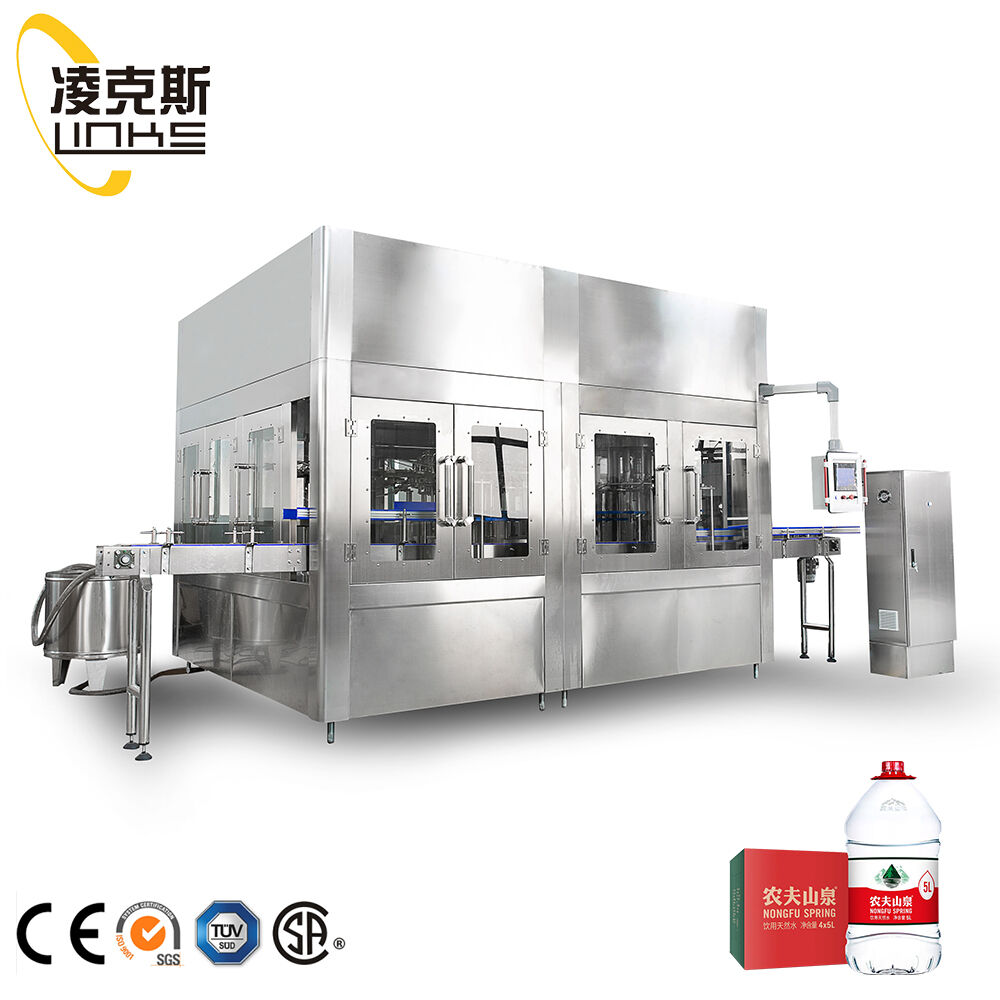
Nozzle Design and Fluid Dynamics Optimized for Low-Viscosity Liquids
The latest water filling machine nozzles work with laminar flow principles to keep things calm inside the system, which helps reduce oxygen getting into the water and stops spills when filling purified or spring water products. These machines have special valves based on the Bernoulli effect that stop those annoying drips after the nozzle pulls back. At the same time, the spouts have a tapered shape that seals properly against different bottle necks thanks to pneumatic actuators doing their thing. According to Packaging Digest from last year, this kind of design reduces foam formation by around 72% compared to older models. What's more, operators can switch between containers ranging from small 330 mL bottles all the way up to large 2 liter PET bottles without missing a beat. Everything that touches the product is made from food grade stainless steel, an important feature for preventing bacteria buildup especially when running in moist environments where contamination risks are higher.
Volumetric Time-Based Control Ensuring ±0.5% Fill Accuracy
Volumetric systems controlled by microprocessors can achieve around 0.5% fill accuracy because they calculate exactly how much liquid moves every millisecond. These smart circuits automatically adjust when there are changes in line pressure or slight differences in liquid thickness, so nobody has to manually tweak things all the time. Sensors detect bottles as they move along the conveyor belt and activate valves at just the right moment, which means operators don't need to constantly monitor or intervene. What does this mean for manufacturers? They stay in line with FDA regulations about proper filling levels, plus each production line wastes about 1,200 fewer liters of product every day. That adds up to roughly $740k saved annually according to Ponemon's research from last year. Pretty impressive when looking at both regulatory compliance and bottom line impacts.
High-Speed Water Filling Machine Performance: Throughput, Uptime, and Consistency
Scalable Output: 2,000–24,000 BPH Across Bottle Sizes (330–2,000 mL)
Water filling machines today can handle anywhere between 2,000 and 24,000 bottles each hour, which works pretty well whether the operation needs small 330 mL bottles or larger 2,000 mL containers. These machines come equipped with servo driven adjustments that automatically adjust themselves when switching to different container shapes and sizes. The tooling is designed for fast changes too, so when manufacturers need to switch formats, they're looking at less than 15 minutes of downtime most of the time. This really helps keep production lines running smoothly whether it's for smaller craft operations or bigger industrial scale production runs.
Proven Reliability: 99.2% MTBF in Real-World Water Bottling Lines
The machines show an impressive MTBF rating of 99.2% when running non-stop in actual bottling operations, which beats industry standards by around 8.7% according to Packaging Digest from last year. Constructed primarily from stainless steel that resists corrosion and backed up by multiple sensor systems, these units help prevent both particle contamination issues and electrical problems. Their smart diagnostic features actually predict when maintenance will be needed long before anything breaks down, keeping production going strong most of the time. Most facilities report seeing less than four unexpected shutdowns each month across their entire line.
Smart Automation in the Water Filling Machine: PLC-HMI Integration and Adaptive Control
Real-Time Fill Calibration and Auto-Compensation for Process Drift
PLC-HMI systems work together to keep an eye on all sorts of process variables like temperature levels, how fast things are flowing, and even what's happening with the surrounding humidity. These systems then tweak fill parameters as they go along. The smart algorithms built into these systems can hold onto around 0.5% accuracy when it comes to volume measurements, even when there are little shifts in the system. This helps cut down on wasted product during large scale operations sometimes by as much as thirty percent. For people working on the floor, the HMI dashboard gives them actual warnings and shows how things are performing so they can react quickly without stopping everything. Such closed loop control makes sure we stay compliant with ISO 22000 standards because our filling stays consistent even when conditions change throughout the day.
Compliance-Ready Design: Meeting FDA-CGMP and ISO 22000 for Water Filling Machines
Food-Grade Stainless Steel (304/316) Construction and Sanitary Quick-Change Architecture
Product contact areas meet FDA CGMP standards and ISO 22000 specs thanks to food grade stainless steel construction, usually either AISI 304 or 316 grades. These materials have a smooth surface that won't corrode or let substances leach out, making them ideal for frequent cleaning procedures required in food processing environments. Our system features a quick change design that lets operators take apart nozzles, valves and manifold components within just over 15 minutes flat. This means far less chance of bacteria buildup forming during shift changes. When compared against older style threaded connections, our modern solution cuts down on contamination risks by around 92 percent according to testing data. Facilities using this setup find themselves consistently prepared for inspections under various international regulations governing food safety practices.
FAQ
What is the significance of laminar flow in water filling machines?
Laminar flow helps reduce oxygen exposure and prevents spills during the filling process, thereby maintaining the purity and preventing foaming of the liquid.
How does a volumetric system achieve ±0.5% fill accuracy?
Volumetric systems use microprocessors to calculate liquid movement in milliseconds, auto-adjusting for changes in pressure or viscosity, which allows for precise fill control.
What role do servo-driven adjustments play in water filling machines?
They enable quick format switching and ensure consistent filling across various bottle sizes while minimizing downtime to under 15 minutes.
How does the integration of PLC-HMI systems benefit filling operations?
These systems monitor process variables in real-time, adjusting fill parameters to maintain consistent fill levels and reduce waste by up to 30%.
Why are stainless steel materials essential for water filling machines?
Stainless steel ensures that the machine components in contact with products are corrosion-resistant and meet FDA CGMP and ISO 22000 standards, reducing contamination risks.
Table of Contents
- Water Filling Machine:Precision Engineering for Water-Specific Filling Accuracy
- High-Speed Water Filling Machine Performance: Throughput, Uptime, and Consistency
- Smart Automation in the Water Filling Machine: PLC-HMI Integration and Adaptive Control
- Compliance-Ready Design: Meeting FDA-CGMP and ISO 22000 for Water Filling Machines
-
FAQ
- What is the significance of laminar flow in water filling machines?
- How does a volumetric system achieve ±0.5% fill accuracy?
- What role do servo-driven adjustments play in water filling machines?
- How does the integration of PLC-HMI systems benefit filling operations?
- Why are stainless steel materials essential for water filling machines?